I was today days old when I learned James Bond’s original card game wasn’t poker at all — in Ian Fleming’s first 1953 novel, 007 takes down his nemesis at baccarat, and it took the 2006 film adaptation to swap it for Texas Hold’em. This is the sixth post in the series on how to actually play the games this site has already toured the venues for (Three Card Poker, Discovery #146; Ultimate Texas Hold’em, Discovery #147; Craps, Discovery #148; Roulette, Discovery #149; Blackjack, Discovery #150). Baccarat is the one game on this list where you don’t make a single decision once the cards are dealt — which makes the one choice you do make, before any cards come out, matter more than it looks.
A disputed 1480s Italian origin, or maybe something older:
Baccarat is popularly credited to a 15th-century Italian named Felix Falguiere, who is said to have invented the game around 1480 using a tarot deck and named it “baccara,” an Italian dialect word for zero — fitting, since every face card and 10 in the game counts as nothing. The story is widely repeated and thinly documented: some historians push the game’s real emergence closer to the 19th century, and others trace its deeper roots to older Chinese, Japanese, and Korean card games rather than a single Italian inventor. What’s not in dispute is how it spread from there — French soldiers reportedly carried an early version home from the Italian Wars, and it became Chemin de Fer, the high-stakes French parlor game that’s still name-checked today.
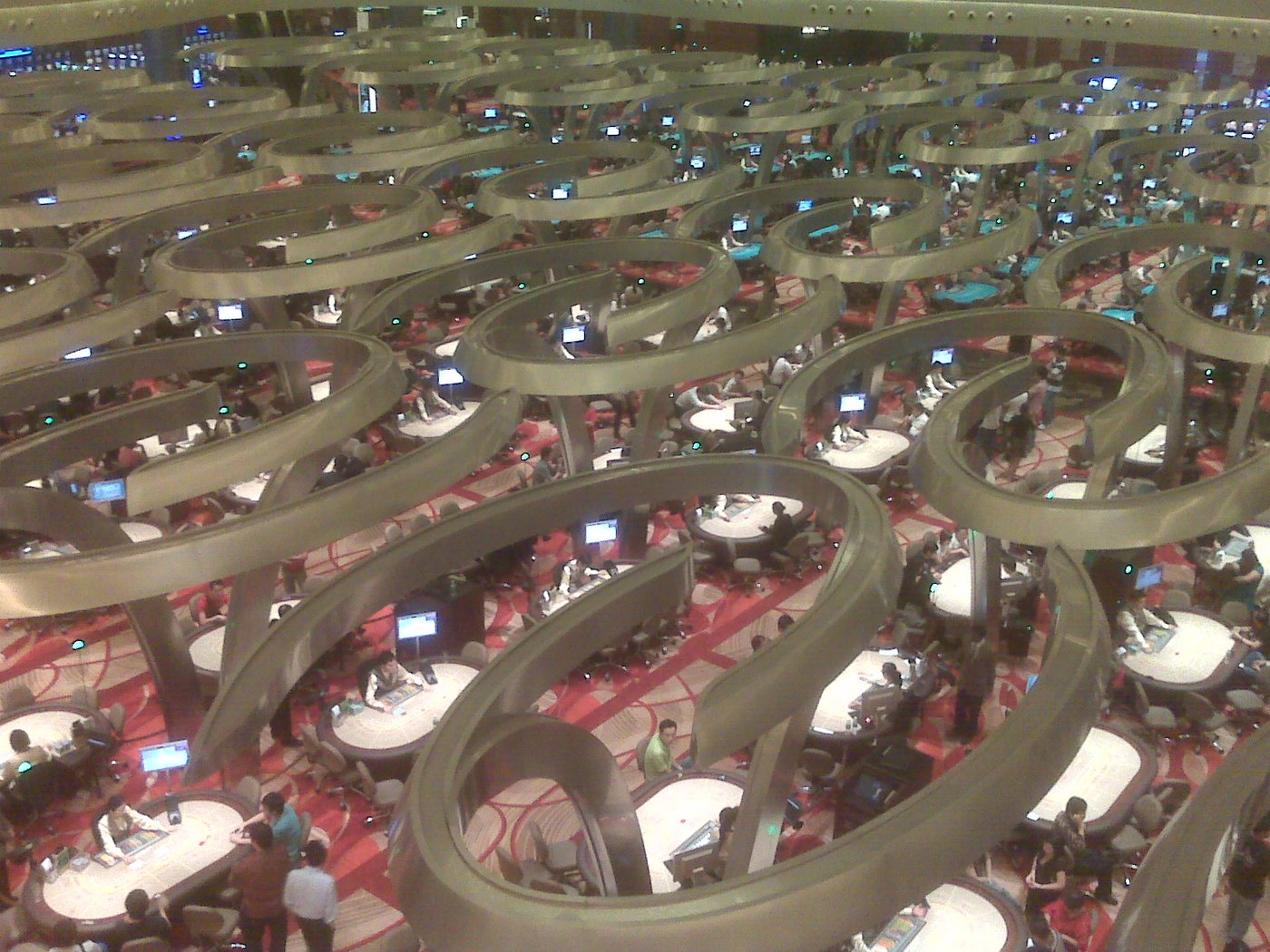
James Bond’s original game wasn’t poker:
In Ian Fleming’s 1953 novel Casino Royale — the first James Bond book — 007 is sent to bankrupt the villain Le Chiffre at the baccarat table, specifically the Chemin de Fer variant, which Fleming wrote as Bond’s signature game. That’s still true in the book today; it’s only the famous 2006 film adaptation that swapped the card game for no-limit Texas Hold’em, a change made for a modern audience more likely to recognize poker than baccarat. The version dealt in casinos today, Punto Banco, is simpler than Bond’s Chemin de Fer: there’s no shoe-passing, no player choices once betting closes, and no skill involved in how any hand plays out at all.

Three bets, zero decisions, and one hidden catch:
Once you’ve placed a bet, the cards deal themselves: Player and Banker each get two cards under fixed drawing rules (a third card is dealt to one or both hands automatically based on the total, with no choice involved), and whichever hand is closer to 9 wins. You’re simply betting on Player, Banker, or a Tie before any of that happens. The catch is in the fine print: the Banker bet wins slightly more often than the Player bet because the Banker’s fixed drawing rules are a little better, so casinos charge a 5% commission on every Banker win to claw that edge back. After the commission, Banker still comes out ahead — a 1.06% house edge, against 1.24% for Player — so the “worse”-feeling bet with the commission is mathematically the one to make.
The Tie bet is the one to skip:
The Tie bet pays big — 8 to 1 or 9 to 1 depending on the house — because it’s rare: Player and Banker land on the same total only about 1 in 11 hands. That payout looks generous next to a 1-in-11 shot, but it isn’t generous enough: the Tie bet carries a 14.36% house edge, more than ten times worse than either Banker or Player, and is reliably one of the worst single bets on a casino floor, baccarat or otherwise.
So the entire strategy for baccarat, start to finish, is one choice made before a single card is dealt: bet Banker, eat the 5% commission, skip the Tie no matter how tempting the payout looks, and let the fixed drawing rules do the rest. Blackjack was the one game in this series where skill moves the number; baccarat is the one where the only skill is knowing which of three bets to make before you sit down. More of this site’s walk through the games it’s spent dozens of posts standing in front of without explaining is still to come.