After Rome (#087), Venice (#088), and the villa stay near Cortona (#089), the trip has one more stop: Bologna, starting tomorrow. This one didn’t come with a fixed number of days attached, so instead of building the list around an itinerary like the last two posts, this is a straight, verified top 10 — the strongest, most checkable things Bologna actually has going for it. Worth a small continuity note: Bologna was one of the cities on Italy’s red heat alert list this summer (#093), so the daily bulletin is still worth a glance before heading out in the afternoon. Same standard as the rest of the series: everything below is checked against Wikipedia or an official source, not copied from a listicle. Here’s the countdown.
10. Basilica di Santo Stefano — Bologna’s “Seven Churches,” Built Over a Temple to Isis
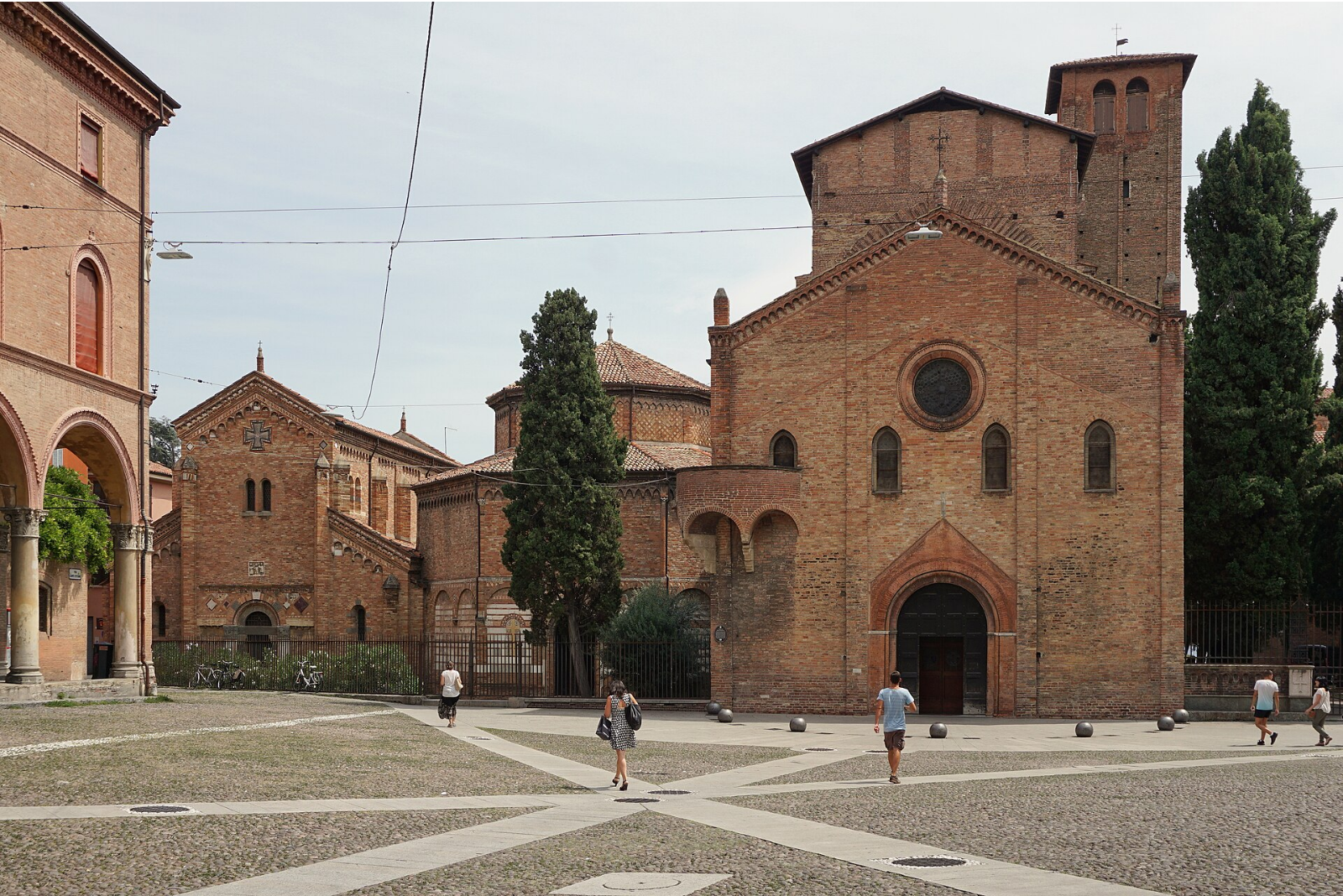
The Basilica of Santo Stefano is a complex of religious buildings on Piazza Santo Stefano, locally known as Sette Chiese (“Seven Churches”) and Santa Gerusalemme (“Holy Jerusalem”). According to tradition, Saint Petronius — Bishop of Bologna in the 5th century — built it over a former temple of the goddess Isis, deliberately modeling it on Jerusalem’s Church of the Holy Sepulchre. Source: Wikipedia, Santo Stefano, Bologna.
The complex includes the 8th-century Church of the Holy Crucifix, the circular Church of the Holy Sepulchre (rebuilt in the 11th century by Benedictine monks after 10th-century Hungarian invasions badly damaged it), the 4th-century Church of Saints Vitale and Agricola, the 13th-century Courtyard of Pilate, and the Chapel of the Bandage, dedicated to a strip of cloth said to have been worn by the Virgin Mary in mourning.
9. Mortadella — a Name Debated Since Roman Times, a PGI Status Today
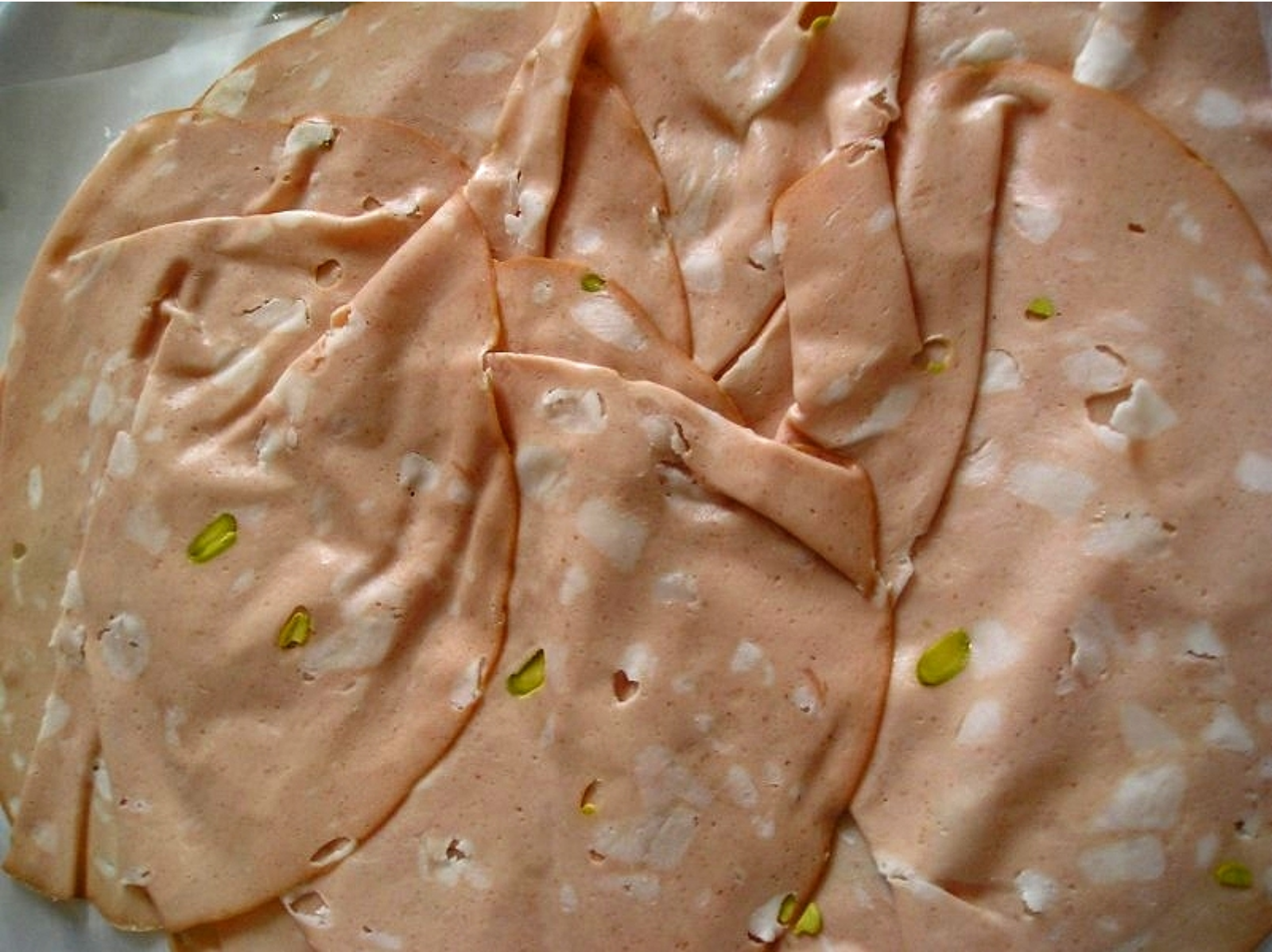
Mortadella is a large cured-pork sausage incorporating at least 15% small cubes of pork fat, traditionally flavored with peppercorns. The best-known version, Mortadella Bologna, carries Protected Geographical Indication (PGI) status under EU law. Source: Wikipedia, Mortadella.
Where the name comes from is still debated: one theory traces it to the Latin mortarium (mortar), the tool traditionally used to pound the meat, a reading backed by two ancient funerary steles in Bologna’s own Archaeological Civic Museum — one showing a herd of piglets, the other a mortar and pestle. A rival 17th-century theory ties it to a Roman sausage flavored with myrtle berries, farcimen myrtatum, from back when myrtle was a common spice in Italy, before pepper reached European markets.
8. Ragù alla Bolognese — the Sauce Has an Actual Government-Registered Recipe, and It’s Not Spaghetti Bolognese
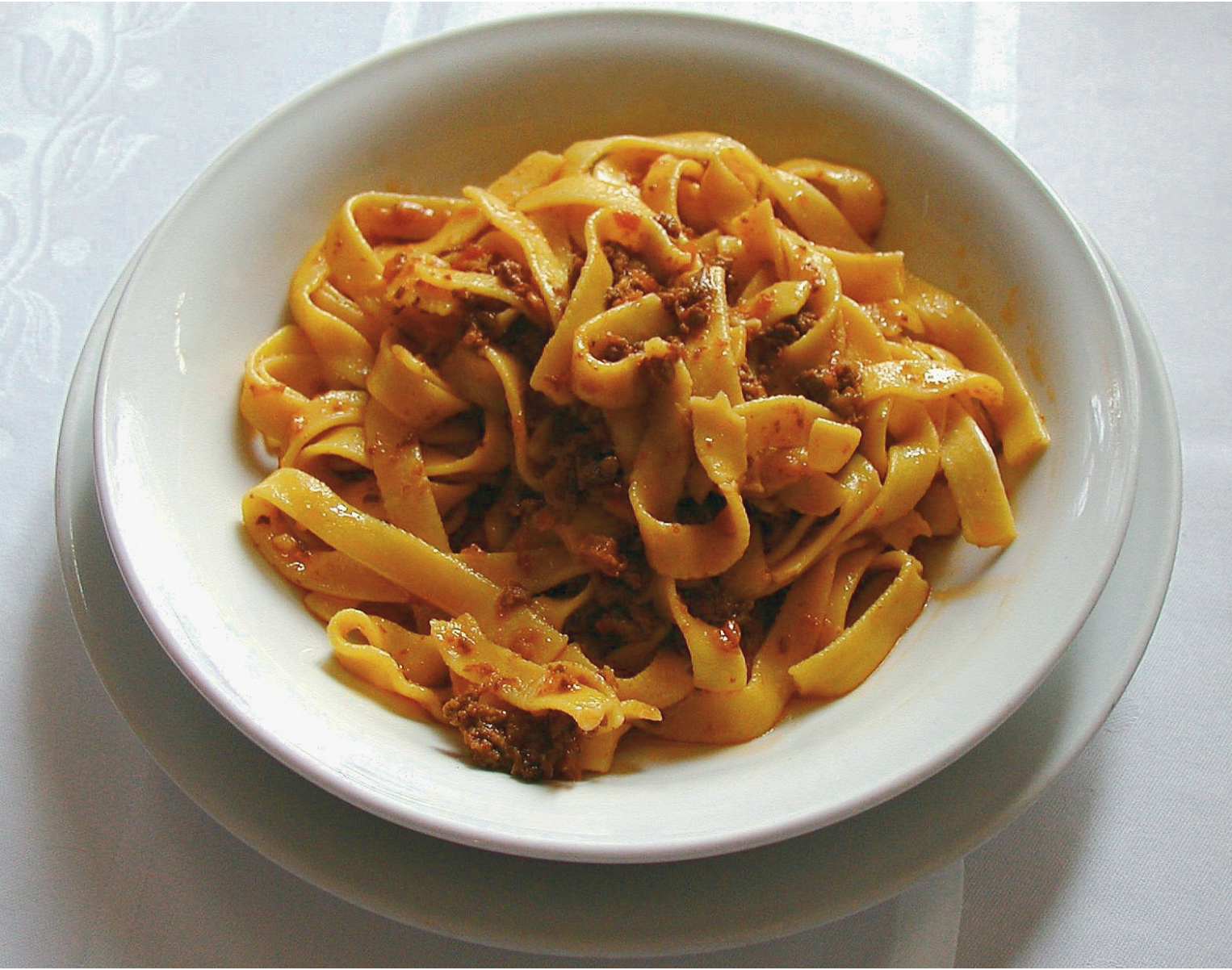
In 1982, the Italian Academy of Cuisine — an organization dedicated to preserving Italy’s culinary heritage — recorded and formally deposited a recipe for “classic Bolognese ragù” with the Bologna Chamber of Commerce; a revised version was deposited again in 2023. Source: Wikipedia, Bolognese sauce.
The earliest documented ragù-with-pasta recipe dates to the end of the 18th century in nearby Imola, from Alberto Alvisi, cook to the local cardinal who later became Pope Pius VII. Traditionally the sauce is served over fresh egg tagliatelle, not spaghetti — spaghetti bolognese is a dish that barely exists inside Italy at all.
7. Tortellini — a Pasta Shape the City Credits to a Peeping Innkeeper and Venus’s Navel
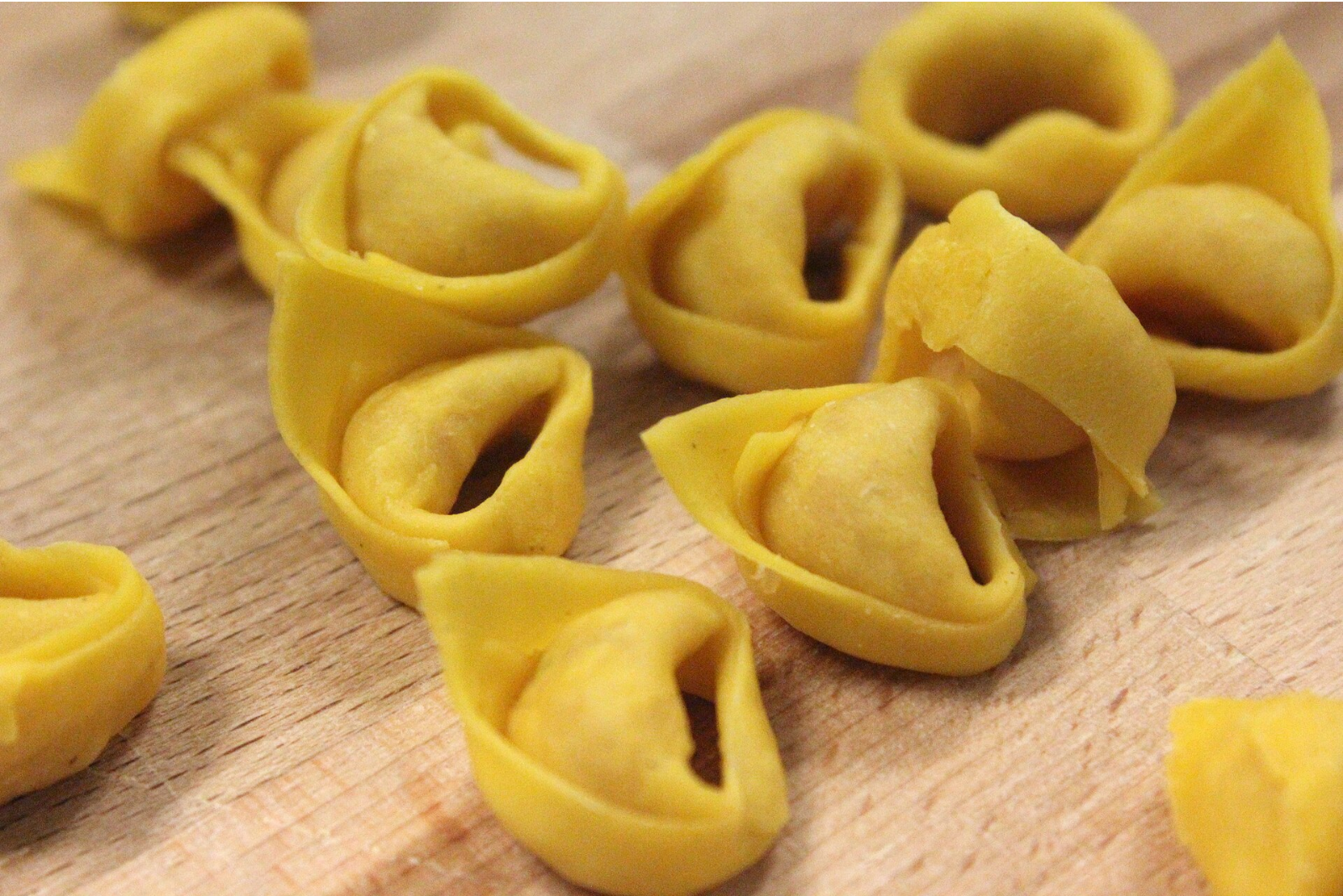
Bologna and nearby Modena both claim to be tortellini’s birthplace, and the dispute has never really been settled. The earliest recorded recipe for a similar pasta, tortelletti, appears in 1570 from the cook Bartolomeo Scappi; the name shifted toward tortellini sometime in the mid-1600s. Source: Wikipedia, Tortellini.
By the 1800s, legends had sprung up to explain the shape, centered on Castelfranco Emilia — the town sitting literally between Bologna and Modena. In one version, an innkeeper spies on a guest through a keyhole, catches only a glimpse of her navel, and is so taken with it that he shapes pasta after it; the guest, in the legend, is Venus, and the dish still carries the nickname ombelico di Venere (Venus’s navel). Castelfranco Emilia holds an annual festival built around the story.
6. The Porticoes of Bologna — 38+ Kilometers of Covered Sidewalk, UNESCO-Listed Since 2021, Including the World’s Longest
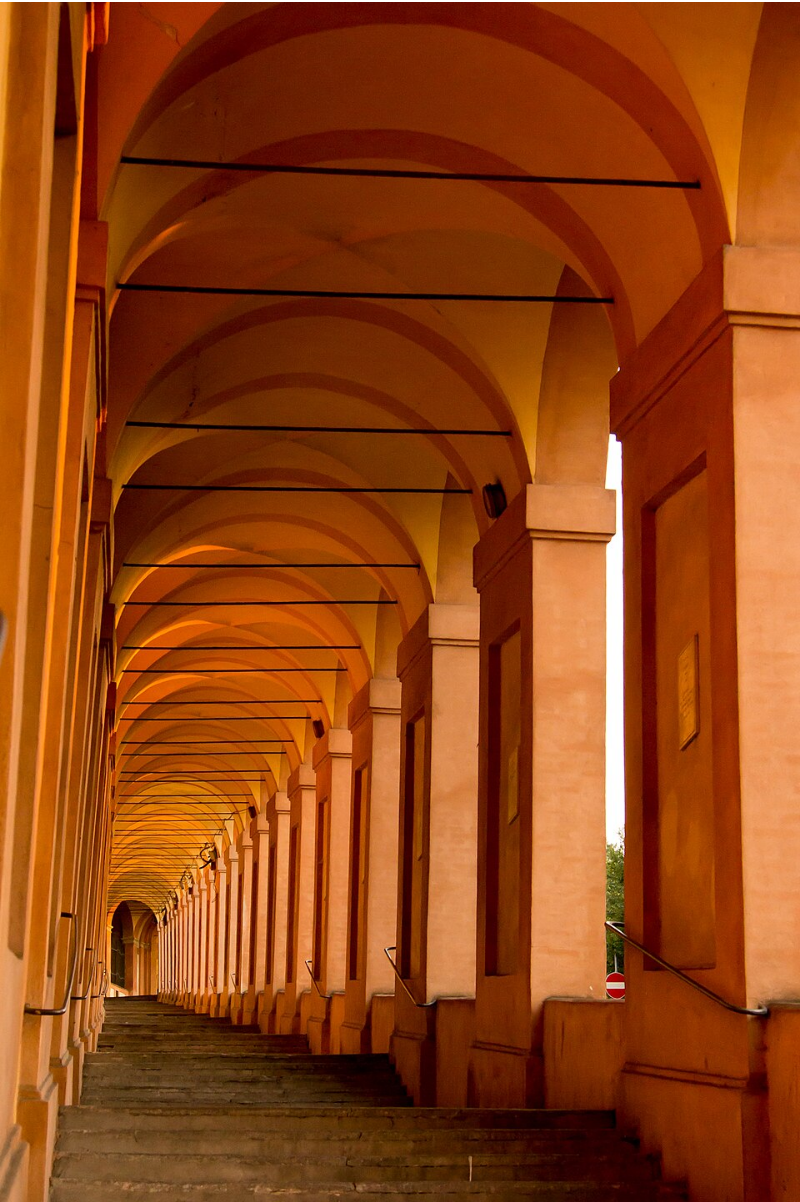
No city on Earth has more porticoes than Bologna — more than 38 kilometers of them in the historic center alone, up to 53 km if the ones outside the old walls are counted too. In 2021, UNESCO added the Porticoes of Bologna to its World Heritage list. Source: Wikipedia, Porticoes of Bologna.
The single longest is the Portico di San Luca: 666 arches across roughly 3.8 km, connecting Porta Saragozza to the hilltop Sanctuary of the Madonna di San Luca — the world’s longest portico. It has sheltered an annual procession carrying a Byzantine icon of the Madonna down into the city every year since 1433.
5. The Archiginnasio — an Anatomical Theatre Guarded by Two Skinless Wooden Statues
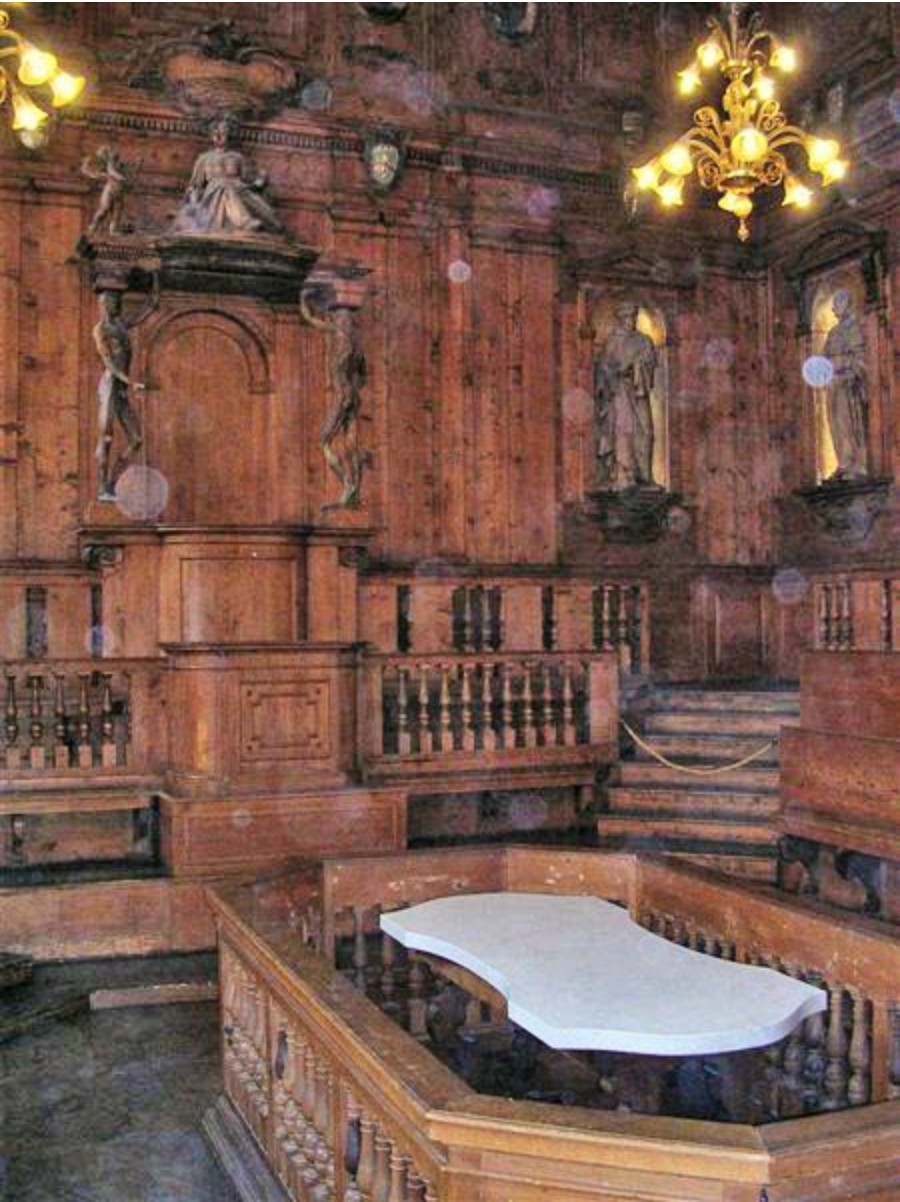
The Archiginnasio was built in 1562–63 as the University of Bologna’s main building, uniting law students and the “artisti” (philosophy, medicine, natural science) under one roof for the first time; it served that role until the university relocated to Palazzo Poggi in 1803. Today it houses the Archiginnasio Municipal Library, the largest in Emilia-Romagna at 850,000 volumes. Source: Wikipedia, Archiginnasio of Bologna.
Its upper floor holds the Anatomical Theatre, built in 1636 by Antonio Levanti: a fir-wood amphitheater where surgeons dissected cadavers in front of students, its professor’s chair flanked by two carved, skinless wooden figures known as gli spellati (“the skinned ones”). Allied bombing gutted the room on January 29, 1944; it was painstakingly rebuilt afterward using whatever original pieces could be salvaged from the rubble.
4. The Fountain of Neptune — Giambologna’s Bronze God, and the Reason Every Maserati Has a Trident on Its Nose
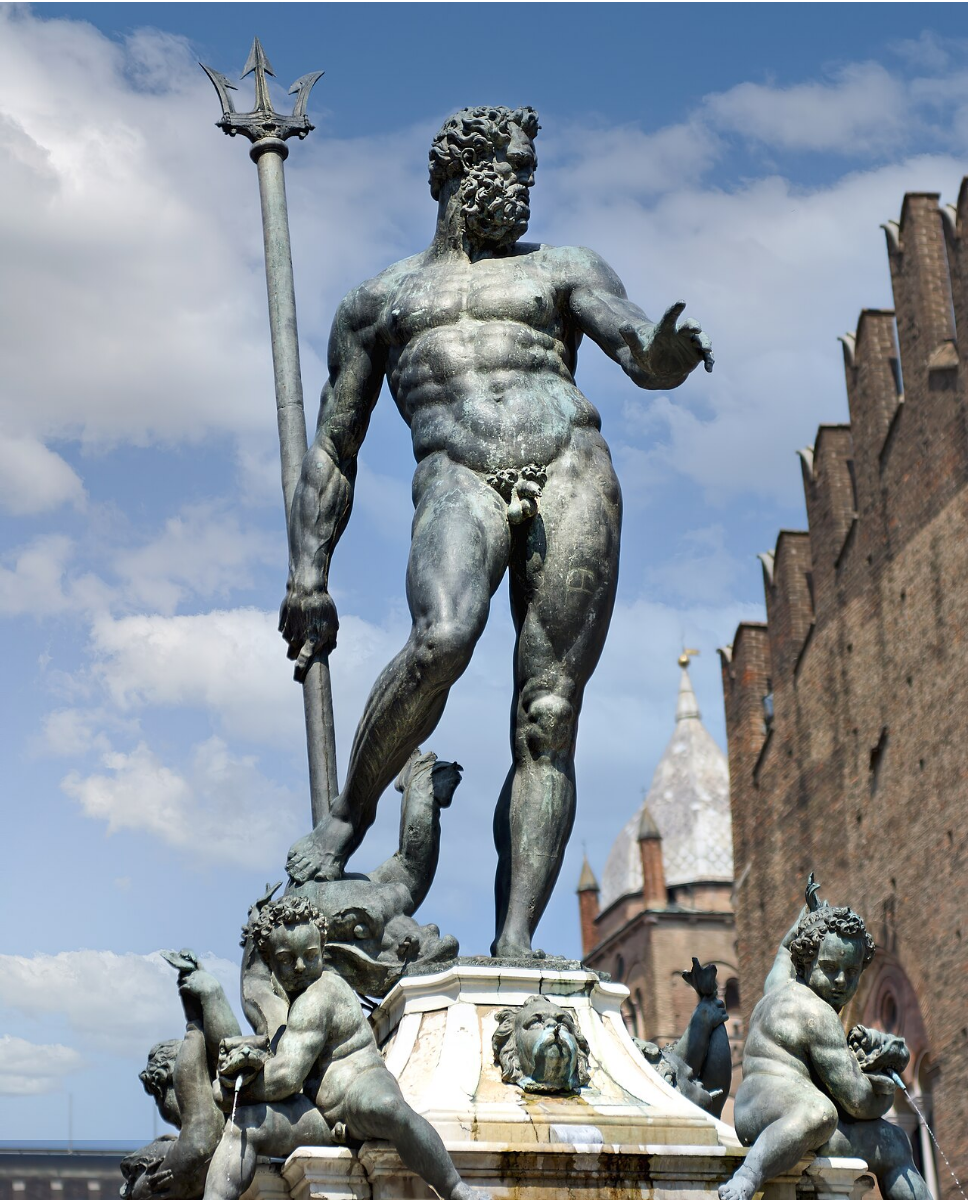
Cardinal Charles Borromeo commissioned the fountain in 1563 to mark his uncle’s election as Pope Pius IV; architect Tommaso Laureti designed it, and the over-life-size bronze Neptune was completed around 1566 by the sculptor Giambologna, who had lost the commission for Florence’s own Neptune fountain just a few years earlier. Source: Wikipedia, Fountain of Neptune, Bologna.
In 1920, the Bologna-born Maserati brothers needed a logo for their new car company. Mario Maserati borrowed Neptune’s trident straight off this fountain, on a friend’s suggestion, and it’s been the Maserati emblem ever since — making this fountain the unlikely source of one of the most recognizable logos in the car industry.
3. Piazza Maggiore and the Basilica di San Petronio — a Facade Left Unfinished Since 1390, and a 219-Foot Sundial on the Floor
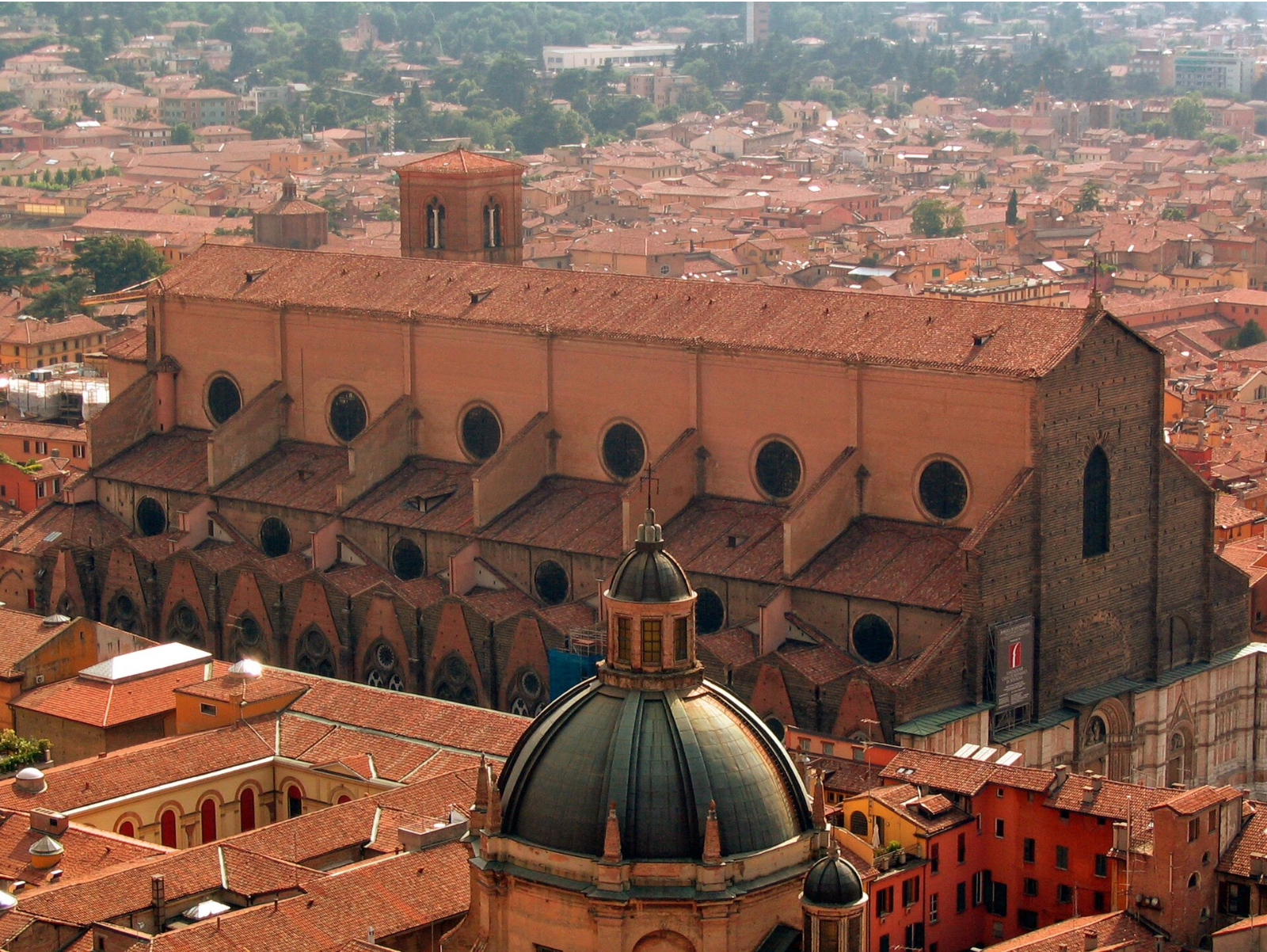
Construction began June 7, 1390 under architect Antonio di Vincenzo, and the basilica’s main façade has never been completed. At 132 meters long, 66 meters wide, and 47 meters tall, with room for 28,000 people, it dominates Piazza Maggiore, Bologna’s main square. According to legend, a 16th-century plan to enlarge the dome was scrapped by Pope Pius IV himself, unwilling to let it grow larger than St. Peter’s in Rome. Source: Wikipedia, Basilica of San Petronio.
Inside, astronomer Giovanni Domenico Cassini inlaid a 66.8-meter meridian line into the floor in 1655 — one of the largest astronomical instruments ever built. Sunlight through a small hole high in the wall projects onto the line at local noon each day, and Cassini used the shifting position and size of that spot of light to calculate the tilt of the Earth’s axis and confirm Kepler’s laws of planetary motion, well before anyone thought to use a church for that kind of physics.
2. The Due Torri — Two Leaning Towers Built as a 12th-Century Flex, One of Them Sealed Off Since 2023
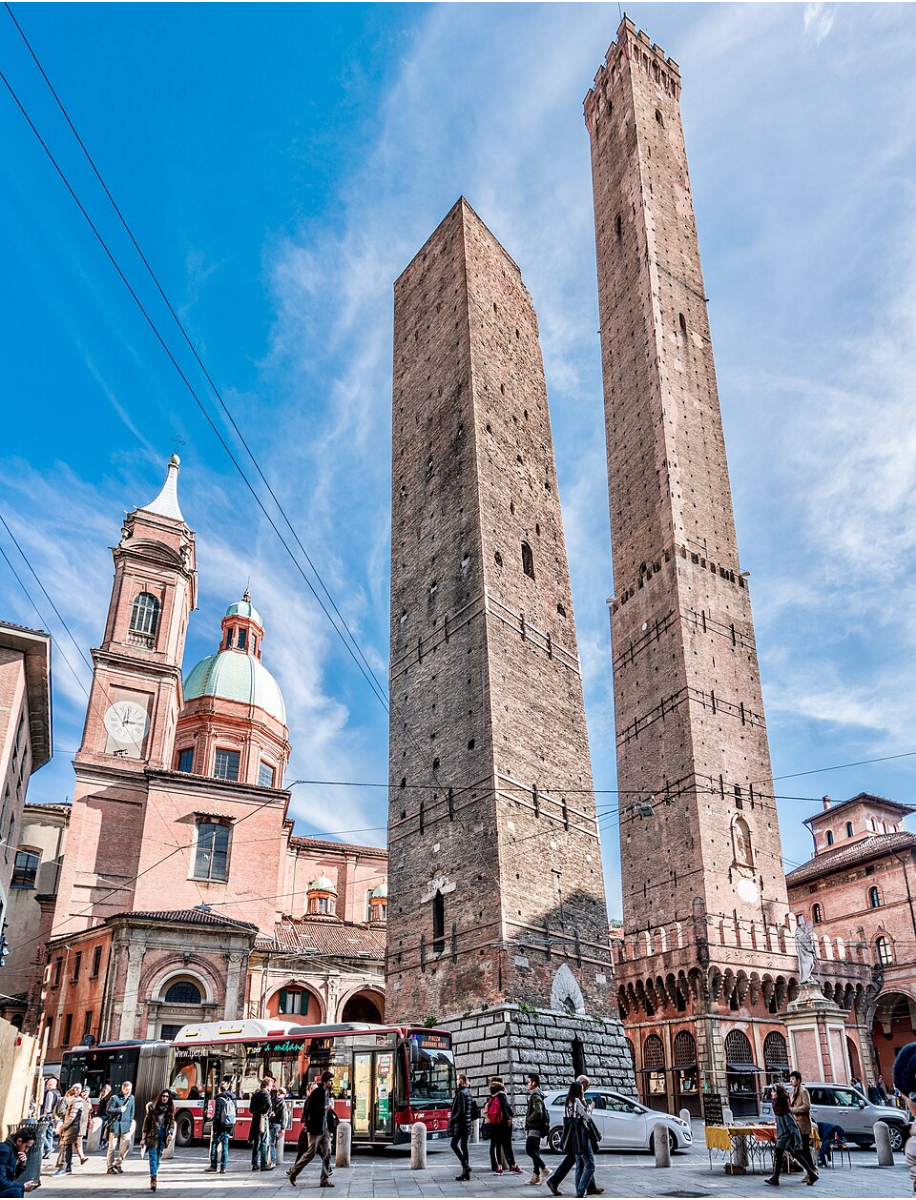
The Asinelli and Garisenda families are traditionally credited with building Bologna’s two leaning towers between 1109 and 1119, most likely to outdo one another — dozens of similar towers once dotted the medieval skyline, and these two are the tallest survivors. Asinelli stands 97.2 meters; Garisenda, deliberately shortened in the 14th century after the ground beneath it gave way, stands 48 meters with a 3.2-meter lean. Source: Wikipedia, Two Towers, Bologna.
In October 2023 the city sealed off the Garisenda after engineers found it tilting further, and by December declared it at risk of collapse; stabilizing it is expected to take at least a decade and cost around €20 million, so it’s currently viewable only from outside a barrier. The taller Asinelli tower remains open, with timed-entry visits bookable in advance through Bologna’s official tourism site — worth reserving ahead of time rather than assuming a walk-up climb.
1. The University of Bologna — Teaching Continuously Since 1088, the Oldest University on Earth
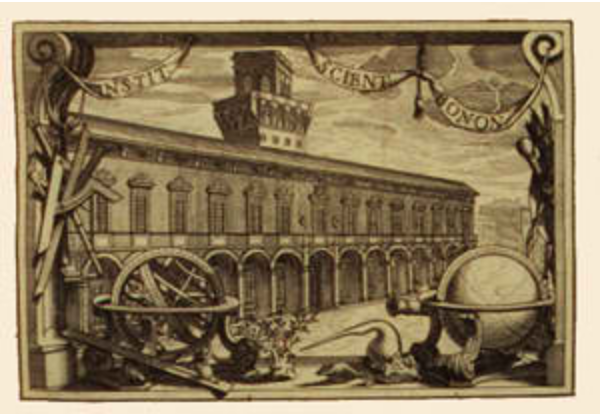
Teaching at what became the University of Bologna is traditionally dated to around 1088, and by the late 12th century students had organized themselves into guilds, or universitas scholarium — a structure that gave the word “university” its modern meaning. It’s recognized as the oldest university in continuous operation in the world and the first institution anywhere to award academic degrees; its own emblem still carries the motto Alma Mater Studiorum alongside the date A.D. 1088. Source: Wikipedia, University of Bologna.
Its alumni list includes Dante, Petrarch, Copernicus, and Guglielmo Marconi, and it’s also where Bettisia Gozzadini became the first woman to earn a university degree and later teach at a university, and where Laura Bassi became the first woman to hold a salaried university professorship anywhere. Today it enrolls more than 90,000 students, still centered on Palazzo Poggi, the building the university moved into after outgrowing the Archiginnasio (#5) in 1803.
Ten stops for a trip with no fixed day count, weighted toward what actually earns Bologna its old nickname — La Dotta, la Grassa, la Rossa (the Learned, the Fat, the Red) — over what just photographs well. Every fact checked against a source before it made the list.