Discovery #112 covered the same Dallas-to-Phoenix route’s nature stops — a meteor crater, a secret cave, a national park full of saguaros. This is the companion piece: the human-made, quirky, and flat-out weird stuff along that same route, none of it overlapping with that list. Turns out it’s a football stadium a real movie was filmed in, a university that built its entire campus to look like a Himalayan monastery, and a roadside attraction advertising a mummy on more than 200 billboards.
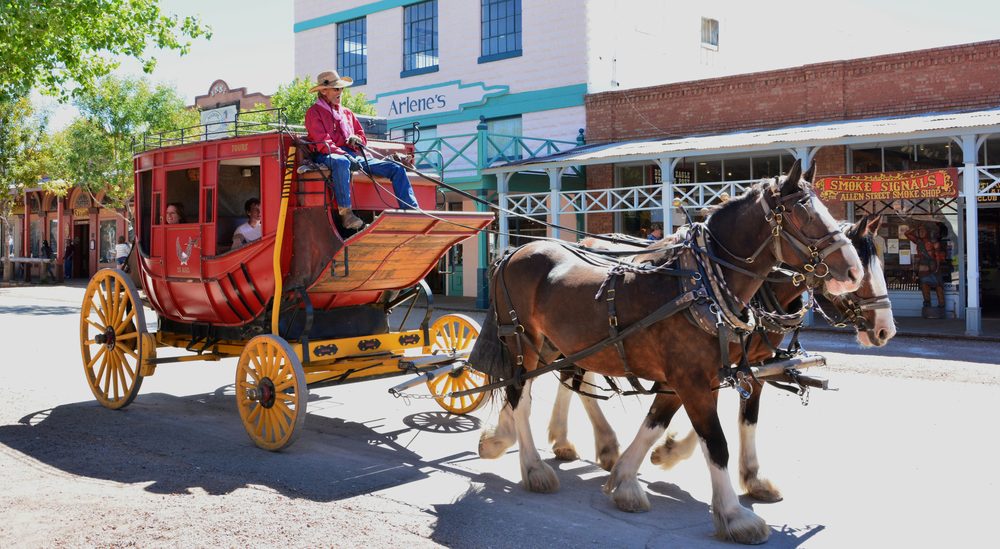
Same fastest path as before: I-20 west out of the Dallas-Fort Worth area through Abilene, Midland, and Odessa, merging onto I-10 west of Pecos and running the rest of the way through El Paso, Las Cruces, Tucson, and into Phoenix — about 1,065 miles, roughly 18 hours of straight driving. This list is ordered geographically along that route the same way, counted down from #10 (the first worthwhile stop leaving Fort Worth) to #1 (the arrival highlight approaching Phoenix).
10. Storybook Capital of America, Abilene, TX
Right off I-20: downtown Abilene has quietly built “the largest public collection of storybook characters” in the country, per the city’s own visitors bureau — 31 bronze sculptures and counting, scattered through the Cultural District. It started in December 1993, when then-Mayor Gary McCaleb visited an elementary school and heard a reading of William Joyce’s Santa Calls, only to learn Joyce had set the story in Abilene. The two became friends, the nonprofit National Center for Children’s Illustrated Literature incorporated in March 1997, and the first statue — “Childhood’s Great Adventure,” by sculptor Rick Jackson — went up downtown before the NCCIL building itself opened in a renovated 1920s storefront on September 14, 2000. The collection now includes six different Dr. Seuss sculptures, characters from Charlotte’s Web and Stuart Little, Joyce’s own “Guardians of Childhood,” and more, with new statues unveiled every year at the city’s Children’s Art and Literacy Festival. Sources: Wikipedia, Abilene Convention & Visitors Bureau.
9. National WASP WWII Museum at Avenger Field, Sweetwater, TX
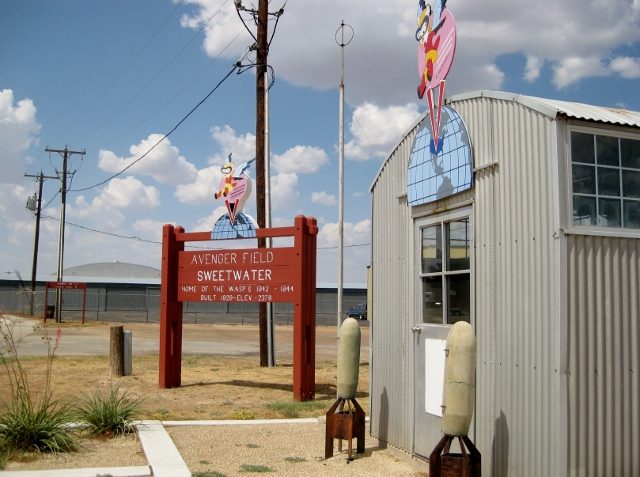
Just off I-20: Avenger Field is where the Women Airforce Service Pilots (WASP) trained starting in 1943 under famed aviator Jacqueline Cochran, becoming the first women to fly American military aircraft. About 2,500 women were accepted into training and 1,074 completed it, going on to fly over 60 million miles, ferry every type of aircraft in the Army Air Forces’ inventory, and tow targets for live anti-aircraft gun practice. Thirty-eight died in service — eleven in training, twenty-seven on missions — and because the WASP had no official military status, families paid to send their bodies home and a flag couldn’t even be draped on the coffin. General Hap Arnold personally announced the program’s disbandment at Avenger Field on December 7, 1944; the WASP weren’t granted veteran status until 1977, and didn’t receive the Congressional Gold Medal until 2009. Avenger Field is now Texas State Technical College’s Sweetwater campus, and the National WASP WWII Museum sits right on the old airfield grounds. Sources: Wikipedia, Wikipedia.
8. Ratliff Stadium, Odessa, TX
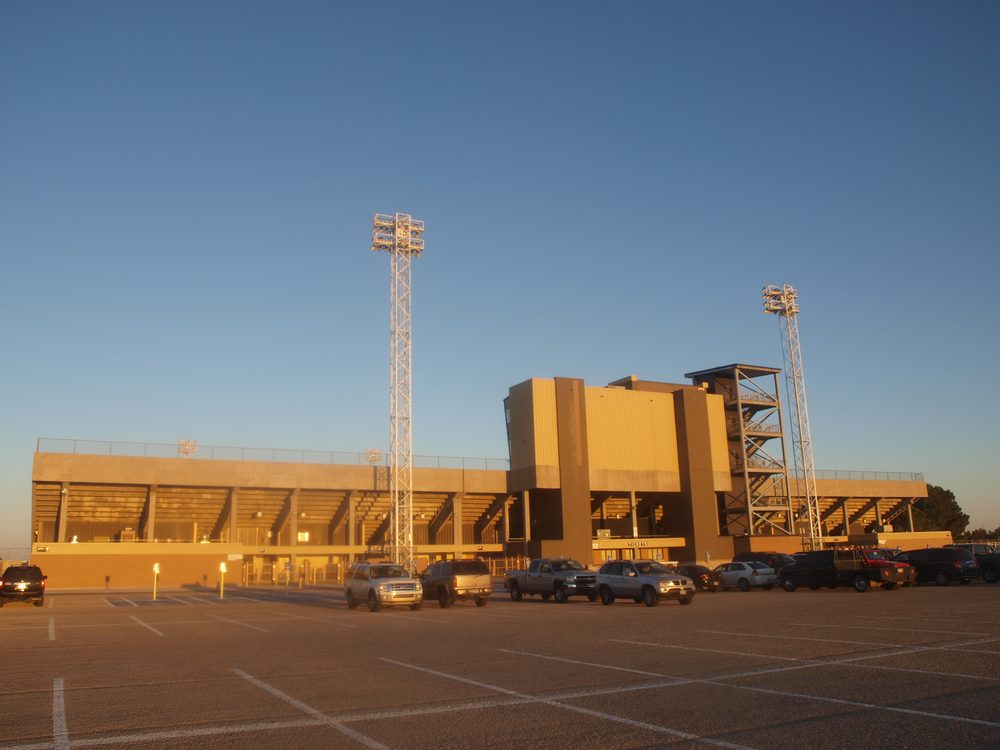
Right in Odessa, a few miles from #112’s meteor crater: Ratliff Stadium opened in 1982 on land donated by ranchers Bud and Sallie Ratliff, cost $5.6 million to build, and holds 17,931 people today, down from an original 19,302 after 2008 accessibility upgrades ate into capacity. It’s owned by Ector County ISD and shared by the city’s two public high schools, Permian and Odessa — and it’s the actual stadium used for most of the football action in the 2004 film Friday Night Lights, based on Buzz Bissinger’s 1990 book about Permian High School’s real 1988 season. It’s also served as the home field for the University of Texas Permian Basin Falcons off and on since 2015. Source: Wikipedia.
7. West of the Pecos Museum, Pecos, TX
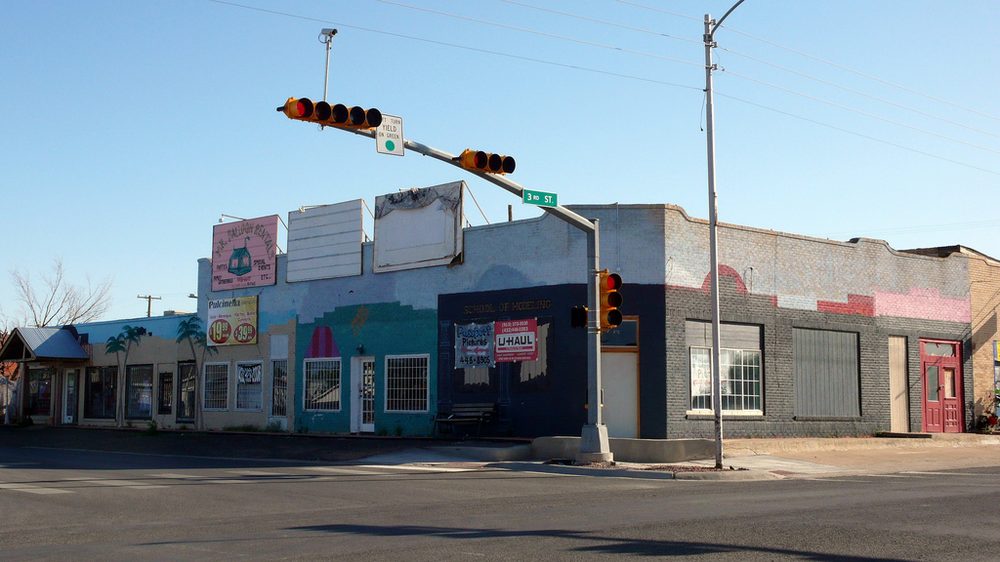
Right where I-20 merges into I-10: Pecos claims to have hosted the world’s first rodeo, on July 4, 1883, a block south of the courthouse. Per the Texas Historical Commission marker on-site (erected 1965), it started as a bragging-rights contest between cowboys from the Lazy Y, NA, and W ranches over who had the fastest steer ropers, with settlers in town for a Fourth of July picnic as the spectators; the prizes were blue ribbons cut with a pocket knife from the new dress of a 4-year-old girl in the crowd. Morg Livingston of the NA ranch won. The annual West of the Pecos Rodeo still runs today, and the West of the Pecos Museum preserves the town’s cowboy and oilfield history downtown. Sources: Wikipedia, Texas State Historical Association, Texas Historical Commission marker #5909.
6. UTEP’s Bhutanese-Style Campus, El Paso, TX
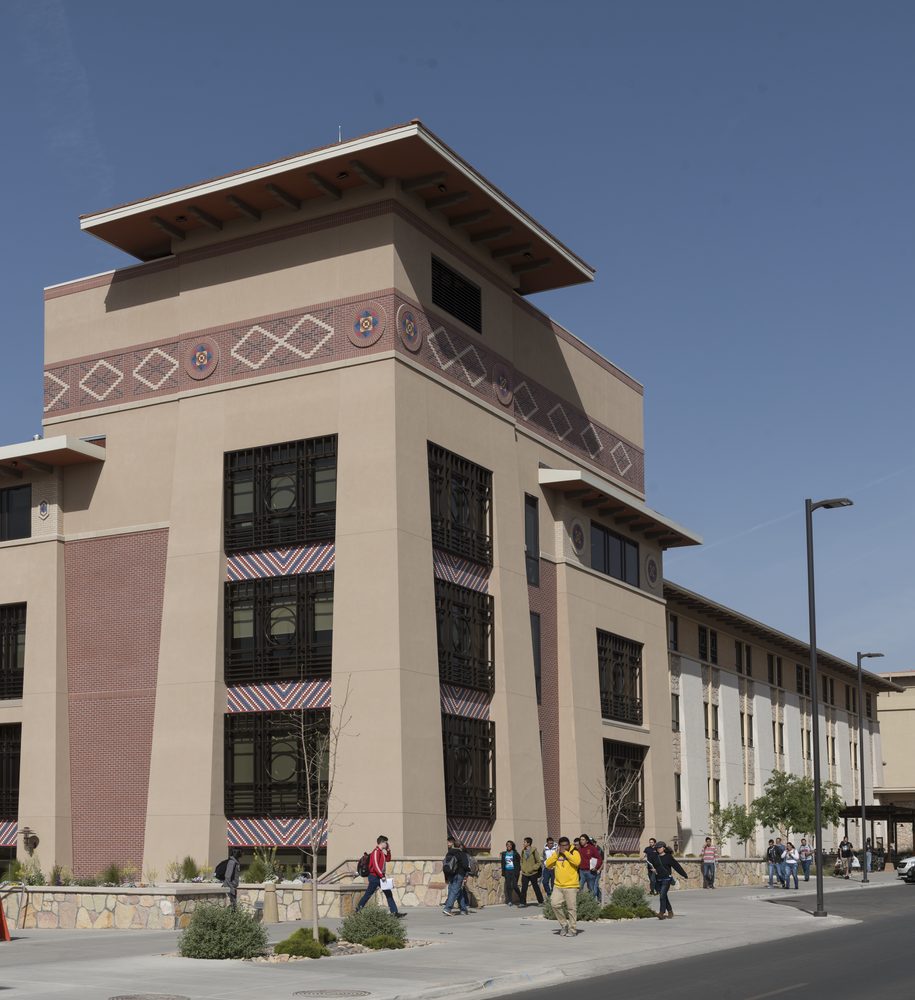
Visible from I-10 as it curves through El Paso: the University of Texas at El Paso built almost its entire campus in the Dzong architectural style native to Bhutan and Tibet, with sloping walls, deep overhanging roofs, and bands of painted decoration. After a 1916 fire destroyed the school’s original buildings, Kathleen Worrell, wife of the school’s first dean, had seen photos of Bhutanese monasteries in an April 1914 issue of National Geographic and noticed how much the terrain resembled the campus’s own mountain backdrop; architect Henry Trost carried the idea through, and every building through 1950 followed suit, including the 52,000-seat Sun Bowl Stadium. Bhutan has embraced the connection back — the kingdom gifted UTEP a hand-carved wooden temple in 2009, and a Bhutanese prince has visited campus. Source: Wikipedia.
5. Speaking Rock Entertainment Center, El Paso, TX
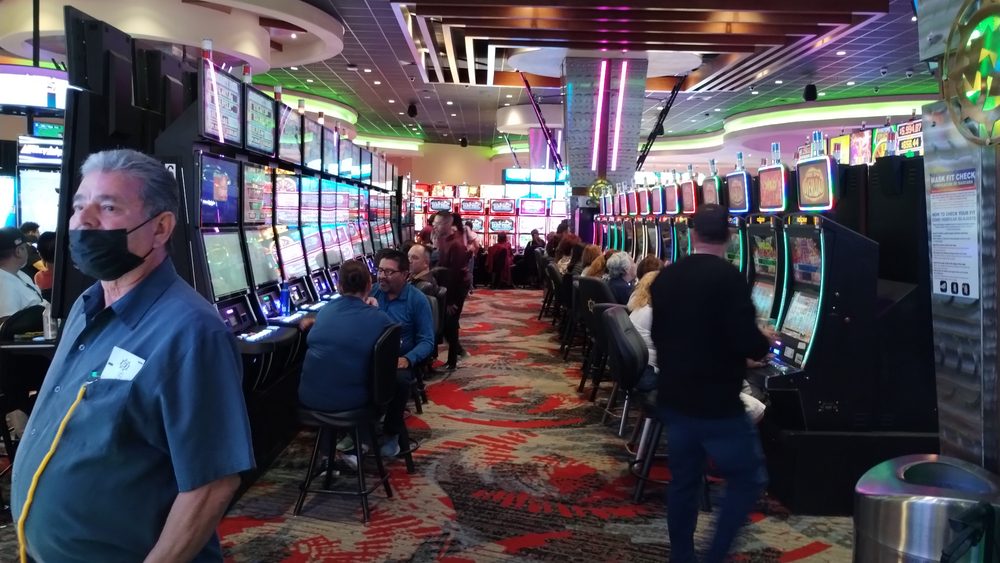
A few minutes off I-10 in the Ysleta area of southeast El Paso: Speaking Rock Entertainment Center is owned and run by the Ysleta del Sur Pueblo, better known as the Tigua tribe, and features live concerts, restaurants, and bars alongside a casino floor with a genuinely tangled legal backstory. The same 1987 federal law that restored the Tigua’s tribal recognition, Public Law 100-89, also specifically barred any gaming activity prohibited under Texas state law — a restriction that shut the tribe’s original casino down in a long legal fight. It wasn’t until 2022 that the tribe secured Class II gaming under that same framework, and the venue formally dropped “Casino” from its name once it reopened. Source: Wikipedia.
4. Old Mesilla Plaza, Mesilla, NM
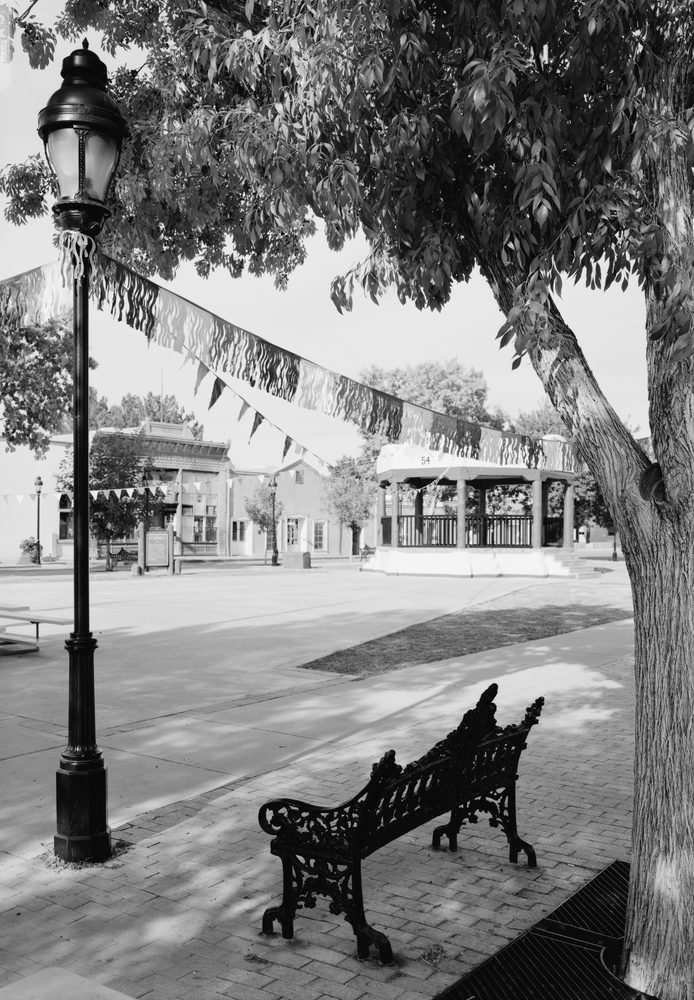
A short detour off I-10 near Las Cruces: Old Mesilla Plaza, a National Historic Landmark since 1961, was briefly the capital of the Confederate Territory of Arizona in 1861–62 and, more famously, the actual site of Billy the Kid’s murder trial in April 1881. He was found guilty of killing Sheriff William Brady — the only conviction ever secured against any combatant in the Lincoln County War — and sentenced to hang by Judge Warren Bristol. Mesilla lost its shot at becoming the region’s dominant city in 1881, when it held out for too much money from the Santa Fe Railway and neighboring Las Cruces gave the railroad free land instead; today Las Cruces has more than 111,000 people and Mesilla has fewer than 1,800. Sources: Wikipedia, Wikipedia.
3. Rex Allen Arizona Cowboy Museum, Willcox, AZ
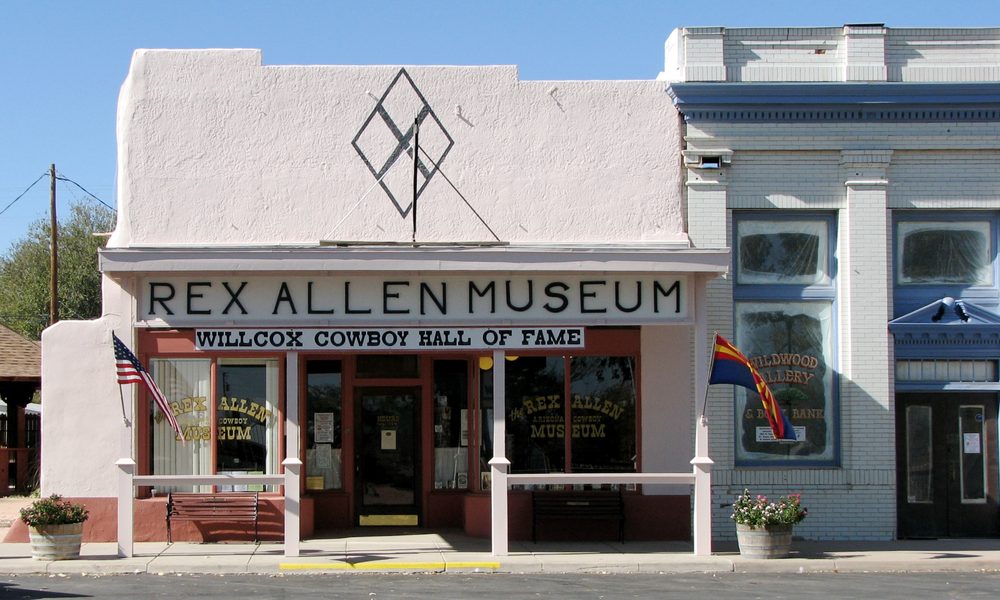
Right on I-10: Willcox is home to the Rex Allen Arizona Cowboy Museum and the Willcox Cowboy Hall of Fame, honoring the town’s most famous native son. Rex Allen was born on a ranch about 40 miles from Willcox, became the last of the singing-cowboy movie stars of the 1950s, later narrated dozens of Disney nature and Western films, and earned a star on the Hollywood Walk of Fame in 1975. Willcox never let him go: after his death in 1999, his ashes were scattered at Railroad Park directly across the street from the museum, next to a bronze statue of him. Source: Wikipedia.
2. The Thing?, Dragoon, AZ
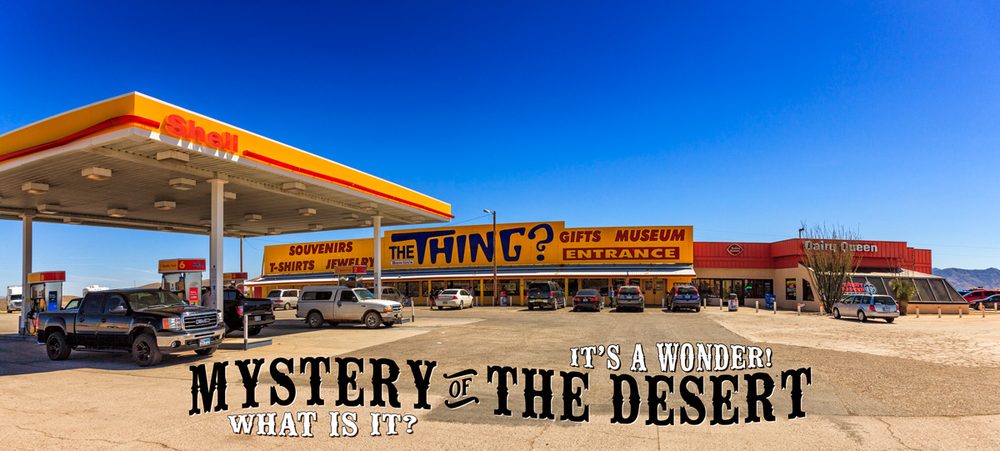
Right at Exit 322 off I-10, between Willcox and Benson: The Thing? is a genuinely bizarre roadside attraction advertised on more than 200 billboards spread across roughly 200 miles of I-10 in both directions, per RoadsideAmerica.com. Sideshow curiosity-maker Homer Tate is believed to have built its centerpiece — a “mummified mother and child” of disputed and murky origin — sometime in the 1950s; lawyer-turned-showman Thomas Binkley Prince bought it and relocated the whole operation from California to this hilltop near Texas Canyon in 1965. The walk to the mummy passes a 1937 Rolls-Royce a sign has at various points claimed belonged to either Winston Churchill or Adolf Hitler, antique firearms, and painted driftwood. It’s $5 to get in, still fully in business today under Bowlin Travel Centers, and got a full renovation with an alien-and-dinosaur theme added in 2018. Source: Wikipedia.
1. Tombstone, AZ
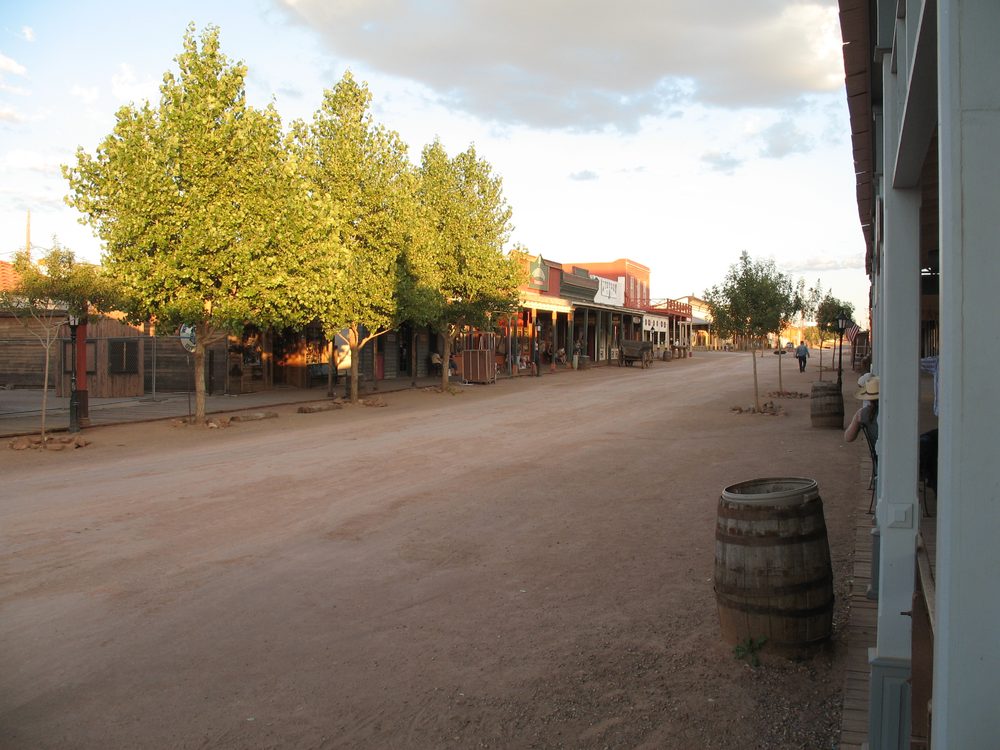
The arrival highlight, about 24 miles south of I-10 via the Benson exit: Tombstone is a real 1879 silver-mining boomtown that leaned all the way into its own legend and became “The Town Too Tough to Die.” It still runs daily re-enactments of the gunfight at the O.K. Corral, a short walk from where Wyatt, Virgil, and Morgan Earp and Doc Holliday actually shot it out with the Clanton-McLaury gang on October 26, 1881 — technically in a vacant lot on Fremont Street, not the corral itself. Three blocks of Allen Street are closed to cars and lined with saloons, gift shops, and the Bird Cage Theatre, which ran 24 hours a day, 7 days a week from December 1881 until 1889 and was once called “the wildest, wickedest night spot” between Basin Street and the Barbary Coast by The New York Times. Source: Wikipedia.
Ten stops, same 1,065 miles — from a downtown full of bronze storybook characters to a Wild West town that still gunfights for tourists every afternoon. Between this list and #112, that’s 17 verified reasons to actually get off I-20 and I-10 on the way to Phoenix.