
I was today days old when I learned that early voting — the thing roughly half the country now treats as the normal way to vote — is a startlingly recent invention. Tomorrow is Election Day for the 2026 midterms, and by the time you read this, millions of people in most states have already cast a ballot at a library, a county office, or a kitchen table. I’d assumed that was just how American elections had always worked, give or take. It isn’t. The first state to let any voter request an absentee ballot without an excuse did it in 1978. The first state to let you physically show up and vote before Election Day did it in the late 1980s. And three states, right now, still don’t offer early in-person voting at all.
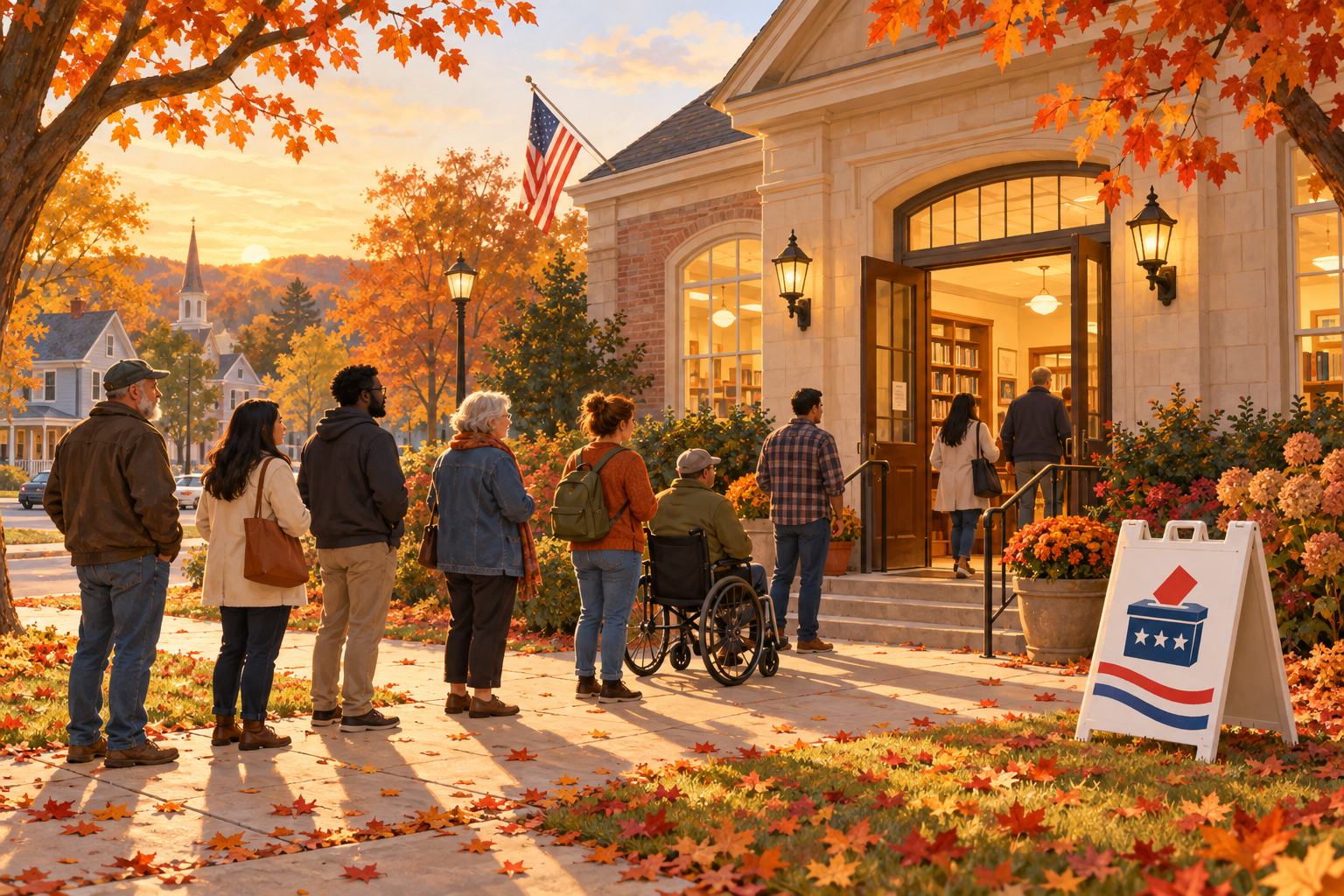
It Started With Soldiers Who Couldn’t Come Home
Absentee voting in the United States got its real start during the Civil War, when states scrambled to let soldiers serving far from home still cast a ballot. The most famous example is the 1864 election, Abraham Lincoln vs. George McClellan, where Union troops in the field voted absentee in large numbers. That’s the origin of the whole concept: not convenience, but wartime necessity, aimed at a very specific group of people with a very specific excuse. Source: Time.
For the next century or so, that’s basically where it stayed. You needed a reason. Louisiana allowed in-person absentee voting as early as 1921, but only for eligible voters who had an excuse, which is a long way from “anyone who feels like it.” Source: AEI.
1978: California Drops the Excuse
The modern era arguably begins in 1978, when California became the first state to let any voter request an absentee ballot with no excuse required. No deployment, no illness, no travel, no explanation. That’s the first time an entire state said, in effect, “you don’t have to justify wanting to vote on a different day.” It’s a small procedural change on paper and a huge one in practice, and it’s within the lifetime of most people reading this. Source: AEI.
Texas Invents the Thing We Actually Call Early Voting
Here’s the part that surprised me most. Mailing in a ballot and walking into a real polling place a week before Election Day are two different things, and the second one didn’t exist until Texas, in the late 1980s, became one of the first states to offer true early in-person voting. Not an absentee ballot you drop in a box, but a poll worker, a booth, and a ballot, days or weeks before the official date. Texas is the birthplace of the thing that now feels like a bedrock feature of American democracy, and it’s younger than the Nintendo Entertainment System. Source: AEI.
Oregon Goes All In on the Mailbox
Oregon took the opposite path and pushed the mail-in idea to its logical end. It ran the first federal primary conducted entirely by mail in 1995, followed by the first mail-only general election in 1996, and then in 2000 became the first all-vote-by-mail state in the country. So the two big models most Americans now recognize, early in-person voting and universal mail voting, each got their start in a single state less than 40 years ago, and one of them hadn’t been tried statewide until this century. Source: Time.
Where Things Stand the Day Before the Midterms
As of now, 47 states plus the District of Columbia, Guam, Puerto Rico, and the U.S. Virgin Islands offer early in-person voting to every voter, no excuse needed. The three holdouts are Alabama, Mississippi, and New Hampshire. To be fair to them, “no early in-person voting” doesn’t mean “no way to vote early at all”: those states may still offer excuse-required absentee voting, which is roughly where the whole country sat a century ago. What they don’t offer is the simple option of showing up at a polling place before Election Day because you’d rather. Sources: NCSL, The Hill.
So if you’ve already voted this cycle, you’ve done something that no American could do anywhere in the country when a lot of today’s voters were born. And if you live in one of those three states, tomorrow is still the day. Either way, the fact that “early voting” went from a Civil War workaround to the default for most of the country in roughly one generation is the kind of thing I wish someone had told me sooner.