
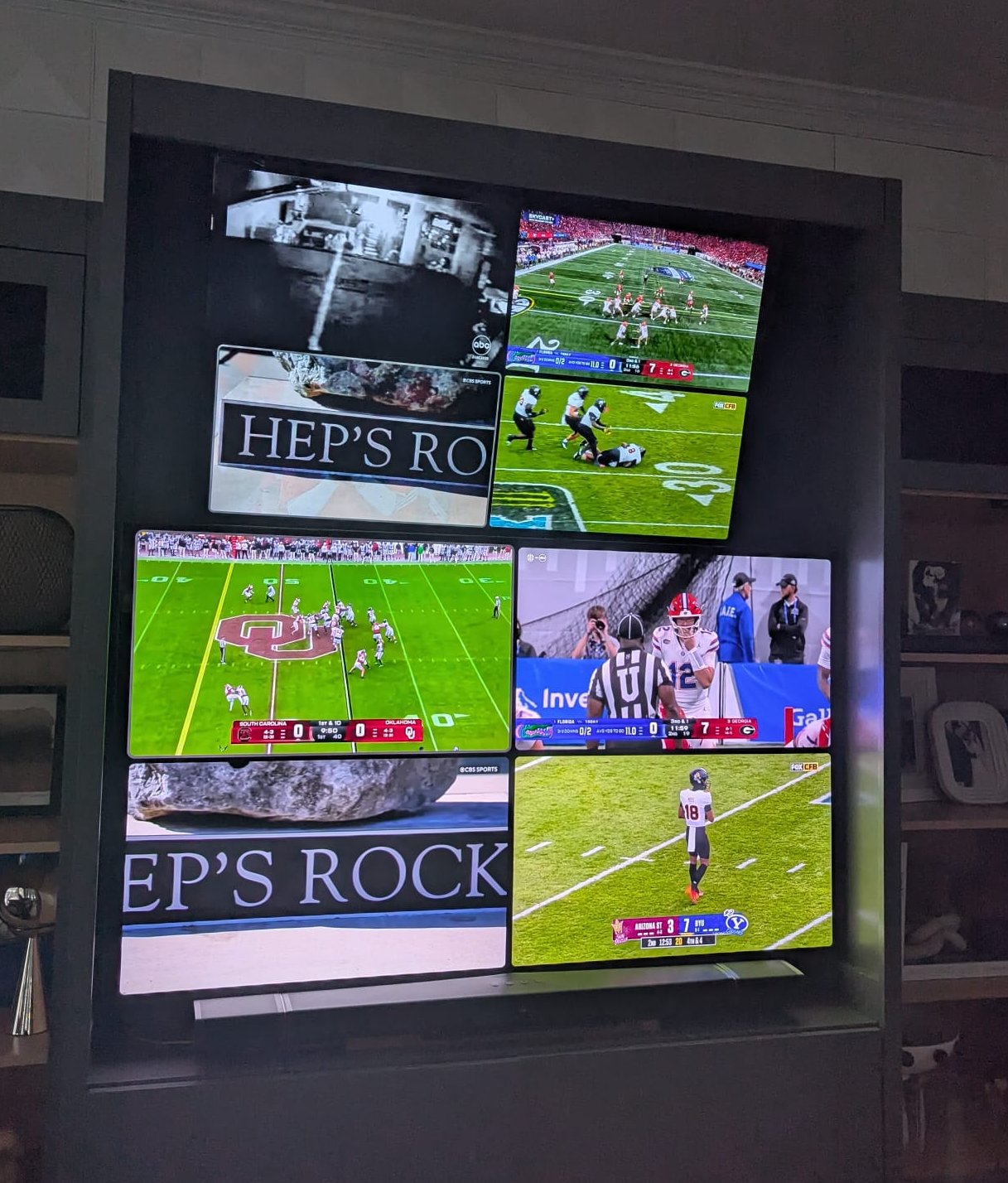
I was today days old when I wondered why “I wish it could just do that” is my default reaction to things I would have called witchcraft at ten years old. I am 62 (born in 1964). I have two televisions showing eight games at the same time. And I am, somehow, mildly annoyed about it.
The four-channel years
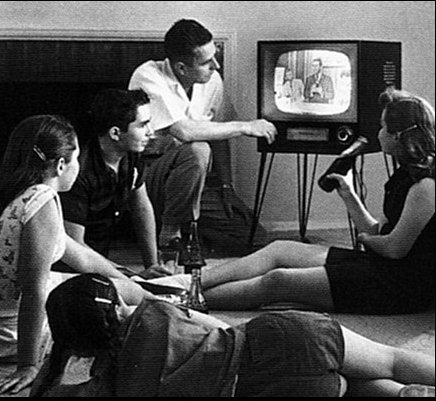
I grew up with a TV that had rabbit ears on top and, by my memory, four or five channels (we lived in a rural area, so that’s the best I can do). That number is mine, not a statistic. My TV memories start in the late 1960s, so everything before that is borrowed. Nobody seems to have a reliable average for the era, but the shape of it checks out:
- The Big Three: NBC, CBS, and ABC, and ABC didn’t really reach parity with the other two until the late 1960s.
- 1952: The FCC defined UHF channels 14 through 83.
- April 30, 1964 (the year I was born): New sets were finally required to include a UHF tuner, under the All-Channel Receiver Act of 1962.
Add a local independent or a UHF station if you were lucky. So “a handful” is the honest description.
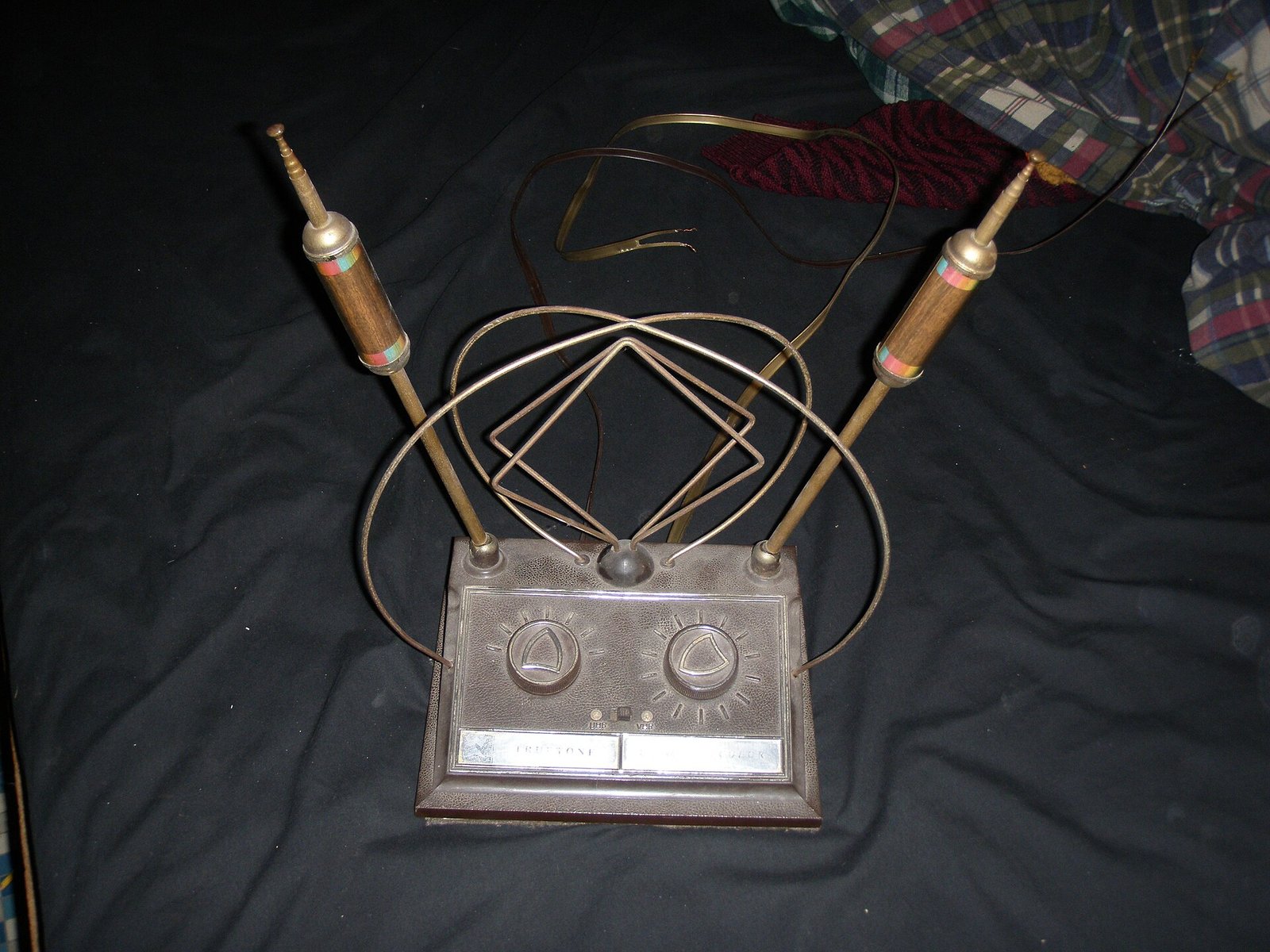
Changing those channels involved a knob, a walk across the room, and, in my house, me. I was my dad’s remote control. I was reliable, low-latency, and free. I was also, I now realize, a product category.
The remote gets invented, slowly
The remote control took a few tries to get right, and the first few were before my time. The short version:
- 1950, Zenith “Lazy Bones”: one of the first, a wired remote on a long cord you could trip over. Zenith’s ad called it “the greatest aid to relaxation and comfort that’s ever happened to television.”
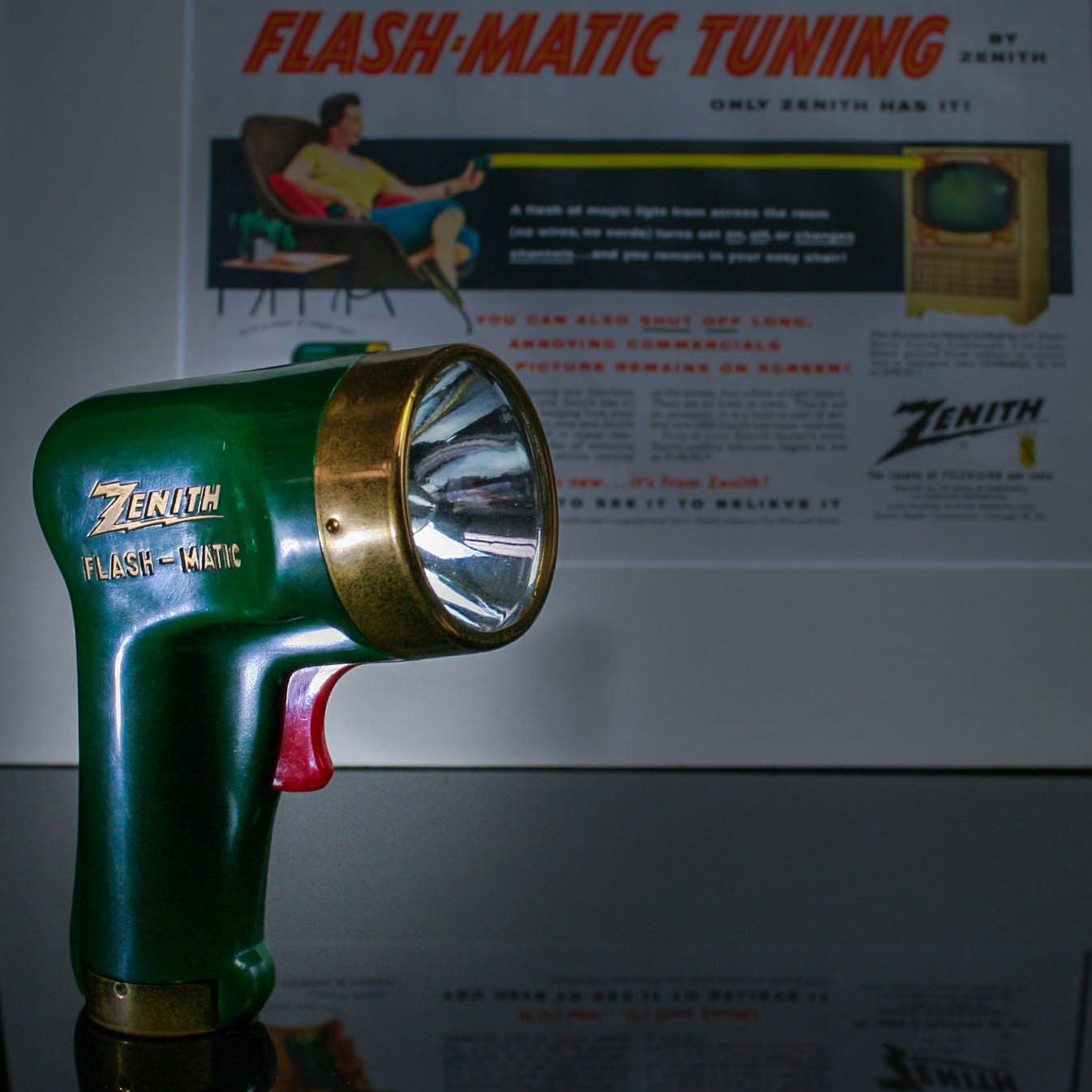
- 1955, Flash-Matic: Eugene Polley’s wireless version, a beam of light aimed at sensors on the set. The sensors couldn’t tell the remote’s light from any other light, which is a problem in a room with windows.
- 1956, Space Command: Robert Adler’s design used ultrasonic tones made by mechanical bars that clicked, which is why some of us still call it “the clicker.”
- 1980s: infrared took over as cable grew, and by the end of the decade more than two-thirds of US households had a remote.
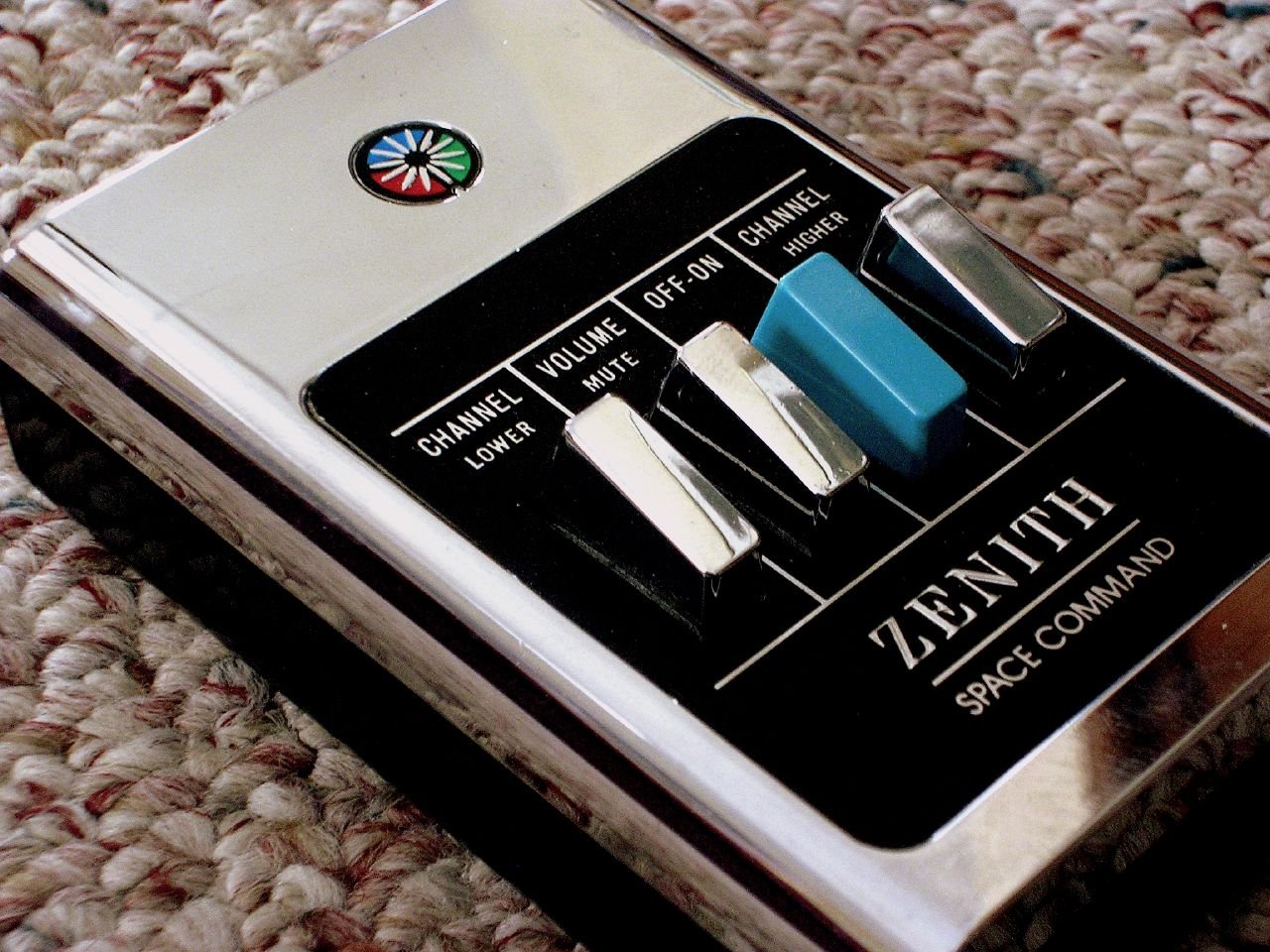
Ultrasonic is a fancy word for high-pitched, and here is the part nobody warned the adults about: as a kid, I could hear it. Every click came with a tiny whine that my parents couldn’t hear and I could. I was, in effect, the only person in the house who knew when the TV was being spoken to.
It also turned out to be a very hackable system. In our house, either me or my brother had a belt, and if you jingled the buckle just right, the channel went up. Zenith had built a remote that listened for exactly the right tone. They had not planned for a boy’s belt buckle.
So within my own lifetime, “not getting up” went from a Zenith marketing promise to a thing nobody thinks about. That’s the pattern I keep noticing. The miracle has a shelf life of roughly one product cycle.
The part I skipped: everything between the clicker and the wall
The remote is the small story. In between, the television itself got reinvented about once a decade, and every miracle wore off right on schedule.
- 1948, roughly: Cable began as community antenna systems, usually credited to John Walson in Mahanoy City, Pennsylvania, though both the date and the claimant are disputed; by the early 1990s about 60% of US households had it.
- 1953: After a false start with CBS’s 1950 color system, which didn’t work on black-and-white sets, the FCC approved the compatible RCA-based NTSC standard on December 17, 1953; RCA’s 15-inch CT-100 went on sale in 1954, and color didn’t pass half of US homes until about 1972.
- 1975: Sony’s Betamax, then JVC’s VHS in 1976; Universal and Disney sued Sony, and on January 17, 1984 the Supreme Court ruled 5-4 that taping a show to watch later is fair use.
- 1994: DirecTV launched June 17, billed as the first all-digital direct-to-home service (depending on how you count “first”), up to 75 channels from $21.95 a month.
- 1998: The first national HD broadcast was John Glenn’s shuttle launch on October 29; full-power analog broadcasting shut off June 12, 2009.
- 1999: TiVo shipped March 31, 14 hours of storage for $499, and the DVR was born. (at the time in my opinion, the second best purchase ever, second only to the engagement ring for my wife — later potentially surpassed by tankless water heater and BioBidet)
- 2007: Netflix began streaming in January with about 1,000 titles (versus about 70,000 on DVD).
- 2017: YouTube TV went live April 5, in five cities at $35 a month.
And somewhere in there the picture tube died. As late as 2004 it still had over 90% of worldwide TV shipments; by the last quarter of 2007, LCD had edged past it, 47% to 46%, per DisplaySearch.
Some of the credit goes to a British radar lab. Cyril Hilsum, a senior scientist at the Royal Radar Establishment in Malvern, didn’t invent the LCD, and it was chemists at the University of Hull who made the molecule that rescued it, but he helped set up and lead the program that sent them looking. Radar wanted a thin, low-voltage screen; picture tubes needed high voltage and a lot of room. In his own telling, the color-TV story above gave it a shove, and the rest went like this:
- 1967: A minister learned that Britain’s royalties to RCA for its color tube cost more than Concorde.
- Early days: The early liquid crystals were unstable.
- 1972: The Hull team found a stable one, 5CB.
- 1973: A stable mixture, E7, which Hilsum said “could be said to be the saviour of the LC industry.”
He died in September at 101, with more than 70 patents to his name, the last earned at 97. The story behind the story is on our sister site: our obituary of Cyril Hilsum.
Every item on that list was the thing for about a season, and then it was just the TV, which brings me, a little sheepishly, to the eight games.
Eight games at once
Today I have two TVs. One runs DirecTV, the other runs YouTube TV. Each can show four live streams at once, which means I can have eight games going. Kid me, the human remote, would not have believed this.
This is also fairly new:
- March 14, 2023: YouTube TV launched multiview in early access, up to four streams at once, with pre-selected combos and custom selection “planned for later.”
- April 2026: YouTube TV added a customizable “multiview builder” that lets you mix channels across packages, including NFL Sunday Ticket, live content only.
- DirecTV, already: Preset quad-screen “Mix Channels” like Sports Mix 920.
- October 14, 2026: DirecTV launched a build-your-own multiview on its streaming service for Gemini and Roku: two-, three-, or four-view, limited to sports networks, with other devices “coming later.”
The painful part
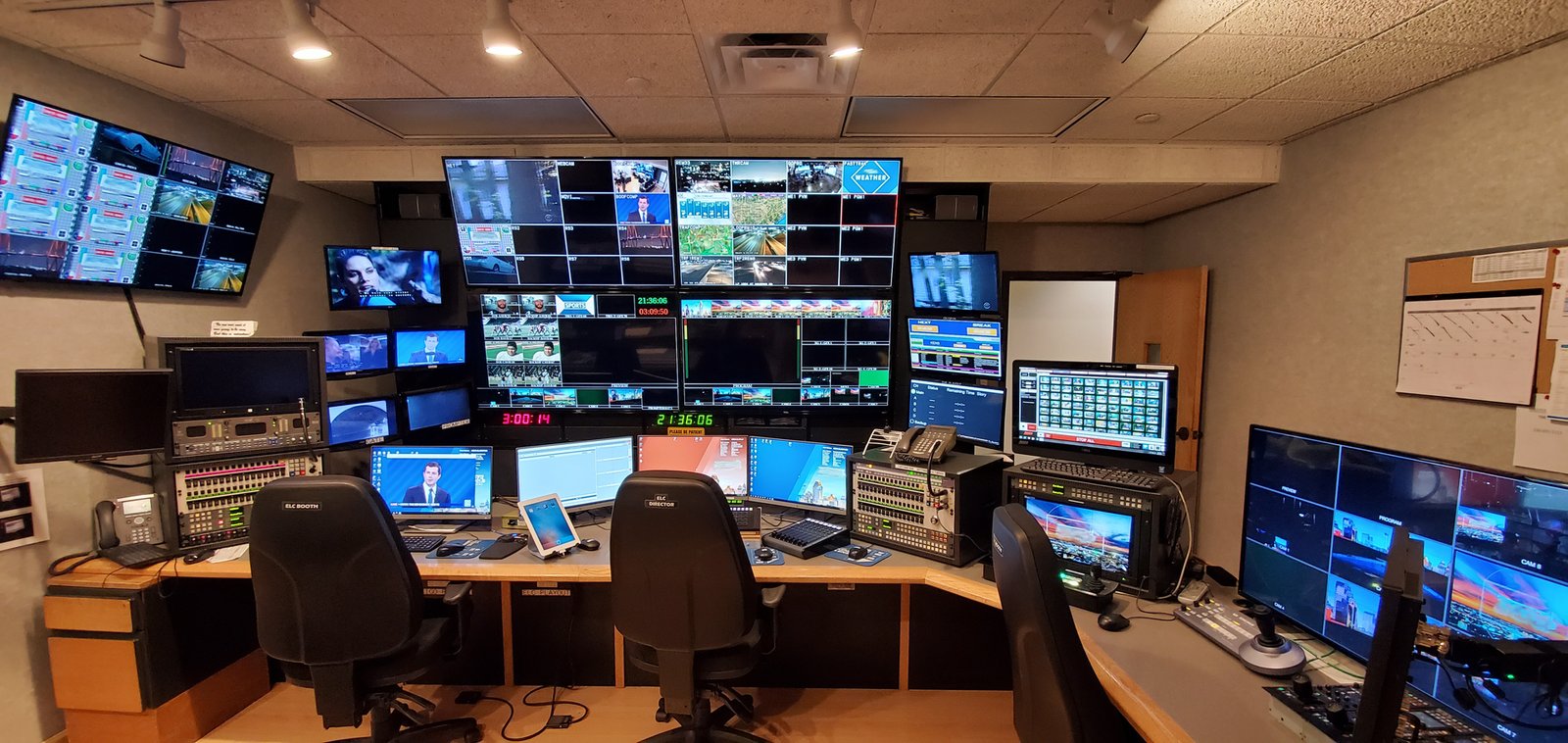
Here is the complaint, and I am aware it’s a ridiculous one. Getting the exact four games I want onto the exact four quadrants of each screen is real remote-control work. Open the multiview, add a channel, scroll for the next one, repeat, four quadrants per screen, two screens.
What I actually want is to say out loud, to Alexa or whatever is listening, “TV 1, put these four games,” and have it happen. As far as I can tell, that doesn’t exist. None of the multiview announcements I found mention voice control at all, and the closest thing I could dig up is Alexa control for DirecTV Genie boxes, which handles channel changes and playback, not building a four-game layout (2018). So this is my wish, not a documented product gap. Someone at a streaming company may be reading this and laughing.
The treadmill
Psychologists have a name for the thing I’m doing. In 1971, Brickman and Campbell coined the “hedonic treadmill”: the idea that people tend to drift back to a fairly stable happiness baseline after good or bad events. It’s not settled science. Diener, Lucas, and Scollon argued in 2006 that set points vary between people and that we aren’t fully neutral. But “tends to” is enough to explain me. Eight games was astonishing, and then it was just the setup.
There’s an older phrase for it too, “the revolution of rising expectations,” usually credited to Harlan Cleveland around 1949 or 1950, though the attribution is a little fuzzy. Either way, the point stands: the moment a thing works, the next thing becomes the thing.
So here’s the wondering
I went from being the remote, to holding the remote, to wishing the remote would just listen to me. Every step was amazing for a while and then it was normal. I’m genuinely not complaining; I know exactly how spoiled this sounds, and I’m going to go watch eight games anyway.
But I can’t tell which of these is true. Is there a point where it’s finally enough and the expectations stop? Or is “I wish it could just do that” the permanent human setting, and the only thing that ever changes is what “that” is?
Sources
- Slate, “The History of the Remote Control”: slate.com
- Wikipedia, Remote control: en.wikipedia.org
- Wikipedia, Television in the United States: en.wikipedia.org
- Wikipedia, UHF television broadcasting: en.wikipedia.org
- YouTube Official Blog, “Multiview on YouTube TV” (March 14, 2023): blog.youtube
- Engadget, “YouTube TV gets a fully customizable multiview feature” (April 29, 2026): engadget.com
- Light Reading, “DirecTV launches multi-view Mix Channels”: lightreading.com
- TVTechnology, “DirecTV launches build-your-own multiview” (Oct 14, 2026): tvtechnology.com
- Engadget, Alexa voice control for DirecTV (2018): engadget.com
- Wikipedia, Hedonic treadmill: en.wikipedia.org
- encyclopedia.com, “Revolution of rising expectations”: encyclopedia.com
- Wikipedia, NTSC: en.wikipedia.org
- TV Obscurities, color TV households: tvobscurities.com
- Wikipedia, John Walson (cable origins): en.wikipedia.org
- Wikipedia, Cable television in the United States: en.wikipedia.org
- Wikipedia, Sony Corp. of America v. Universal City Studios: en.wikipedia.org
- Wikipedia, DirecTV: en.wikipedia.org
- Wikipedia, High-definition television in the United States: en.wikipedia.org
- Wikipedia, Digital television transition in the United States: en.wikipedia.org
- IEEE Spectrum, TiVo: spectrum.ieee.org
- Wikipedia, Timeline of Netflix: en.wikipedia.org
- TechCrunch, YouTube TV in five cities (April 5, 2017): techcrunch.com
- HDTV Magazine, Q4 2007 LCD TV shipments (DisplaySearch): hdtvmagazine.com
- Electronic Design, LCD TVs get ready to take over: electronicdesign.com
- TheLastHeadline, Cyril Hilsum: thelastheadline.com