I’ve been a genuine James Franco fan for a long time — not just the Spider-Man and Pineapple Express version, the whole range of it, including the weirder swings most casual fans never clocked. I’ve never actually laid the whole career out in order before, so this is that: three acts, in chronological order. Act one is the range he actually has. Act two is what actually happened in 2018, handled as factually and carefully as I can manage, with everything sourced. Act three is where things stand in 2026, a quiet comeback that’s still very much in progress. One section is my own opinion and I’ve flagged it as exactly that.
Act One: The Range
Before any of the rest of this, there’s a genuinely wide, genuinely good body of work here — a breakout ensemble comedy, a blockbuster franchise, a decade-plus stoner-comedy run with the same circle of friends, and, in the middle of all of it, an Academy Award nomination.
Freaks and Geeks (NBC, 1999–2000)
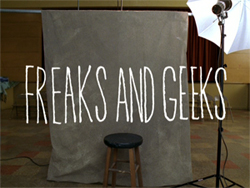
Franco’s breakout role was Daniel Desario on Paul Feig and Judd Apatow’s single-season NBC series, a burnout with more going on underneath than the archetype suggested. The show lasted only 18 episodes and got canceled after weak ratings, but it became a genuine cult classic in the years after, and its cast — Franco, Seth Rogen, Jason Segel, Linda Cardellini, John Francis Daley, Busy Philipps, Martin Starr — kept working together for the next two decades. Source: Wikipedia, Freaks and Geeks.
Spider-Man Trilogy (2002–2007)
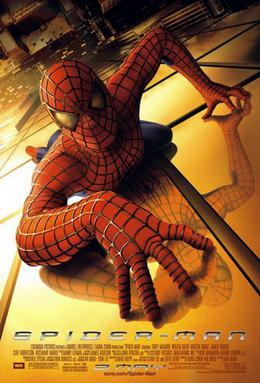
Sam Raimi’s trilogy made Franco a genuine mainstream name, playing Harry Osborn opposite Tobey Maguire’s Peter Parker across all three films — a friendship that curdles across the series and turns Harry into the New Goblin by the third installment. It’s the version of Franco most casual moviegoers still picture first, even though it’s only one register of what he’s actually done. Source: Wikipedia, James Franco.
Pineapple Express (2008)
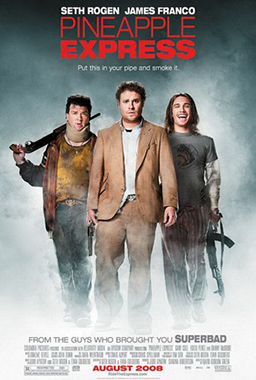
Directed by David Gordon Green and produced by Judd Apatow, this is where the Freaks and Geeks circle reconvened for the first time as adults, with Franco playing genial, none-too-bright drug dealer Saul Silver opposite Seth Rogen — the film that kicked off Franco and Rogen’s long stoner-comedy stretch together. Source: Wikipedia, James Franco.
General Hospital (ABC, 2009–2012)
By 2009, Franco was already an established film actor, which makes what he did next a genuinely odd move for someone at his level: he sought out a recurring role on ABC’s daytime soap General Hospital, playing “Franco,” an artist and serial killer, partly as research for one of his own film and art projects. It’s the kind of artsy, self-directed detour that’s easy to forget sits in the same filmography as a Spider-Man trilogy. Source: Wikipedia, James Franco.
127 Hours (2010) — the Career Peak
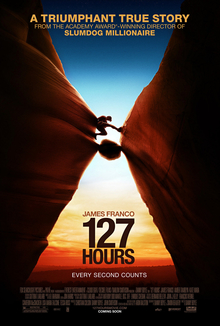
Directed by Danny Boyle, 127 Hours is based on the true story of hiker Aron Ralston, who amputated his own arm to survive after being trapped by a boulder in a Utah canyon for five days. Franco carried nearly the entire film alone and earned an Academy Award nomination for Best Actor for it — the high point of his career by any conventional measure. Source: Wikipedia, James Franco.
The detail that still gets me every time I think about it: Franco co-hosted that same year’s Academy Awards ceremony, alongside Anne Hathaway, while he was sitting in the audience as an actual Best Actor nominee. Very few people have ever been asked to run the show and compete for its biggest prize on the same night.
This Is the End (2013)
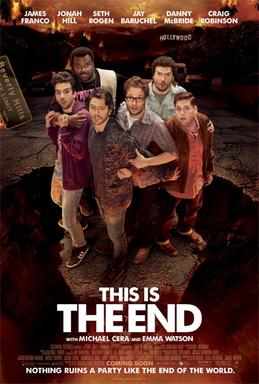
Directed by Seth Rogen and Evan Goldberg, this apocalyptic ensemble comedy has Franco, Rogen, Jonah Hill, Jay Baruchel, Craig Robinson, and Danny McBride all playing exaggerated versions of themselves, trapped together at Franco’s own house party while the actual end of the world unfolds outside. It’s the fullest expression of the Apatow/Rogen circle that started with Freaks and Geeks fourteen years earlier. Source: Wikipedia, James Franco.
11.22.63 (Hulu, 2016) — My Least Favorite of His Performances
Based on Stephen King’s novel about a teacher who travels back in time to try to stop the Kennedy assassination, this one is a personal opinion rather than any kind of consensus claim: it just didn’t work for me. Franco is fine in it, the production is polished, and plenty of people genuinely like it — it simply landed as my own least favorite of his performances, for whatever that’s worth.
The Deuce (HBO, 2017–2019)
Created by David Simon and George Pelecanos, The Deuce is set amid the rise of the porn industry in 1970s Times Square, and Franco plays dual roles — twin brothers Vincent and Frankie Martino — letting him carry both the grounded, responsible half of the story and its chaotic, wildcard half inside a single show. It was widely praised, and it’s one of the clearest showcases of his range as a straight dramatic actor. Source: Wikipedia, James Franco.
The Disaster Artist (2017) — a Golden Globe, and the Same Night Everything Changed
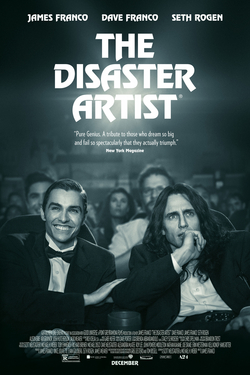
Franco directed and starred as Tommy Wiseau in this dramatization of the making of Wiseau’s notorious cult film The Room, and won the Golden Globe for Best Actor in a Musical or Comedy for it at the January 7, 2018 ceremony — walking the red carpet that night wearing a Time’s Up pin. Source: Wikipedia, James Franco.
That detail isn’t incidental. It's the exact hinge this whole story turns on, which is where act two picks up.
Act Two: What Actually Happened
This part isn’t a hit piece and it isn’t a defense. It’s what’s actually documented, as plainly as I can lay it out.
Days after that Golden Globes win, in January 2018, five women — four of them former students — publicly accused Franco of inappropriate and sexually exploitative behavior at Studio 4, the acting school he ran from 2014 to 2017. The allegations centered on Franco and the school pressuring students into nude scenes without following standard industry safety protocols. Source: Newsweek, James Franco sexual misconduct allegations explained.
The timing was, and still is, a stark irony that was widely noted at the time: the allegations broke almost immediately after Franco won a Golden Globe while wearing a Time’s Up pin on the red carpet, the same movement built specifically to confront exactly this kind of behavior in the industry. Source: Wikipedia, James Franco.
In October 2019, two of the women filed a lawsuit alleging sexual exploitation and fraud. It was settled in February 2021 for $2.235 million total — $894,000 to the named plaintiffs, with the remaining $1,341,000 allocated to a broader fund for other individuals affected by the school’s practices. Franco settled without admitting wrongdoing, and he has continued to deny the allegations. Source: ABC News, James Franco to pay $2.235 million.
He kept working through this period — including filming The Deuce’s second season amid the allegations — but mainstream studio opportunities largely dried up for years afterward.
Act Three: The 2026 Comeback
This year is the first real sign of things moving again, even if it’s been slow and mostly quiet.
Hey Joe Premiere (March 2026)
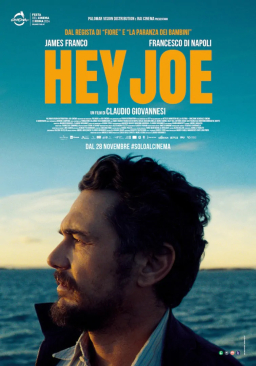
Franco starred in Hey Joe, an Italian drama directed by Claudio Giovannesi, and made a rare public appearance at its March 2026 premiere — notable mostly because public appearances from him at all had become genuinely uncommon by this point. Source: Just Jared, James Franco makes rare public appearance for Hey Joe premiere.
Cannes, for Foster (May 2026)
In May 2026, Franco appeared at the Cannes Film Festival for Foster, an action thriller and his first major studio film since the fallout began. No poster or key art has been released publicly yet, so there’s no image to include here, but the Cannes appearance itself is the more significant marker: a real studio picture, at a major festival, after years without one. Sources: The Hollywood Reporter, James Franco Cannes Foster, Deadline, James Franco first studio film.
What's Next: Toad and The Razor's Edge
Beyond Foster, Franco has two more projects lined up: Toad and The Razor’s Edge. Neither has released any poster or promotional art as of this writing, so there’s nothing to show here yet, but both point toward a genuinely active slate rather than a one-off appearance.
Seth Rogen, June 2026
The clearest marker of how much has actually changed: in June 2026, longtime friend and former collaborator Seth Rogen told the New York Times he hasn’t spoken to Franco in a “long time” and has “no plans” to work with him again. This is the same Seth Rogen from Freaks and Geeks, Pineapple Express, and This Is the End — a friendship and creative partnership that ran for close to two decades before it apparently just stopped. Source: Variety, Seth Rogen no plans to work with James Franco.
That's the whole arc as I understand it, in order: a genuinely wide range of work, an Oscar nomination at the actual peak of it, a Golden Globe win the same week everything changed, a documented settlement he still disputes, and a 2026 comeback that's real but clearly still finding its footing — including with the people who used to be closest to him.