
I was today days old when I realized how often powerful men do this. It hit me again this week, when Nvidia's Jensen Huang resigned as CEO on Nov. 12 after admitting an affair. Different man, different industry, and my first thought was still: oh, this again.
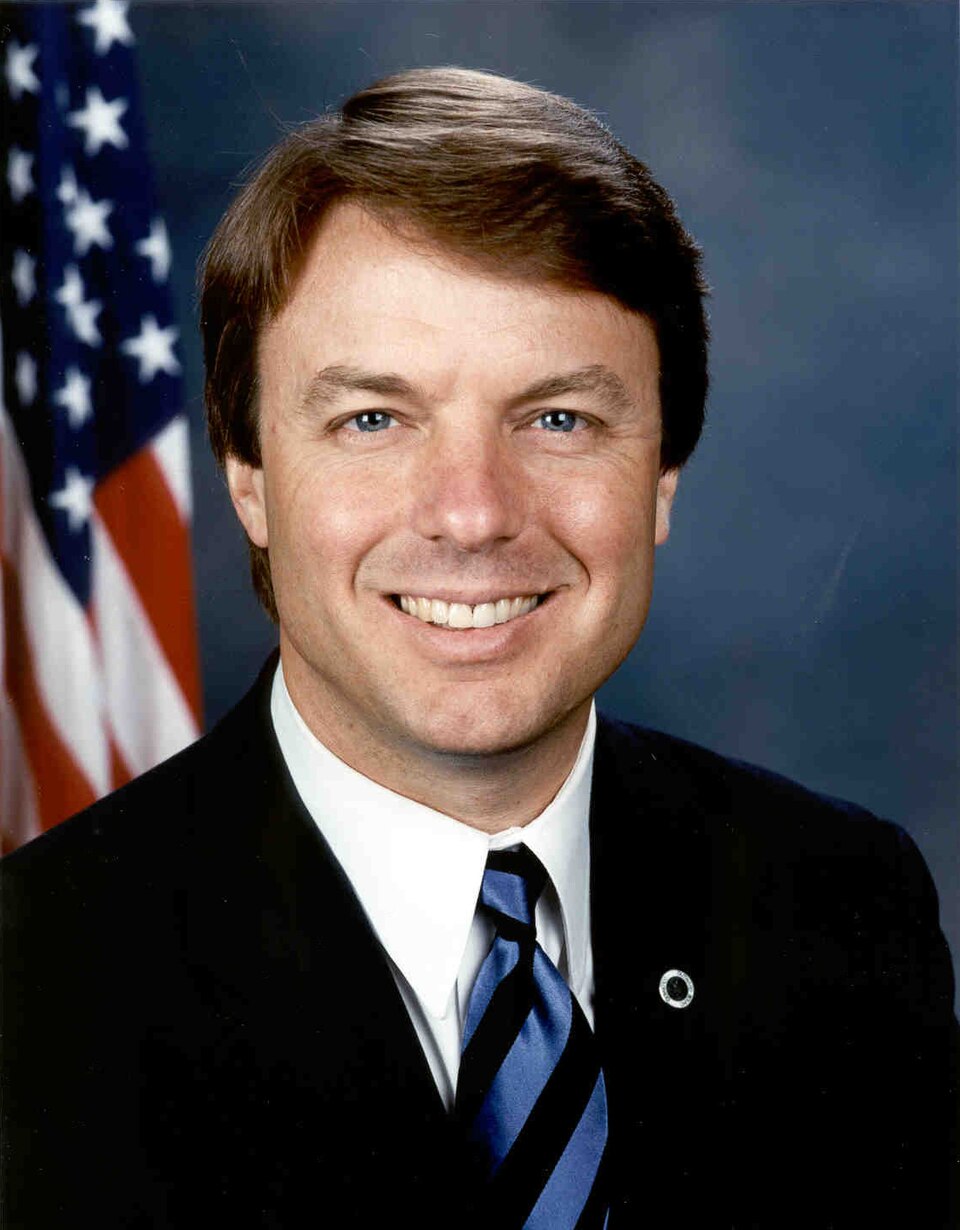
For me, "this" has a face, and it belongs to John Edwards. I was a supporter. I voted for him. I believed he had a huge future, and I mean the Oval Office kind. So this one is personal, and I have wanted to lay the whole thing out in order for a long time. I'll try to be fair to him. He did not always make that easy.
Before: The Rise
The biography was half the appeal. Edwards was born in Seneca, South Carolina, in 1953, grew up in Robbins, North Carolina, and was the first person in his family to go to college. He studied textiles at NC State, got a law degree at UNC, and became one of the most successful trial lawyers in the state. Sources: Wikipedia, Britannica.
The résumé that made people like me pay attention:
- 1984: won a $3.7 million malpractice verdict (New York Times, 2004)
- 1996: his son Wade died in a car accident at 16 (AP via MPR)
- 1997: won a $25 million verdict against Sta-Rite, then the largest personal-injury award in North Carolina history (WRAL)
- 1998: in his first run for office, beat Republican Sen. Lauch Faircloth, about 51.2% to 47.0% (official tally)
- July 6, 2004: John Kerry named him his running mate, six years after that first campaign (PBS NewsHour)
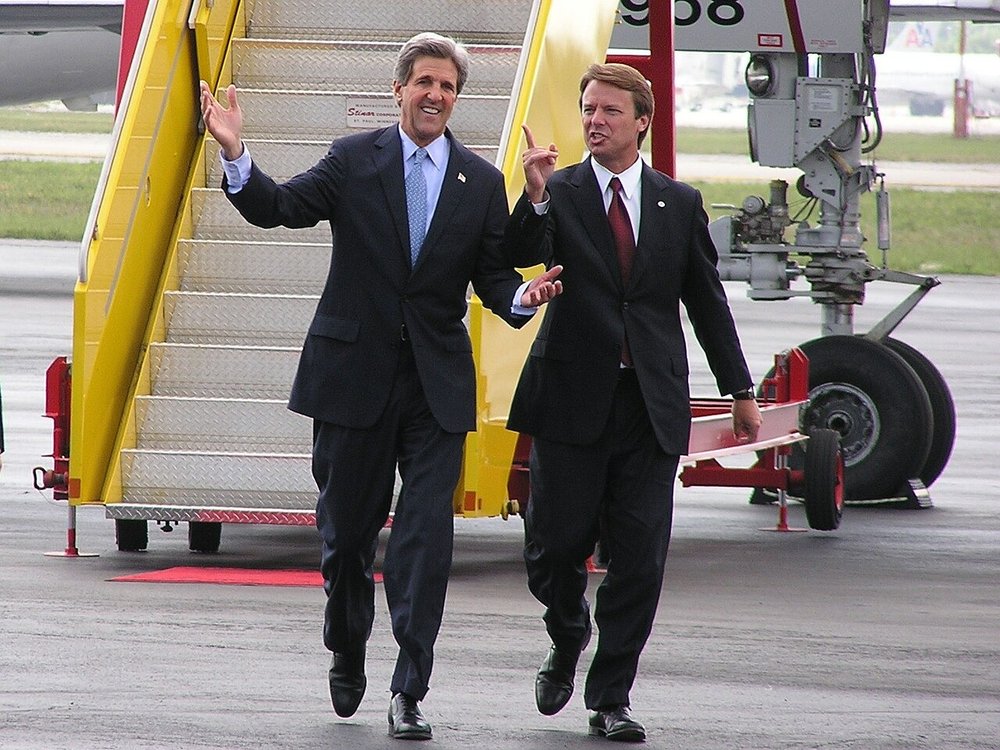
Kerry and Edwards lost to Bush and Cheney. On Nov. 3, 2004, the day her husband conceded the vice presidency, Elizabeth Edwards was diagnosed with breast cancer. The family announced it the next day. Sources: Wikipedia, Lawrence Journal-World, Nov. 5, 2004.
What People Expected
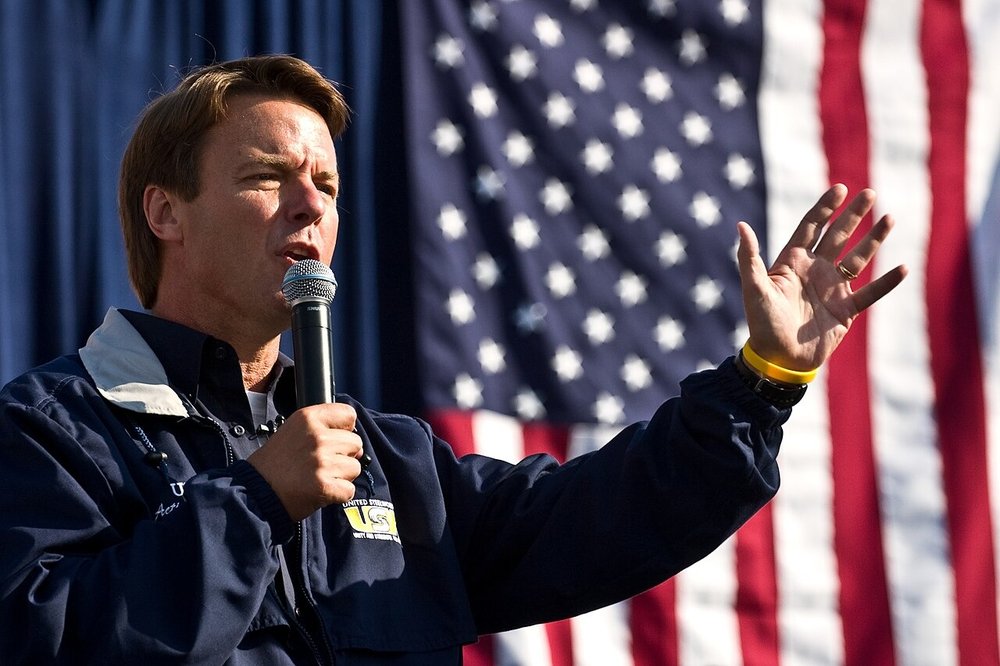
He came back in late December 2006, announcing a second presidential run from a yard in New Orleans that was being rebuilt after Katrina. The message was "Two Americas": one for the wealthy and privileged, one for everybody else. The platform was ending poverty, universal health care, global warming and getting out of Iraq. Sources: Wikipedia, NPR.
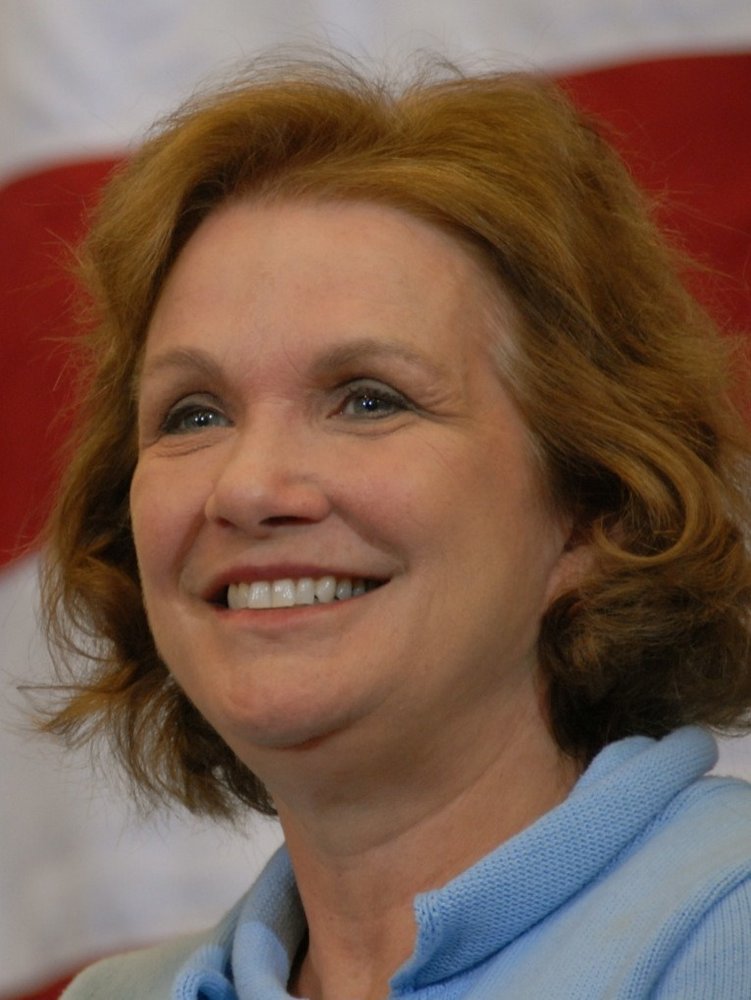
Elizabeth was a big part of why people believed in it. She was one of his closest advisers (Fox News obituary) and a bestselling author (AP via MPR), and on March 22, 2007, the two of them stood together to announce that her cancer had returned at stage IV. He said it was "no longer curable" but "completely treatable," and that the campaign would go on. Sources: NPR, WRAL.
I owe you some honesty about my own optimism here. He was never the frontrunner. From January 2007, national polls had him third behind Hillary Clinton and Barack Obama, and an October 2007 National Journal piece called him a distant third nationally and tied for second in Iowa. (The Des Moines Register poll that month, as reported by NPR, had Clinton at 29%, Edwards at 23% and Obama at 22%.) But he had raised $23 million from nearly 100,000 donors by that July (ABC News), and on Jan. 3, 2008, he finished second in the Iowa caucuses with 29.75%, a hair ahead of Clinton. If you squinted, as I did, you could see a path.
The Affair
By Edwards' own later account, the affair happened in 2006. Per Wikipedia's account, Rielle Hunter met him at a New York City bar and pitched a series of behind-the-scenes campaign "webisodes." Her company was hired to make them and was paid more than $100,000.
On Oct. 10, 2007, the National Enquirer reported that Edwards had an affair with a former campaign staffer it did not name. The next day, campaigning in Summerton, South Carolina, he answered in four words: "The story is false." In December the Enquirer ran a photo of a pregnant Hunter. Sources: ABC News timeline, the 2011 federal indictment (which dates the first article to Oct. 10, 2007).
Edwards suspended his campaign on Jan. 30, 2008. Hunter's daughter, Frances Quinn Hunter, was born four weeks later in Santa Barbara, California, with no father named on the birth certificate. Sources: AP via MPR, AP via Spokesman-Review.
Then came the Beverly Hilton. In July 2008 the Enquirer reported that Edwards had visited Hunter at the hotel late at night. A security guard told Fox News he found a shaken Edwards in a men's room after 2 a.m. with reporters waiting outside. Fox could not independently confirm the tabloid's full account, but Edwards later acknowledged the Enquirer was right that he had met her there.
On Aug. 8, 2008, he went on ABC's "Nightline" and admitted the affair. "I made a very serious mistake," he said. "A mistake that I am responsible for and no one else." He also denied being the father of Hunter's child and offered to take a paternity test. That part did not hold up.
The Cover-Up
The affair cost him his reputation. The cover-up nearly cost him his freedom.
A campaign aide, Andrew Young, had publicly claimed he was the baby's father. Young later wrote in his 2010 book "The Politician" that Edwards knew the child was his, asked Young to take responsibility, and even asked him to help fake a paternity test. Those are Young's allegations, from a book he was paid for, and I am passing them along as exactly that. (They were widely reported at the time, for instance by ABC News, and prosecutors later made the same paternity claim in the indictment.)
The money is better documented. Per AP trial coverage and the federal indictment:
- Rachel "Bunny" Mellon, a philanthropist then in her late 90s, gave about $725,000, in seven checks written between June 2007 and January 2008
- According to the indictment, several of her checks listed furniture on the memo line ("chairs," "antique Charleston table," "book case") to hide what the money was for
- Fred Baron, a Dallas trial lawyer and Edwards' finance chairman, gave Hunter a $9,000 monthly cash allowance
- Baron also paid for a $20,000-a-month manor in Santa Barbara
- In all, about $1 million went to Young and Hunter (AP via Christian Science Monitor)
- The legal limit on a campaign donation at the time: $2,300
Baron said in August 2008 that he had helped Hunter and Young without Edwards' knowledge and without campaign money. He died of cancer that October, at 61. Whether Edwards knew about the money was the question a jury would later be unable to answer.
On Jan. 21, 2010, less than two weeks before Young's book was due out, Edwards finally admitted he was Frances Quinn's father. Sources: WRAL, NBC News.
Timeline of the Fall
- Late December 2006: announces his 2008 presidential run in New Orleans
- March 22, 2007: John and Elizabeth Edwards announce her cancer has returned; the campaign continues
- June 2007: the Mellon checks begin
- Oct. 10-11, 2007: the Enquirer reports an affair; Edwards says "The story is false"
- Dec. 19, 2007: the Enquirer publishes a photo of a pregnant Rielle Hunter
- Jan. 3, 2008: finishes second in Iowa
- Jan. 30, 2008: suspends his campaign
- Feb. 27, 2008: Frances Quinn Hunter is born
- July 2008: the Beverly Hilton encounter
- Aug. 8, 2008: admits the affair on "Nightline," denies paternity
- Early 2009: a federal investigation gets under way
- Jan. 21, 2010: admits paternity
- Jan. 27, 2010: news breaks that John and Elizabeth have legally separated
- Dec. 7, 2010: Elizabeth Edwards dies at 61
- June 3, 2011: indicted on six felony counts
- July 21, 2011: the FEC rules his campaign must repay more than $2 million in matching funds
- April 23, 2012: trial begins
- May 31, 2012: acquitted on one count, mistrial on five
- June 13, 2012: the Justice Department drops the case
The Trial
The indictment had six counts: four of accepting illegal campaign contributions, one of conspiracy and one of making false statements. In other words, the charges treated the money as illegal campaign contributions. Edwards pleaded not guilty and said, "There's no question that I've done wrong ... But I did not break the law." Sources: the indictment, AP via Fox News.
That was the whole case in one sentence. By then the affair and the lying were public record. What was left to argue was whether money spent hiding a mistress counts as a campaign contribution.
Prosecutor Bobby Higdon told jurors that "John Edwards forgot his own rhetoric," a jab at the Two Americas candidate. Defense lawyer Abbe Lowell answered: "John Edwards has confessed his sins. He will serve a life sentence for those." Second source for both lines: ABC7's closing-arguments report.
After nine days of deliberations, the jury found him not guilty on one count, the one covering Mellon's money in 2008, and deadlocked on the other five (NPR). Two weeks later the Justice Department declined to try again (NPR). "Last month, the government put forward its best case against Mr. Edwards," Assistant Attorney General Lanny Breuer said. He was never convicted of anything.
Aftermath: Where He Is Now
Elizabeth did not live to see the trial. She separated from him after the paternity admission and died at home in Chapel Hill on Dec. 7, 2010. More than 1,000 people came to her funeral in Raleigh. Sources: PBS NewsHour, Wikipedia, WRAL obituary, ABC News on the separation, WRAL on the funeral.
Edwards went back to the thing he was good at before any of us had heard of him. His North Carolina law license was reactivated in May 2013, and that November he and his old partner David Kirby formed Edwards Kirby, a personal injury and medical malpractice firm. (I have not checked the license's current status.) In 2019, Political Wire, citing WRAL, reported that he had "quietly returned to law to resurrect his career" and that he says the experience helps him empathize with families in crisis.
Hunter, by Wikipedia's account, said in 2016 that the two kept dating until February 2015. She gave CNN an interview about the affair in 2024. Edwards was reportedly seen at the Democratic convention in Chicago that August, which Wikipedia says was his first since 2004. I could not find any news about him from the past two years.
What I Take From It
Here is the part I keep coming back to. The best explanation of John Edwards I have ever read came from John Edwards. On "Nightline," explaining how he got there, he talked about everything that "fed a self-focus, an egotism, a narcissism that leads you to believe that you can do whatever you want."
He saw it clearly. He said it out loud on national television. And he was, in that same interview, still denying his daughter.
I don't regret the vote. The things he ran on were worth voting for, and a lot of them are still unsolved. But I think about how sure I was. I looked at a great biography, a great speech and a marriage that seemed like the real thing, and I decided I knew the man. I didn't. Which is why, when the Nvidia news broke this week, I wasn't shocked. I was just today days old, again.