
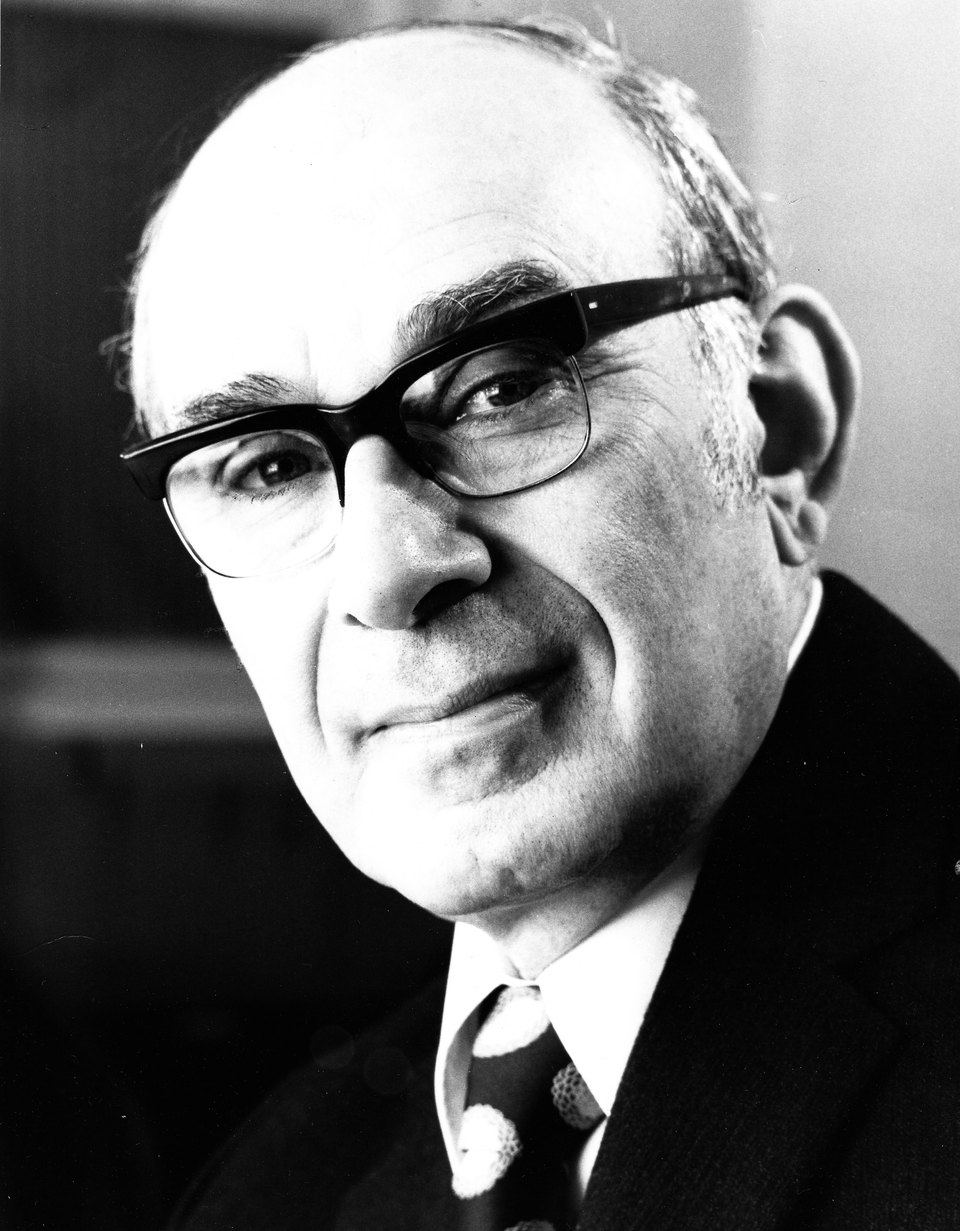
On December 14, 1964, a research executive at the Sugar Research Foundation wrote an internal memo about some new research suggesting sugar might be a less desirable source of calories. He pointed to one name: John Yudkin, a professor of nutrition in London. And he proposed that the foundation "could embark on a major program" to counter him.
I had heard "the sugar industry paid for a study" before. This is different. It is the industry's own research director, writing down in plain words that a scientist was a problem to be dealt with. It also leads to a fair question: was Yudkin right?
The short answer is that he was half right. He was right to flag sugar. He was wrong to play down saturated fat.
What the Memo Proposed
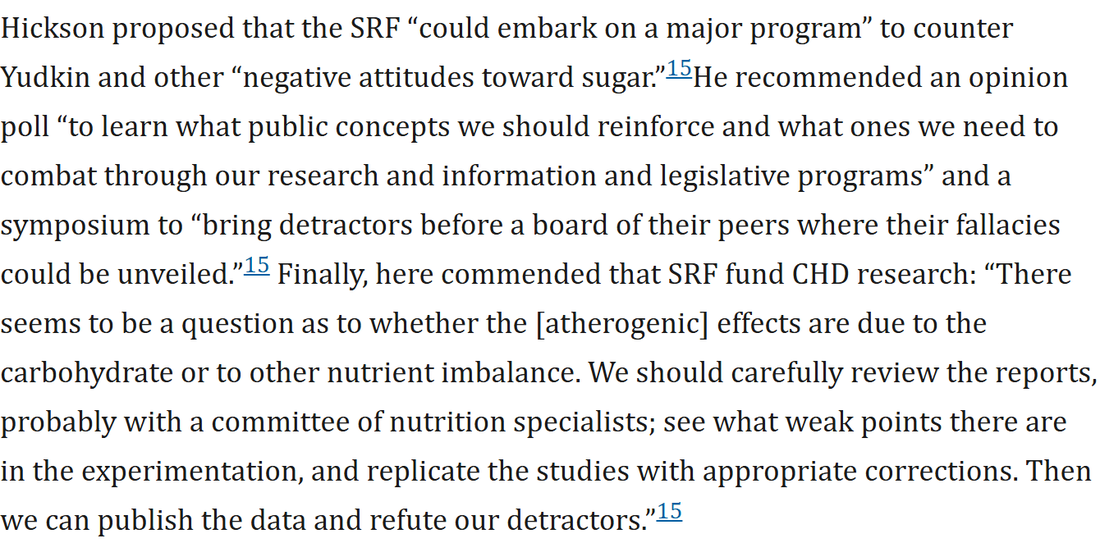
The memo was written by John Hickson, the foundation's vice president and director of research, and it was quoted in a 2016 paper in JAMA Internal Medicine by Cristin Kearns, Laura Schmidt and Stanton Glantz of the University of California, San Francisco. They had read the foundation's internal files, which survive in university archives. According to their paper, Hickson suggested:
- That the foundation "could embark on a major program" to counter Yudkin and other "negative attitudes toward sugar."
- An opinion poll "to learn what public concepts we should reinforce and what ones we need to combat."
- A symposium to "bring detractors before a board of their peers where their fallacies could be unveiled."
- Funding heart-disease research, so the foundation could "see what weak points there are in the experimentation, and replicate the studies with appropriate corrections. Then we can publish the data and refute our detractors."
A caution. A memo proposing a program is not a finished program, and what I have is a historian's reading of documents, not the memo itself. But the wording is the industry's own.
Who Yudkin Was
John Yudkin was born in London on August 8, 1910, and died there on July 12, 1995, at 84. He studied at Christ's College, Cambridge. After the war he took the chair of physiology at Queen Elizabeth College in London in 1945, and in 1954 he became the college's first professor of nutrition. According to the Royal College of Physicians, that year he also set up the country's first BSc and MSc degrees in nutrition.
In 1957 he published "Diet and Coronary Thrombosis" in The Lancet. His case then rested largely on comparisons between countries, which cannot separate sugar from everything else that differs from one country to the next. The mainstream view, led by Ancel Keys in Minnesota, was pointing at saturated fat. Yudkin kept arguing that sugar deserved more of the blame.
The 1967 Review
In 1965 the foundation paid two Harvard nutrition researchers, D. Mark Hegsted and Robert McGandy, $6,500 in total (about $48,900 in 2016 dollars) to write a review of the evidence on sugar, fat and heart disease. Their department chair, Fredrick Stare, oversaw the work and was a third author. It ran in The New England Journal of Medicine in two parts, on July 27 and August 3, 1967. It did not disclose the foundation's money.
According to Kearns and colleagues, the review discounted the studies linking sugar to heart disease "on the grounds that they contained questionable data or incorrect interpretation." They found no direct evidence that the foundation wrote or changed the review. What they found was the funding, the brief, and a sponsor who saw the drafts.
The Book, and the Word "Dustbin"
In 1972 Yudkin took his argument to the public. The book came out in London as Pure, White and Deadly and in New York as Sweet and Dangerous. He revised it in 1986.
In 1979 the Quarterly Bulletin of the World Sugar Research Organisation, a sugar-industry body, ran an item headed "For your dustbin" that called the book "science fiction." Here is the rest of the story, as Yudkin himself told it in the book's second edition. It is quoted on Powerbase, and I could not find independent coverage of it.
- His solicitor and two barristers told him the statement was libellous, and he began a libel action.
- The lawyers exchanged letters for about four years.
- In March 1984 the organisation printed a retraction saying "no imputation is cast upon his sincerity," and that it was "sorry that the publication of those comments has been taken by Professor Yudkin to impugn his integrity."
- It also agreed to pay his legal costs.
Notice the phrasing: it regrets how he took the comments, not the comments. Still, a sugar-industry body had to retract in print.
The Second Look
For a long time Yudkin's name faded. In 2009 a lecture by UCSF endocrinologist Robert Lustig, "Sugar: The Bitter Truth," went viral, and Lustig has been one of Yudkin's champions since. Penguin reissued Pure, White and Deadly in 2012 with an introduction by Lustig. And on September 12, 2016, Kearns's team published the 1964 memo.
The Royal College of Physicians' biography, by J. Garrow, opens with this line: "John Yudkin was by temperament an innovator and teacher, rather than a conformer." I have not tried to guess what the fight cost him, because I could not confirm the dramatic versions of that story.
What He Got Right
- Sugar matters beyond teeth. A 2014 study in JAMA Internal Medicine followed 11,733 U.S. adults for a median of 14.6 years. Compared with people who got under 10% of their calories from added sugar, the risk of dying of cardiovascular disease was 1.30 times higher at 10% to under 25%, and 2.75 times higher at 25% or more. The authors stress that it is observational, so it does not prove cause.
- The industry did try to shape the debate. That part is in the documents.
What He Got Wrong, or Never Proved
- Sugar as the main cause, with fat let off. A 2020 Cochrane review of 12 trials with 53,758 participants found that cutting saturated fat for at least two years reduced combined cardiovascular events by 17% (risk ratio 0.83, 95% CI 0.70 to 0.98). The fat side of the mainstream view held up.
- The proof for sugar is still thin. A 2022 Cochrane review found no trials of high versus low added sugar that reported cardiovascular events or deaths. The trials it did find measured blood pressure, blood fats and similar markers, and the effects were small.
- His early evidence was weak. His 1957 case compared countries, which is easily confounded. Keys's country comparisons had the same weakness.
My Honest Sorting
Documented: A sugar-industry research director proposed a program to counter Yudkin in 1964. A 1979 industry bulletin called his book "science fiction," and in 1984 the organisation retracted it, according to Yudkin's own account.
Fair: Yudkin was right to say sugar deserved more scrutiny than it got, and the industry's behavior supports him on that.
Not shown: That sugar, rather than saturated fat, is the main dietary cause of heart disease. He needed the evidence to be strong enough to dismiss fat, and it was not.
I think that is the most useful way to read him. A scientist can be treated unfairly and still be partly wrong. Both things were true of John Yudkin.