
I was today days old when I learned that one of the most influential radio stations in 1990s Los Angeles wasn’t a radio station at all — legally speaking. KBLT was a fully unlicensed pirate station that a journalist named Sue Carpenter started in 1995 and ran around the clock, at just 40 watts, out of the closet of her one-bedroom apartment in Silver Lake. It stayed on the air for three years before the FCC finally shut it down in 1998. Source: Boing Boing. Three years. In plain sight. In the second-biggest media market in the country.

Not Her First Rodeo
The part that makes this feel less like a prank and more like a calling: KBLT wasn’t Carpenter’s first pirate station. She’d already run an earlier one, KPBJ, up in San Francisco before moving south and doing it all over again. Source: Boing Boing. Her motivation was the one every music nerd of a certain age will recognize instantly — she’d come up through college radio, and licensed commercial radio in LA was playing a sliver of what she knew was out there. So she built the station she wanted to hear, and stuck the transmitter in a closet, exploiting a legal gray area that let hundreds of low-power unlicensed broadcasters pop up around the country in the 1990s — the same gray area that eventually led regulators to create the legal “low-power FM” category. Source: Yahoo Entertainment.
The DJ Booth Was a Punk-Rock Hall of Fame
This is where the story stops being a quirky footnote. KBLT’s DJ roster included Keith Morris of the Circle Jerks, Mike Watt of the Minutemen and Firehose, and Don Bolles of the Germs. Source: Boing Boing. Those aren’t scene hangers-on — those are three of the people who built LA punk in the first place, voluntarily taking shifts on a station that could have been raided at any moment.
And the support went beyond the booth. Acts including Mazzy Star and the Red Hot Chili Peppers played benefit shows to help keep KBLT funded and running. Source: Boing Boing. Read that again: a band that was selling out arenas played a fundraiser for a station that, on paper, didn’t exist.
Then the FCC Showed Up
All pirate stations end the same way, and KBLT’s turn came in 1998, when the FCC shut it down. Source: Boing Boing. Three years is a remarkably long run for an unlicensed signal in a city that size, and I suspect the reason the ending feels less like a bust and more like a graduation is that, by then, the station had already done its job — it had given a whole scene a place to be heard.
The Footage Nobody Knew Existed
Here’s the twist that turned this from “interesting bit of LA history” into an actual film. Back in 1998, one of KBLT’s own DJs shot footage of the station for a documentary that was never finished. It sat unseen for a quarter century — Carpenter herself didn’t know it existed until the filmmaker who found it contacted her in 2023. Source: SPIN and Inside Radio.
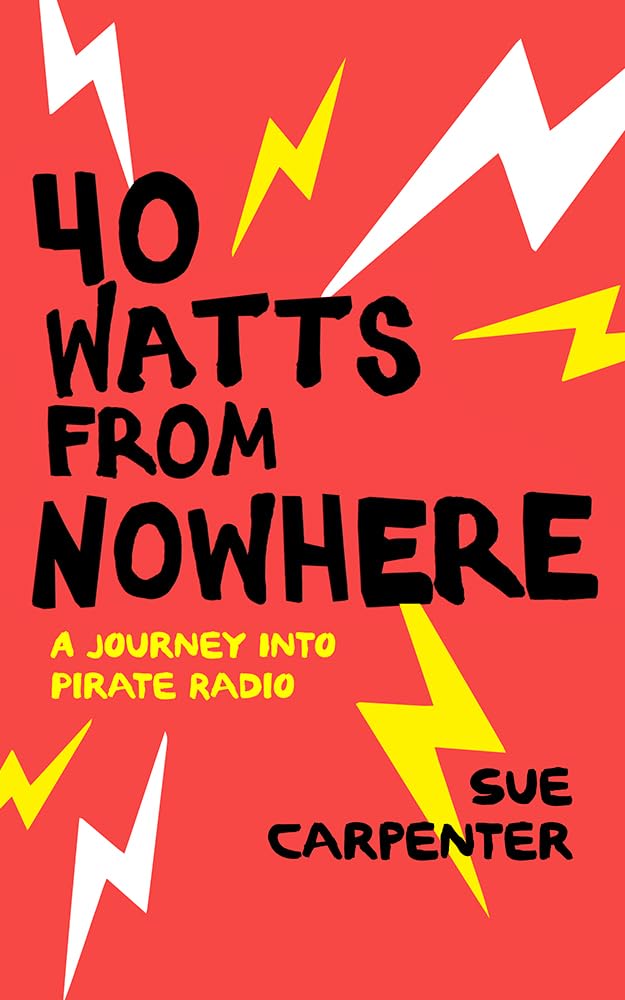
That rediscovered footage is the backbone of “40 Watts From Nowhere,” a documentary chronicling KBLT’s 1995-1998 run — directed by Sue Carpenter herself, with Jack Black on board as an executive producer. Source: SPIN. The woman who ran the station from her closet is now the one telling its story, working from tape she didn’t know anyone had rolled.
Clearing 140 Songs From a Scene That Never Signed Anything
One more detail I loved, because it’s the kind of problem only this story could produce. Music supervisor Mara Kuge cleared licensing for more than 140 tracks for the film’s soundtrack, drawing on her own history in the ’90s LA music scene and her personal ties to producer Brandon Jay. According to a Flood Magazine interview with Kuge, the big-name acts were often the easy part — they already had a KBLT connection and were happy to help. The hard part was the small indie bands of the era, whose rights were never formalized in the first place and whose members had since lost touch or fallen out entirely. Which is a perfectly on-brand ending: the station that gave those bands airplay without asking permission now had to go back and, for the first time, actually ask.
If you want to see it: “40 Watts From Nowhere” premiered at Slamdance in February 2025, had a theatrical run starting July 2026, and landed on video-on-demand and Amazon Prime on October 27, 2026 — this week. Source: Yahoo Entertainment.