
I was today days old when I realized that a piece of software I wrote a long time ago and a company spending billions on brain surgery are, in the end, trying to solve the same problem. Years back, I built NextUp Talker, a Windows text-to-speech app for people who’ve lost the ability to speak — to ALS, to cancer, to a stroke, to aphasia. You type what you want to say, it says it out loud, and you’re back in the conversation at the dinner table. It costs $99. It is not a miracle; it’s a keyboard and a synthesized voice. But for the right person, it hands them their voice back. Then on October 30, 2026, Elon Musk announced that Neuralink’s first two products are headed out into the world, and the first one is aimed squarely at the same people Talker was built for. Source: Elon Musk on X.

What NextUp Talker actually does
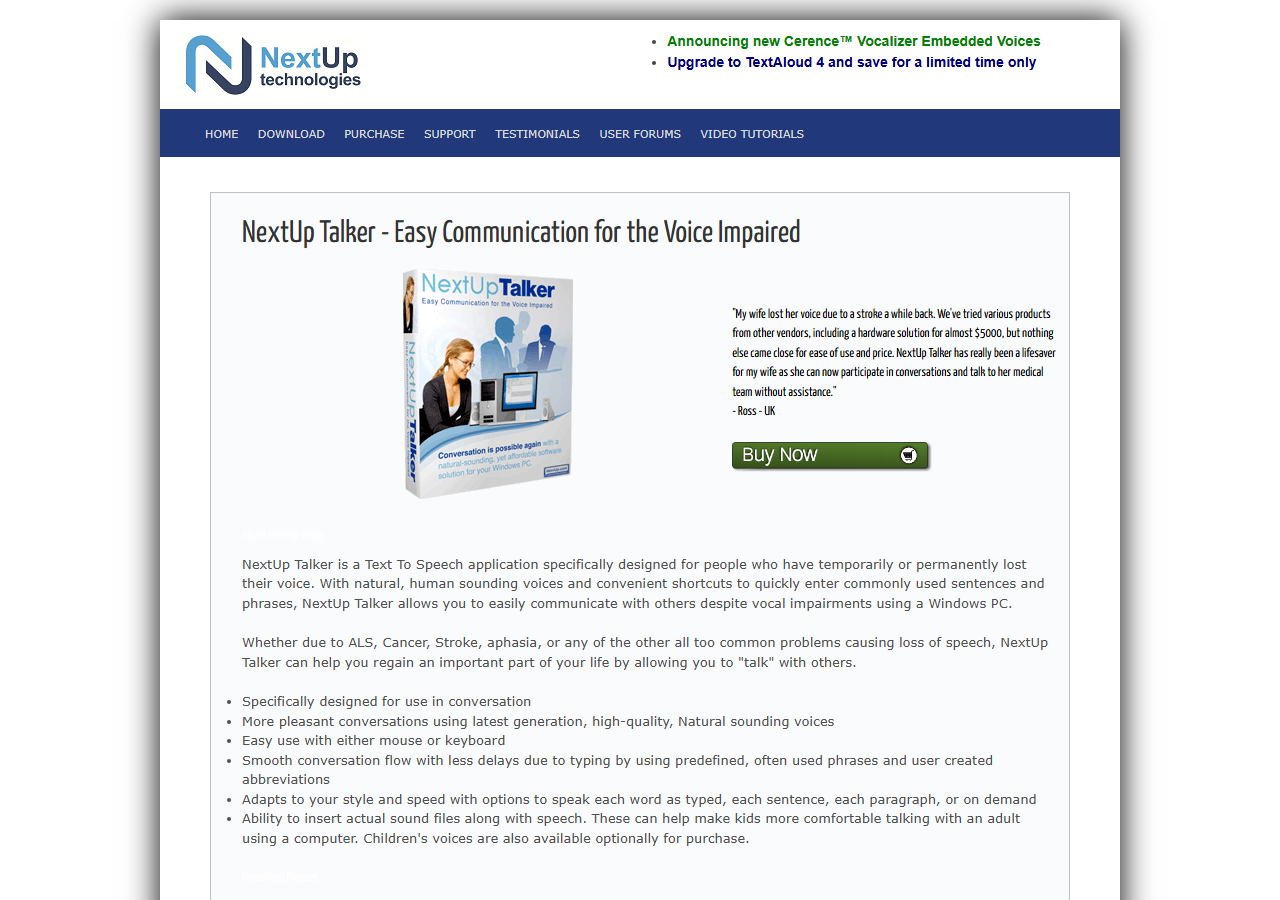
Here’s the honest, unglamorous version of my end of this. Someone with ALS who can still move their fingers, or a stroke survivor whose speech is gone but whose typing isn’t, opens Talker and types a sentence. The computer speaks it. You can save phrases you use constantly so you’re not retyping “I need my medication” twenty times a day, and you can pick a voice that sounds something like a person rather than a robot. That’s it. The whole trick is that it meets people where they already are — a Windows PC and a keyboard — and asks nothing surgical of them. I built it because the gap between “has something to say” and “can say it” is one of the cruelest gaps a disease can open, and closing even part of it with cheap software felt worth doing. Source: NextUp Talker.
Telepathy: the same goal, by way of the skull
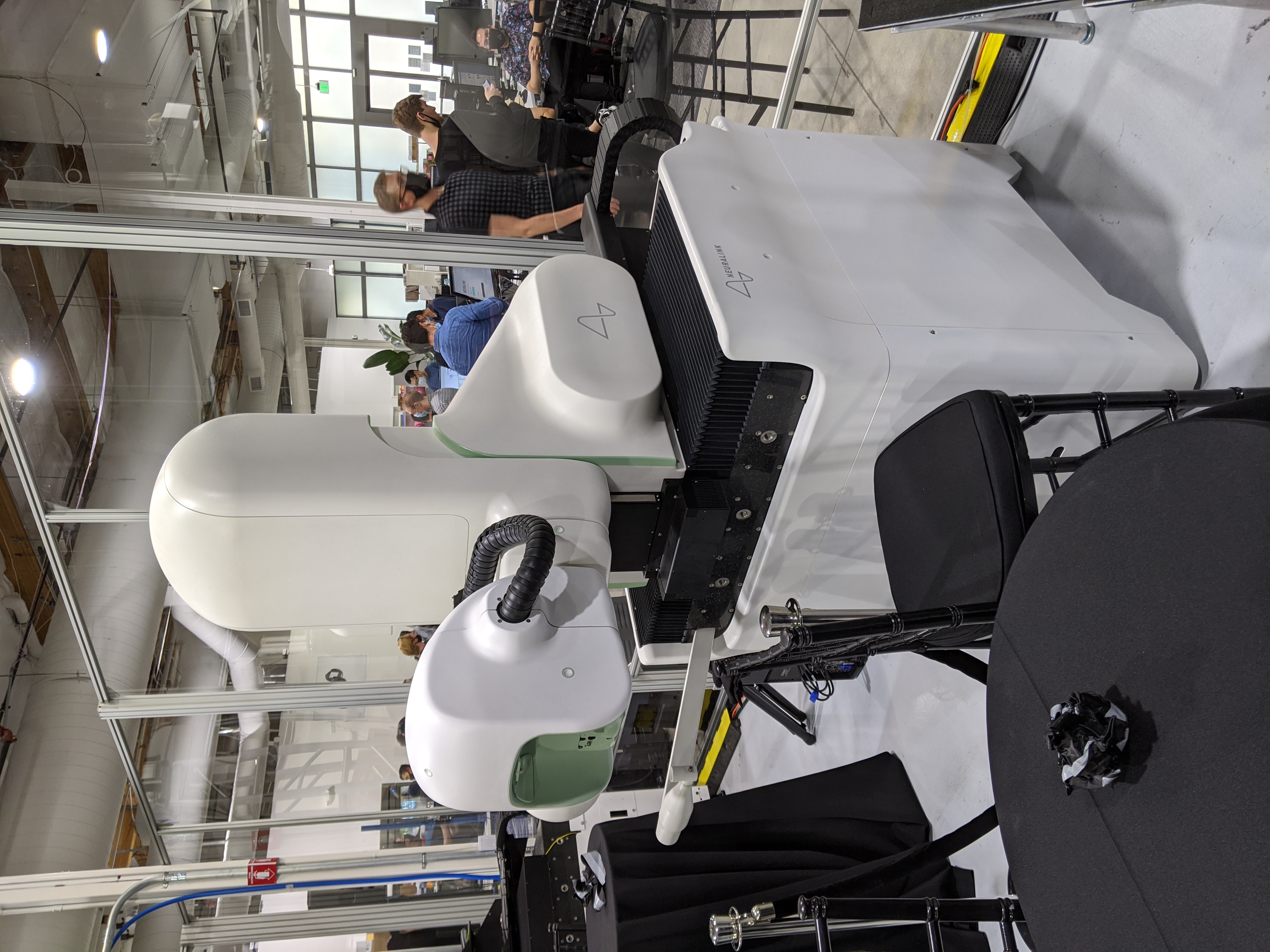
Neuralink’s first product is called Telepathy. Instead of a keyboard, it’s the company’s N1 implant — 1,024 electrodes spread across 64 flexible threads placed in the brain — and it lets a person move a computer cursor and type purely by thinking. The initial target group is people with paralysis: the same population that, until now, has reached a keyboard through eye-trackers, head switches, or whatever fingers still work, and then a program like mine to turn the typing into speech. Musk’s own framing on X was characteristically not modest: “Neuralink’s first product is called Telepathy. It enables high-speed communication with computers or humans simply by thinking. Output bandwidth will vastly exceed the fastest human speech or typing in a few years. Read that sentence again.” Source: Elon Musk on X.
That “will vastly exceed” is a prediction, not a measurement, and it should be read as one. The number that’s been circulating in coverage of the announcement is that one participant with ALS reportedly reached 75 words per minute with a 5.8% error rate using Telepathy. I want to be careful here: that is a single participant, reported secondhand, and not a published clinical result. If it holds up across more people, 75 words per minute by thought alone is genuinely remarkable — it’s roughly the pace of a decent typist, and faster than most people with ALS can manage with any assistive setup. But one person’s best day is not a product spec, and nobody outside Neuralink has independently verified it.
Blindsight: the second product, and the bigger promise
The second product is called Blindsight, and it’s going after something Talker never touched: sight. The idea is to take visual data from a camera and send it directly to the brain’s visual cortex, skipping damaged eyes and optic nerves entirely. Musk’s post: “Our second product is called Blindsight and it will, as the name suggests, enable even those who are completely blind or have never seen to see. It is ready from an engineering standpoint. Just waiting on regulatory approval.” Source: Elon Musk on X.
Some background worth keeping in view: Blindsight got FDA Breakthrough Device designation back in September 2024, which is a fast-track review status, not an approval. As of this announcement, there is no human Blindsight implant yet and no approved product. “Ready from an engineering standpoint” is Musk’s assessment of his own company’s hardware, and the phrase “have never seen to see” is a very large claim about how the brain handles visual input it has never processed — a claim that will need actual patients and actual data behind it before anyone should repeat it as fact.
Where things actually stand
To be plain about it: neither Telepathy nor Blindsight is FDA-approved for commercial use. Both remain investigational. What Musk announced on October 30 is that these are the names and the goals, and that the company considers itself ready to move — not that you can sign up for one. If you or someone you love has lost their voice today, the realistic options are still the ones that have existed for years: eye-gaze systems, switches, and text-to-speech software, including, yes, mine.
How far the idea has come
What got me about this announcement wasn’t the electrodes or the Musk bravado. It was recognizing the goal. Decades ago, the best I could do for someone who’d lost their voice was give them a $99 program so they could type and be heard. It helped real people, and it still does. Now a company with a surgical robot and a billion-dollar budget is chasing the same thing — put a person who’s lost a channel to the world back on it — from the inside of the skull outward. I’m not claiming any lineage here; Neuralink didn’t get the idea from a text-to-speech app, and a brain implant and a keyboard are not the same thing in capability, risk, or cost. But the problem is the same problem. It’s strange and a little moving to see something you worked on in a small way show up, years later, as the stated mission of one of the most ambitious engineering projects on the planet. I hope they pull it off. And until they do, Talker is still $99 and still works today.