
I was today days old when I decided I’m finally on board with permanent daylight saving time. This is a bigger deal than it sounds, because I have always enjoyed the time change. Fall back, you get an extra hour. Spring forward, you lose one, but it’s one less hour of a Sunday, and who’s counting. When I was a kid, I cracked up at a cousin who believed that when we fall back, you get an extra hour of sleep every night until the time changes again. I’m older now. She might have been right.

Then I did what I always do, which is look it up, and the thing I always enjoyed turns out to be a little bit dangerous.
The spring switch is the problem
- Fatal crashes: A 2020 study in Current Biology looked at 732,835 fatal US crashes from 1996 to 2017 and found the spring-forward week carried about a 6% higher risk of a fatal crash: roughly 5.7 extra fatal crashes per weekday, more than 28 deaths across the work week. The effect was bigger, 8% or more, on the western edges of time zones. The authors said their numbers probably understate it.
- Workplace injuries: A 2009 study in the Journal of Applied Psychology went through 576,292 US mining injuries from 1983 to 2006. The Monday after spring-forward had about 5.7% more injuries, and workers slept about 40 minutes less.
- Heart attacks, the famous one: A 2014 study in Open Heart found about 24% more heart attacks treated in Michigan on the Monday after spring-forward, and about 21% fewer on the Tuesday after fall-back. The weekly totals didn’t change, which suggests the clock mostly moved heart attacks around rather than creating them.
- Heart attacks, the counterweight: In September 2025, a Duke-led study in JAMA Network Open looked at nearly 170,000 patients from 2013 to 2022 and found no significant rise around either change, except spring 2020, which had other things going on. I’m calling that one unsettled.
Notice what’s missing: the fall. Evidence that falling back hurts anybody is weak to nonexistent. The half I liked was fine all along, and the half I shrugged at is the one quietly costing people.
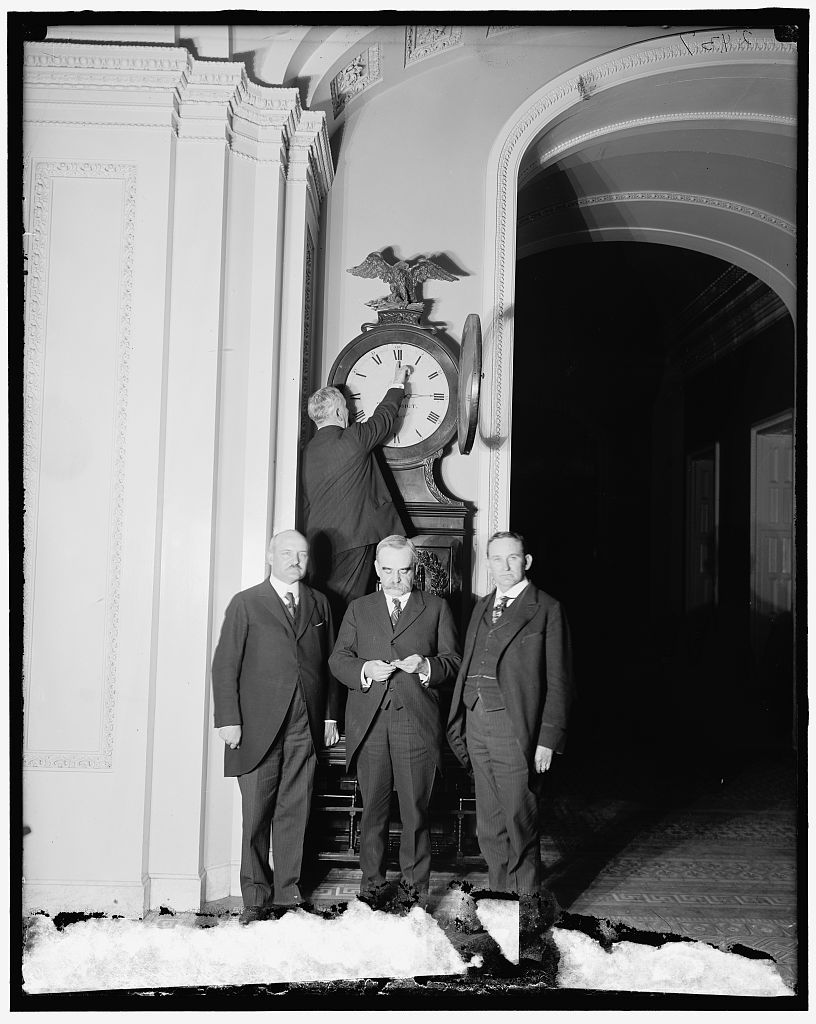
Kids and pets do not read the memo
Kids don’t adjust well to a sudden new bedtime and wake time. In 2015, researchers tracked a small group of high school students across the spring change:
- 35 students tracked across the spring change.
- They slept about 32 minutes less per night afterward.
- That adds up to about 2 hours and 42 minutes over a school week.
- Small study, so hold it loosely.
It also matches every parent’s experience.
Pets are even worse. They get used to a feeding time, and when it’s time, they’ll let you know. There are no controlled studies, just anecdote and standard vet advice, which is to shift meals in 10 or 15 minute steps. Nobody has explained this plan to the dog.
“We do it for the farmers”
I always heard we go back to standard time for the farmers. Does it really make a difference to them? It turns out the farmers are the reason we didn’t have peacetime daylight saving time for decades. They hated it.
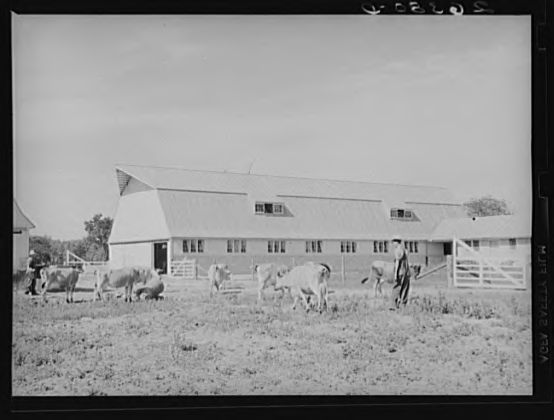
According to the Marshall Independent, crops have to wait for the dew to dry no matter what the clock says, and cows aren’t ready to be milked an hour earlier because Congress said so. According to Michael Downing, who wrote a whole book on this called Spring Forward, the actual backers were retailers, who liked light evenings when people might go out and spend money.
- March 19, 1918: The Standard Time Act created time zones and daylight saving time, which started March 31, 1918.
- 1919: Congress repealed it over President Wilson’s veto, with farm interests leading the fight.
- 1966: The Uniform Time Act set it back up nationwide starting in 1967.
And Benjamin Franklin didn’t invent it either. His 1784 piece in the Journal de Paris was satire about how much Paris could save on candles if people got up with the sun, complete with a tax on window shutters and church bells at sunrise. He never proposed moving a clock.
“Oh wait, it’s the bus stop”
Then I remembered the other reason: we don’t want kids walking to the bus stop in the dark. When I was a kid we walked about half a mile to the bus stop (in the snow, uphill both ways). So I took this one seriously, and it has a real history.
- January 6, 1974: In the middle of the energy crisis, the US went on year-round daylight saving time.
- Public support fell from 79% in December to 42% by March, once people experienced dark winter mornings.
- Florida: After morning crashes involving schoolchildren, with eight child deaths reported, the governor asked for repeal.
- October 27, 1974: The country went back to standard time for the winter.
A 1976 National Bureau of Standards review found:
- No significant energy savings.
- No overall difference in traffic deaths.
- A significant rise in morning fatalities among school-age children from January through April 1974 compared with 1973, though the review could not say how much of that the clock caused.
That’s the honest version, and it’s why 1974 gets brought up every time somebody proposes permanent daylight time.
But here’s my question. How many kids ride the bus now compared to back then, and how many get driven to the stop or walked there by a parent? I was half right. A comparison of the National Household Travel Survey from 1969 to 2009 found:
- Walking or biking to school: fell from 48% of students to 13%.
- Riding in a private car: rose from 12% to 44%.
- School bus: barely moved, roughly 38 to 40% both years.
So the bus share held steady, which surprised me. But the kid trudging alone down a dark road is a lot rarer than it was, because far more of them are in the back seat of somebody’s car. I couldn’t find a current bus number that sources agree on, so I’ll leave it there.
Winter is awesome, actually
Can I say something nice about standard time before I vote against it? Winter is awesome. It stays dark so late that you can actually sleep until 7:30 sometimes. You never know, you might make it to 8 when you really need it.
Oh, and did I mention? I’m starving at 4 p.m. and so dang sleepy at 7. The time change is SO hard.
The part where the scientists disagree with me
The people who study sleep for a living do not want permanent daylight saving time. The American Academy of Sleep Medicine’s position, which a long list of medical groups has endorsed, is that “the United States should eliminate seasonal time changes in favor of permanent standard time, which aligns best with human circadian biology.” Their argument is roughly that morning light sets your body clock, and permanent daylight time means dark mornings all winter, which is the 1974 problem again.
I’m not going to pretend the science is on my side. It isn’t. My reason is simpler and it’s just a preference: I’d rather have the light at the end of the day. The sleep doctors and I agree on the important part, which is that switching twice a year is the worst of the three options. We just disagree about which way to stop.
Where the law actually stands
- March 15, 2022: The Senate passed the Sunshine Protection Act, permanent daylight time, by unanimous consent. The House never took it up.
- July 14, 2026: The House passed its own version, H.R. 139, 308 to 117. It’s in the Senate Commerce Committee, and I couldn’t find a Senate vote.
- 19 states have passed laws to go on year-round daylight time, but every one needs Congress to say yes first.
- The loophole: States can pick permanent standard time on their own. Arizona (except the Navajo Nation) and Hawaii did. Nobody can pick permanent daylight time without Congress.
- Clocks fell back November 1, 2026. We spring forward again March 14, 2027.
So what are we gonna do about it?
The options are all on the table and none of them are new. Congress could lock in permanent daylight time, and the House has already voted to. Any state that wants to could go to permanent standard time tomorrow and join Arizona and Hawaii. The sleep scientists want standard, and they have the better evidence. I want daylight, and I have an evening.
Either way, I’d like us to stop. The spring switch is the dangerous one and it doesn’t buy us much. Pick a clock, any clock, and leave it alone.
And if we do land on permanent daylight time, I’ll have to call my cousin. If the clocks never change again, every night from here on out is the night we fall back. She gets her extra hour of sleep forever. She was right the whole time.
Sources
- Fritz et al., Current Biology (2020), via CU Boulder Today: colorado.edu
- Barnes and Wagner (2009), via APA: apa.org
- Sandhu et al., Open Heart (2014): pmc.ncbi.nlm.nih.gov
- Duke University School of Medicine, JAMA Network Open heart attack study (September 2025): medschool.duke.edu
- AASM, high school students and the spring change: aasm.org
- Zoetis Petcare, daylight saving and pets: zoetispetcare.com
- KUOW, Don’t blame the farmers (2013)
- Marshall Independent, Daylight saving time not for farmers (2017)
- Wikipedia, Daylight saving time in the United States: en.wikipedia.org
- The Franklin Institute, Franklin and daylight saving: fi.edu
- Streetsblog USA, 40 years of how kids get to school: usa.streetsblog.org
- US House Clerk, roll call on H.R. 139: clerk.house.gov
- Congressional Research Service, IG10102 (October 2026): everycrsreport.com
- AASM position statement, permanent standard time: aasm.org