I was today days old when I learned that the personal weather station beating every plastic-spinning-cup gadget on Weather Underground has no moving parts at all. It measures wind with ultrasonic chirps and rain with haptic vibrations — the dome literally feels the tap of each drop. Genuinely cool engineering. And then I remembered why the closed ecosystem irritates me a bit.
What Tempest actually is:
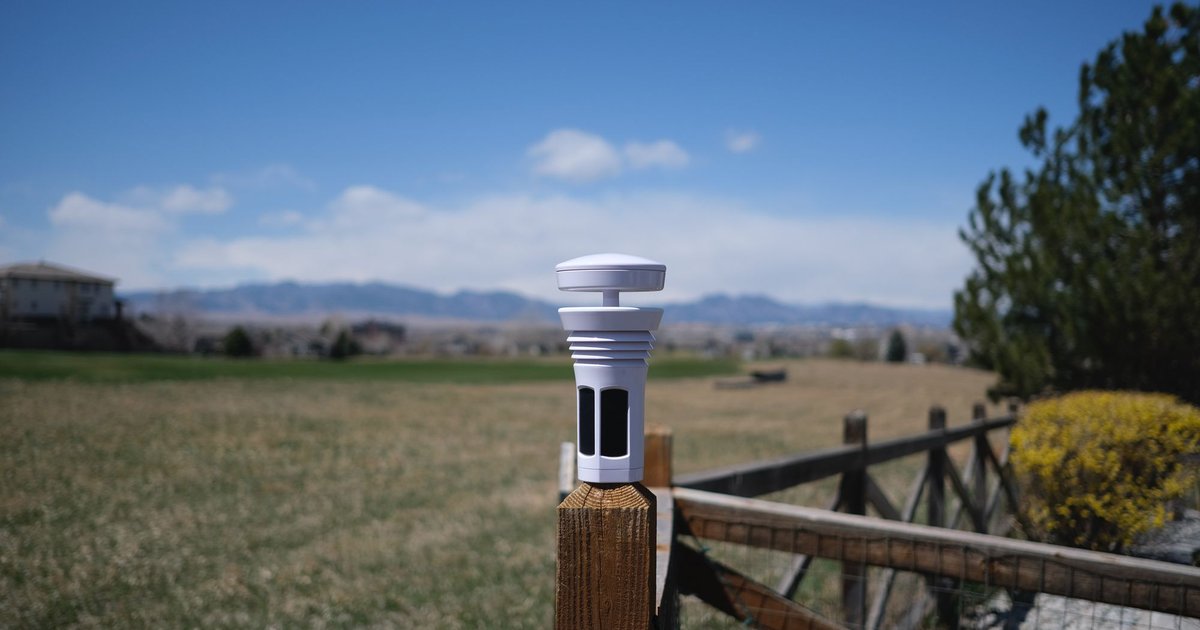
Tempest is a solid-state personal weather station made by Tempest (formerly WeatherFlow). No anemometer cups, no tipping-bucket rain gauge, no moving parts. Just a single white dome (~$329 retail) that mounts on your roof and measures wind, rain, lightning, temperature, humidity, barometric pressure, ambient light, and UV all in one solid-state sensor cluster.
The wind sensing is ultrasonic — it listens to the distortion of sound waves bouncing through the air to calculate speed and direction without a single moving cup to freeze in winter. The rain sensor uses a piezoelectric element that detects the vibration of water drops hitting the dome. The result: no maintenance, no winterization, no clogged buckets, no bearing replacement.
Your data flows back to Tempest’s servers where their Nearcast AI blends your hyperlocal readings with regional forecast models to give you a forecast that actually means something for your specific address. Most phone weather apps are regional guesses. Tempest’s forecast reflects what the air is doing ten feet from your house. It’s noticeably better for outdoor decisions.
Why it’s better than what most people have on Weather Underground:
The typical consumer weather station on Weather Underground is something like an Ambient Weather WS-2000 or AcuRite Atlas — plastic anemometer cups that spin, a tipping bucket that clicks every 0.01 inches of rain, bearing seals that collect grime. They work, but they require maintenance. The cups can ice up in freezing rain. The bucket can get jammed by a leaf. Bearings wear. Tempest, being solid-state, just sits there.
The lightning detection is the other showpiece. Tempest claims a 25-mile detection range and legitimate reports from storm chasers, outdoor venues, and anyone running pools or sports fields say it works. You can watch storm activity happen in real time, watch lightning position before you decide whether to pull the kids off the field. That was the domain of expensive radio-based lightning networks until now.
The solid-state rainfall sensor is initially weird — it measures rain by feeling vibrations? — but for real-time rainfall rate it’s surprisingly accurate. The cumulative total self-calibrates against nearby radar data, so you don’t have to worry about an initial bias.
The honest caveat (and yes, it matters):
Here’s the thing: the map at tempestwx.com only shows Tempest stations. If you want to look at your friend’s Davis Vantage Pro2 or browse the whole network of Weather Underground stations near you, Tempest doesn’t let you see them. You have to bounce to wunderground.com.
Their API is gated. There IS a developer API, but it’s rate-limited and intended for app developers, not for someone who wants to pull their own station’s data into Home Assistant or pipe it to a personal server. Doable, but not casual. The company chose a walled garden, and if you buy a Tempest, that garden is the only view you get.
Does it make sense from a business standpoint? Absolutely. You sell the hardware, you lock the ecosystem so there’s incentive to stick with it. Every station you sell, you get data lock-in. The margins are better that way. WeatherFlow’s predecessor was friendlier to open data and third-party integrations, and this is what you get when a company decides that strategy was the wrong bet. Better device, tighter walls.
My take on it? Closed system makes sense from a business standpoint, but it irritates me a bit. If you buy one, you’re buying into that ecosystem.
What you can do without spending $329:
Go to tempestwx.com, find a Tempest station near your city, and watch it in real time. It’s free. You’ll see the same live data — wind, rain, temperature, pressure, lightning strikes within 25 miles. During a storm, it’s hypnotic.
The Tempest app itself (free download, iOS and Android) shows Nearcast AI forecasts for your address even if you don’t own a station. You can see what the proprietary forecast looks like compared to your phone’s weather app. Spoiler: you’ll notice the difference.
The close:
If you’ve ever had a Weather Underground station freeze up or die from mechanical wear, Tempest is the upgrade you’ve been waiting for. Solid engineering, no moving parts, lightning detection, and forecasts that actually match your neighborhood. Just know the network you’re joining is also the network you’re stuck in.
tempest.earth — Tempest Weather System, ~$329, solid-state weather station with lightning detection and Nearcast AI forecast.