I’m thinking about a trip from Las Vegas up to Salt Lake City, and rather than just wagering hotel points on it and winging the drive, I was today days old when I learned how much is actually worth stopping for along the way — an 1867 fort still standing on the exact frontier road it was built to protect, and a lake at the end of the trip that’s disappearing faster than most people realize.
The route is I-15 north the whole way — about 420 miles, roughly 6 hours of straight driving — but every source I checked agrees it’s worth spreading over 2-3 days if the schedule allows it. This list mixes the stops worth making along that drive with a realistic 1-2 day stay in Salt Lake City itself, counted down from #10 (the first stop leaving Vegas) to #1 (the anchor stop in the city), so the numbers roughly trace the actual route south to north.
10. Valley of Fire State Park, NV
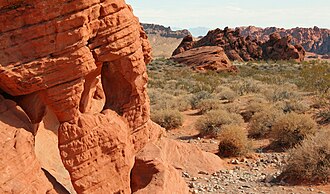
About 1.5 hours up I-15 from Las Vegas sits Nevada’s oldest state park, known for vivid red Aztec sandstone formations dating back roughly 150 million years. Popular easy hikes include the Rainbow Vista and White Domes trails, each about a mile round-trip. Source: The World Was Here First.
9. Zion National Park, UT
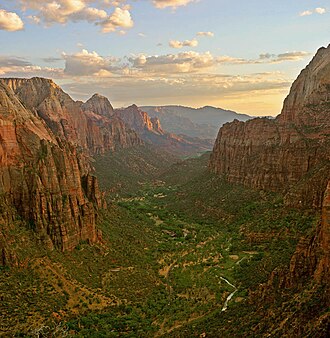
A short drive off I-15 via St. George leads to Zion, famous for 2,000-foot sandstone cliff walls carved by the Virgin River, with a shuttle-only scenic drive through the main canyon. Trail options range from the easy, paved Riverside Walk (2 miles round-trip) up to the strenuous, permit-required Angels Landing (5.5 miles round-trip, with a chain-assisted final approach). Source: The World Was Here First.
8. Cove Fort Historic Site, UT
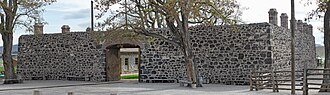
A genuinely rare surviving frontier fort: built between April and November 1867 by Ira Hinckley at Brigham Young’s request, to shelter travelers and protect telegraph lines on the road between Fillmore and Beaver during the Black Hawk War. The walls form a 100-foot square, 18 feet high, built from black volcanic rock and dark limestone rather than the wood most forts of that era used — exactly why it’s one of the few forts of its kind still standing today. Source: Wikipedia.
7. Utah Territorial Statehouse, Fillmore, UT
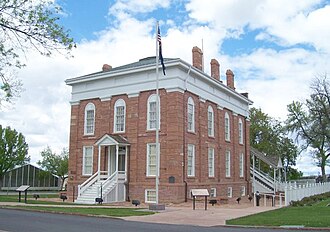
The oldest government building in Utah, and the original territorial capitol: Brigham Young and territorial lawmakers picked Fillmore for its central location in 1851, but only the south wing was ever built (1852–1855) before federal funding dried up. The legislature met there for just one full session before the capital moved to Salt Lake City in 1856. Saved from demolition and turned into a museum by the Daughters of Utah Pioneers in 1930. Source: Wikipedia.
6. Thanksgiving Point, Lehi, UT
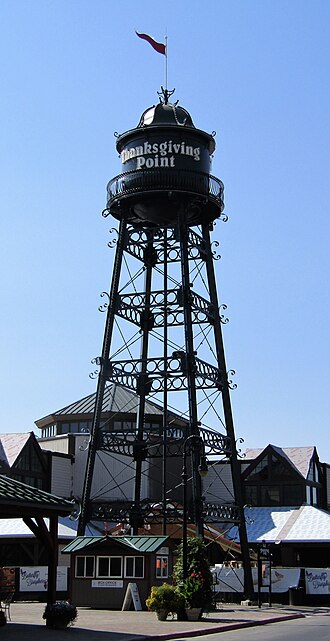
Close to Salt Lake City sits a large family-oriented complex with botanical gardens (Ashton Gardens), multiple museums, a working farm, and a 40,000-square-foot butterfly biosphere. A good last stop before arriving in the city proper, especially traveling with kids. Source: Wikipedia.
5. Little & Big Cottonwood Canyons (Alta and Snowbird), UT
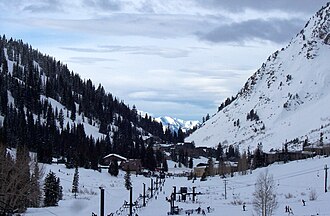
Minutes from downtown Salt Lake City. Utah trademarked the phrase “The Greatest Snow on Earth” back in 1975, and Alta — sitting at the top of Little Cottonwood Canyon — backs that up with an average of about 547 inches of snow a year, among the highest of any ski resort on Earth. Alta opened in 1938 and is the second-oldest lift-served ski area in the American West, after Sun Valley, Idaho. Honest caveat for an August visit: it’s summer, no skiing — but both canyons are also top scenic-drive and hiking destinations outside ski season, worth the detour either way. Sources: Wikipedia, SnowBrains.
4. This Is the Place Heritage Park, Salt Lake City, UT
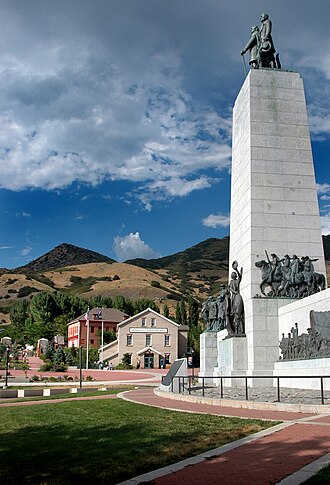
Marks the spot where, on July 24, 1847, Brigham Young — sick with Rocky Mountain spotted fever and riding in the back of a wagon — first looked out over the Salt Lake Valley and reportedly said, “It is enough. This is the right place.” Worth a factual caveat: neither Young nor companion Wilford Woodruff recorded the exact words at the time; Woodruff didn’t publicly quote the line until 1880. The heritage park built around the monument has preserved and celebrated pioneer Utah history for close to a century. Sources: National Park Service, Utah Life Magazine.
3. Natural History Museum of Utah (Rio Tinto Center), Salt Lake City, UT
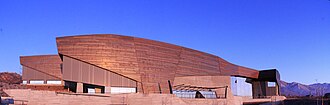
A 163,000-square-foot museum in the foothills of the Wasatch Range, part of the University of Utah, home since 2011. Utah is one of the richest dinosaur fossil regions on Earth, and the museum backs that up with 30+ skeletal reconstructions, including the world’s only display of 14 ceratopsian (horned dinosaur) skulls, plus Utah’s own Utahceratops gettyi and Kosmoceratops richardsoni. Source: Wikipedia.
2. The Great Salt Lake Itself
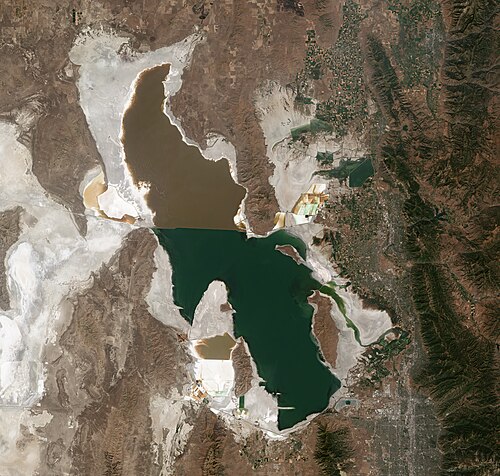
The largest saltwater lake in the Western Hemisphere and the largest natural lake in the US west of the Mississippi — but genuinely worth seeing sooner rather than later. It’s shrunk from about 3,300 square miles in 1987 to roughly 950 square miles as of 2022, salinity in the main basin runs up to 27% (nearly 8x the ocean’s 3.5%), and it hit its lowest recorded level in December 2022. Scientists have warned it could functionally dry up by 2028 without policy changes, which would expose a lakebed of toxic dust right next to the city. Sailing, kayaking, and swimming — you float, the salinity does the work — are all still very much on the table today. Source: Wikipedia.
1. Temple Square, Salt Lake City, UT
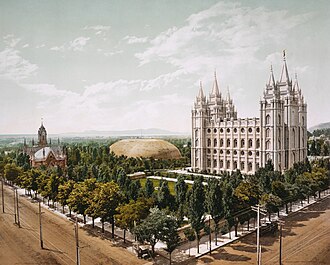
Utah’s single most-visited attraction — a 35-acre plaza anchored by the Salt Lake Temple, with free tours offered in 40+ languages. Important logistics note for an August 2026 visit: Temple Square is mid-renovation. The Salt Lake Temple’s six-year seismic upgrade has its scaffolding down and its facade visible again, but the Conference Center is fully closed to the public from March 30, 2026 through March 1, 2027, and the new Temple Square Visitors’ Center didn’t open until May 18, 2026 — the full celebration isn’t until 2027. Worth visiting now, but check current hours and closures before heading over. Sources: Visit Salt Lake, Church Newsroom, Temple Square Renovation Update.
Ten stops, geographically ordered so the countdown doubles as the actual route — from an 1867 fort still standing on the road it was built to guard, to a lake that might not look the same in a few years, to the plaza where the city itself began.
Everything Else Worth Doing in Salt Lake City
The countdown above covers the drive plus the anchor stops in the city itself — Temple Square, the Great Salt Lake, the Natural History Museum, This Is the Place, and Alta/Little Cottonwood Canyon. For anyone spending more time in Salt Lake City beyond those stops, here’s a deeper, city-only list.
Digging Into Mormon History
Temple Square (already covered above) is the obvious start, but Salt Lake City has several other free LDS/Mormon history sites and tours worth knowing about.
Beehive House
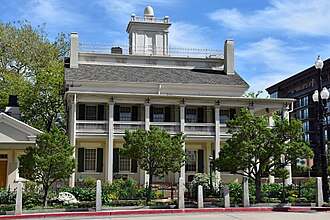
Brigham Young’s actual home from 1855 to 1877, at the corner of State Street and South Temple. Free 30-minute guided tours run on a first-come basis, no reservations needed — check current posted hours before visiting, since sources vary between roughly 10am–6pm and 9:30am–8:30pm, so hours may have changed. Tours focus on Young’s dual role as church leader and family man. Sources: history.churchofjesuschrist.org, utah.com.
Family History Library
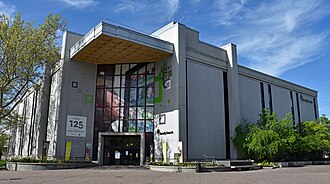
The largest genealogical library in the world, free and open to the public, operated by FamilySearch (the Church’s genealogical arm). Copies of records covering more than 2 billion deceased people, with staffed research consultants who help beginners and experienced genealogists alike. Located at 35 North West Temple Street. Sources: Wikipedia, newsroom.churchofjesuschrist.org.
Church History Museum
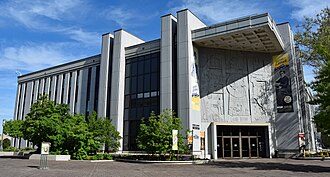
Free admission, 75 N West Temple Street. Holds real artifacts including the seer stone Joseph Smith used in translating the Book of Mormon, the original printing press that produced the first 1830 edition of the Book of Mormon, and a chair Brigham Young built before his baptism into the church. Sources: Wikipedia, churchofjesuschrist.org.
This Is the Place Heritage Park’s Heritage Village
Already mentioned above for the monument itself, but the attached Heritage Village deserves its own callout: 60+ original or replica 19th-century structures, costumed interpreters demonstrating blacksmithing, tinsmithing, and saddle-making, plus train rides and a Native American Village. Open 10am–5pm Monday–Saturday, closed Sunday. Source: thisistheplace.org.
Beyond Church History
The rest of Salt Lake City worth carving out time for.
Utah State Capitol
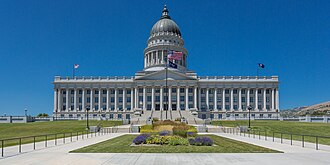
A 1916 granite building modeled after the US Capitol, on a hill just north of Temple Square with the Wasatch Mountains behind it and the whole valley below. Free guided tours run hourly, 9am–4pm weekdays; free parking; self-guided tours also available. Source: Wikipedia.
Antelope Island State Park
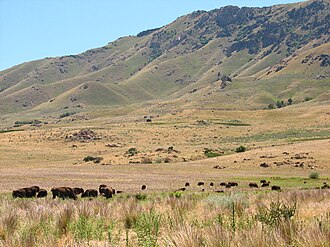
About 40 minutes north of downtown, the largest island in the Great Salt Lake. Home to a free-roaming bison herd (550-750 animals today, descended from just 12 introduced in 1893) — one of the oldest publicly-owned bison herds in the US. You can also swim in water several times saltier than the ocean. Sources: Wikipedia, visitutah.com.
Red Butte Garden and Arboretum
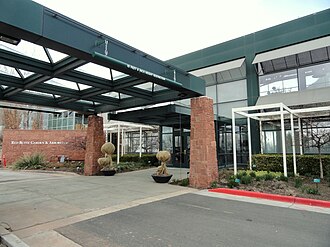
A 100-acre botanical garden and arboretum in the foothills of the Wasatch Range, with 21 acres of display gardens and 5+ miles of hiking trails, run by the University of Utah. Its outdoor amphitheater seats about 3,000 for a well-regarded summer concert series. Source: Wikipedia.
Gilgal Sculpture Garden
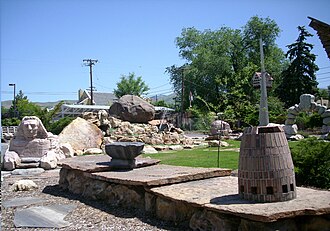
A genuinely odd, wonderful hidden gem: 12 sculptures and 70+ engraved stones built by stonemason Thomas Battersby Child Jr. between 1945 and his death in 1963, most inspired by the Book of Mormon and the Bible — including a sphinx carved with Joseph Smith’s face. Tucked behind a residential neighborhood at 749 East 500 South; became a public city park in 2000. Free, no admission charge. Source: Wikipedia.