
Halloween is the one night a year when entire towns agree to lose their minds on schedule, and some of them have been refining the act for a century. The numbers alone are a little unhinged: the Greenwich Village Halloween Parade, which started in 1974 as a children’s puppet parade, now claims 50,000 costumed participants and 2 million spectators. Salem, Massachusetts drew 1.1 million unique visitors across October 2025, per Destination Salem, with roughly 96,000 people packed downtown on Halloween night alone, per NBC Boston. Detroit once logged more than 800 fires on the night before Halloween in 1984 — and got it down to 3 structure fires by 2021. A pumpkin-boat race in Tualatin, Oregon went from a few dozen onlookers in 2004 to roughly 20,000. Asbury Park, New Jersey put 9,592 zombies on the boardwalk for a Guinness record in 2013. And the Guinness-recognized record for a pumpkin in flight is 5,545.43 feet. This is a countdown of the ten weirdest, biggest, and most stubbornly local Halloween traditions I could verify — seven American, three from elsewhere — each one checked against the source linked at the end of its entry, rather than lifted from a secondhand “spooky traditions” roundup. Where the crowd figures come from organizers rather than independent counts, I say so.
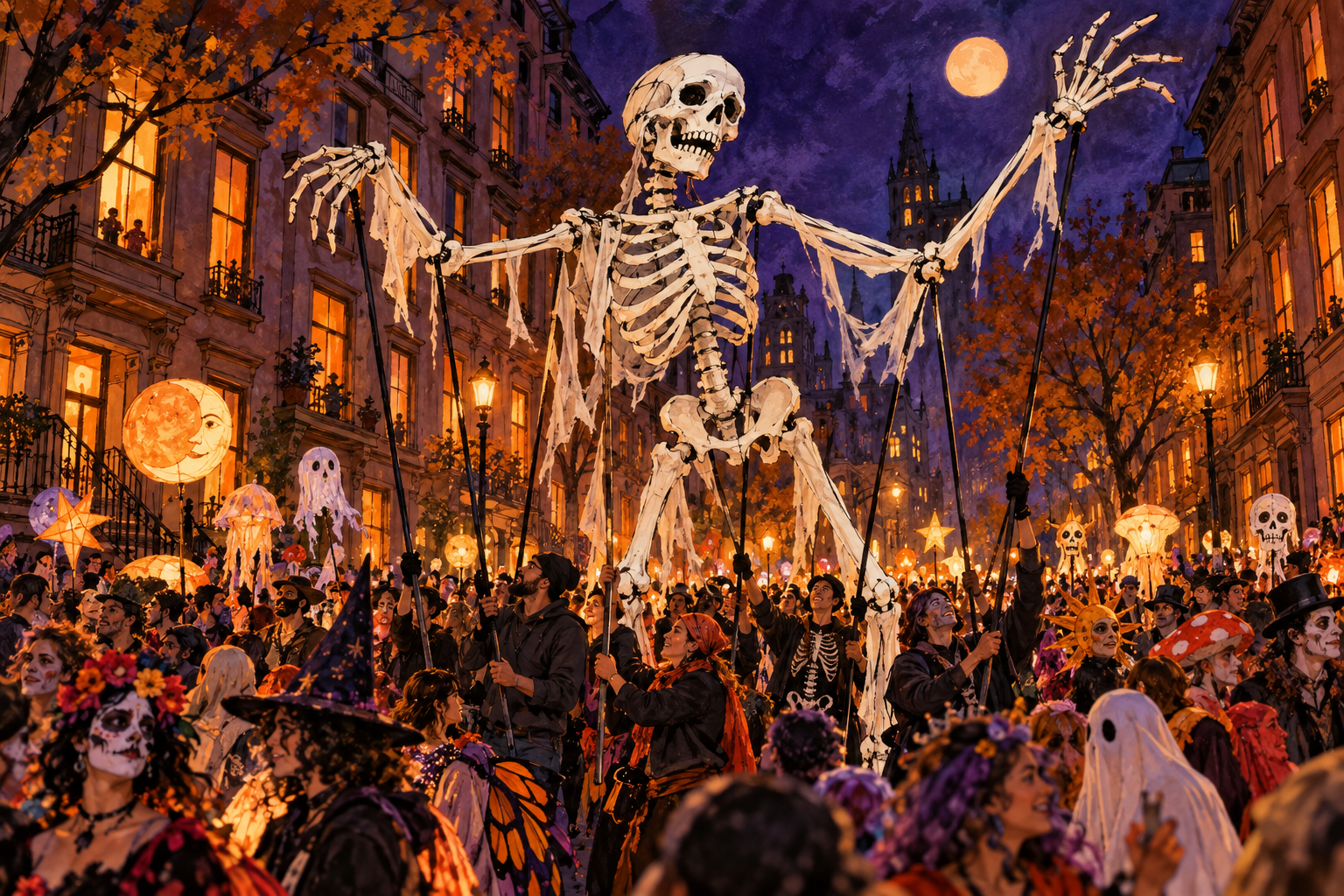
10. Scottish Guising — Earn Your Candy With a Song, a Joke, or a Story
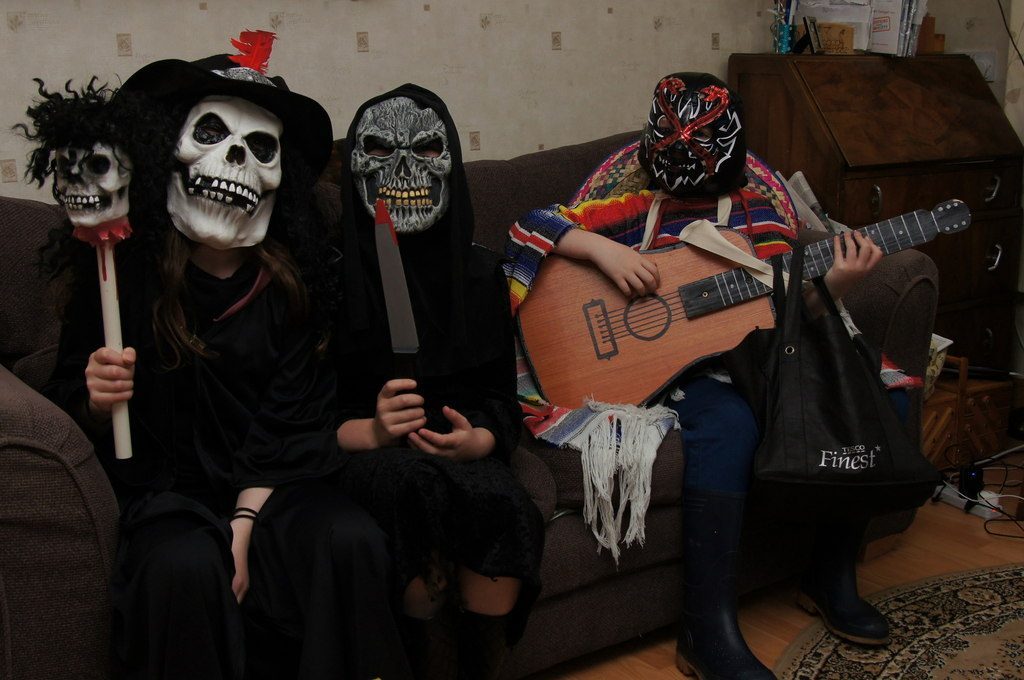
Before there was trick-or-treating, there was guising: Scottish kids dress up in disguise, go door to door, and — this is the key part — have to perform for their treats. A song, a joke, a story, a poem; the point is you work for it. The word “guise” goes back to the 13th century and the custom itself to at least the 16th, per National Records of Scotland, which also notes that early-1900s newspapers fretted that all that costumed wandering was really cover for mischief. In West Central Scots the practice is called “galoshans.” If you’ve ever handed a fun-size Snickers to a silent six-year-old in a Spider-Man suit, you’ve been shortchanged by the American version.
Source: National Records of Scotland, “Out Guising”; Atlas Obscura.
9. Irish Barmbrack — a Fruit Bread That Tells Your Fortune, One Hidden Object at a Time
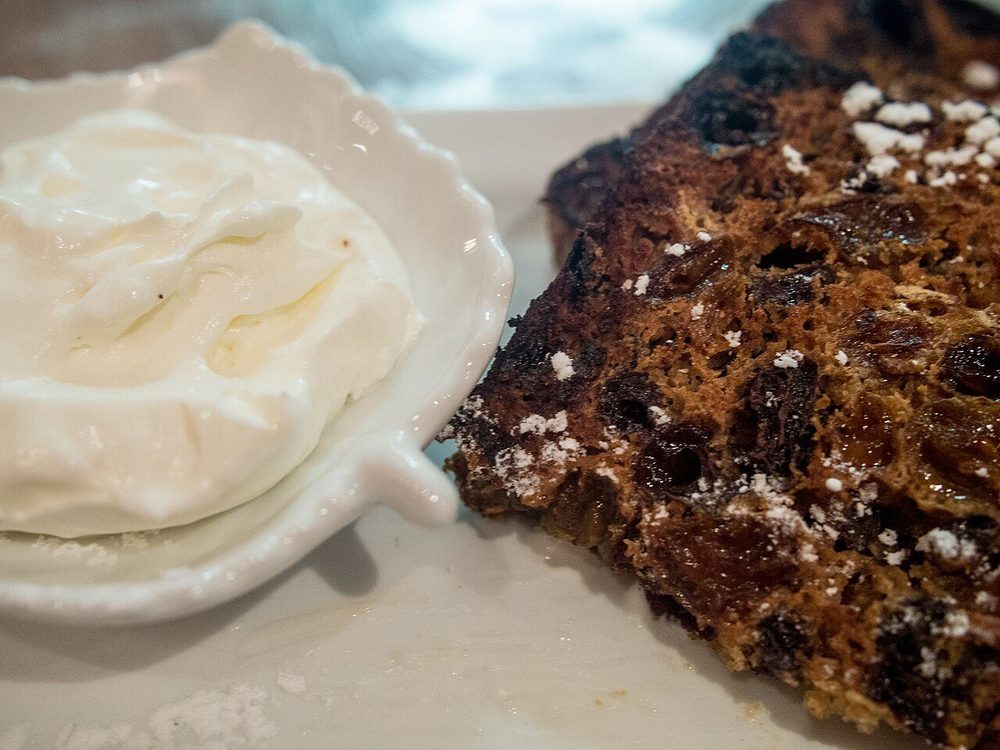
In Ireland, Halloween comes with a loaf that doubles as a horoscope. Bairín breac, the “speckled loaf,” is a fruit bread baked with small charms hidden inside, and whatever ends up in your slice is your year. Per the Government of Ireland’s own recipe page: a ring means you’ll wed within the year; a coin means good fortune; a pea means no marriage that year; a stick means an unhappy marriage or disputes; a rag means poverty or bad luck. (Some versions include a bean, but sources disagree on what it means, so I’m leaving it off the menu.) The timing isn’t accidental — Samhain, on October 31, marked the end of the harvest and the start of the new year in the old Irish calendar, so a fortune-telling loaf on that night makes a certain amount of sense. The stick seems harsh, though.
Source: Government of Ireland, “Bairín Breac: A Traditional Irish Halloween Recipe”; IrishCentral.
8. Punkin Chunkin — the Delaware Contest That Launched a Pumpkin More Than a Mile
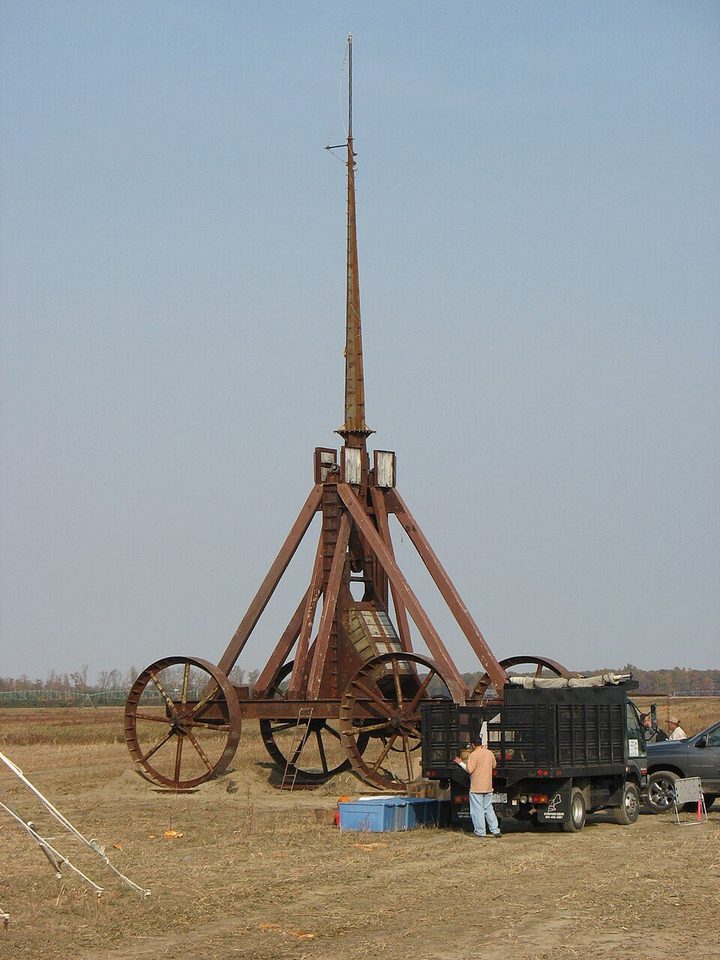
In 1986, a group in Lewes, Delaware decided the correct thing to do with a pumpkin was to see how far it could be thrown, and Punkin Chunkin was born. The contest moved to Bridgeville in 2007, by which point it had grown to about 75 teams and more than 20,000 attendees, per Wikipedia. The machines escalated from catapults to trebuchets to compressed-air cannons the size of grain silos. The World Championship distance record is 4,694.68 feet, set by the air cannon “American Chunker” at Bridgeville on November 1, 2013 — but the Guinness-recognized record is bigger still: an air cannon named “Big 10 Inch” threw a pumpkin 5,545.43 feet in Moab, Utah on September 9, 2010. That’s more than a mile, for a gourd.
The later history is bumpier. The 2014 event was canceled because the proposed Dover site was too short (a problem few festivals have). In 2016 an air-cannon malfunction injured a TV staffer, and 2017 was canceled after a lawsuit. Per Wikipedia, a brand-licensed championship was held near Vinita, Oklahoma on October 28, 2023.
Source: Wikipedia, Punkin Chunkin.
7. Guatemala’s Giant Kites — Taller Than a House, Built for the Dead
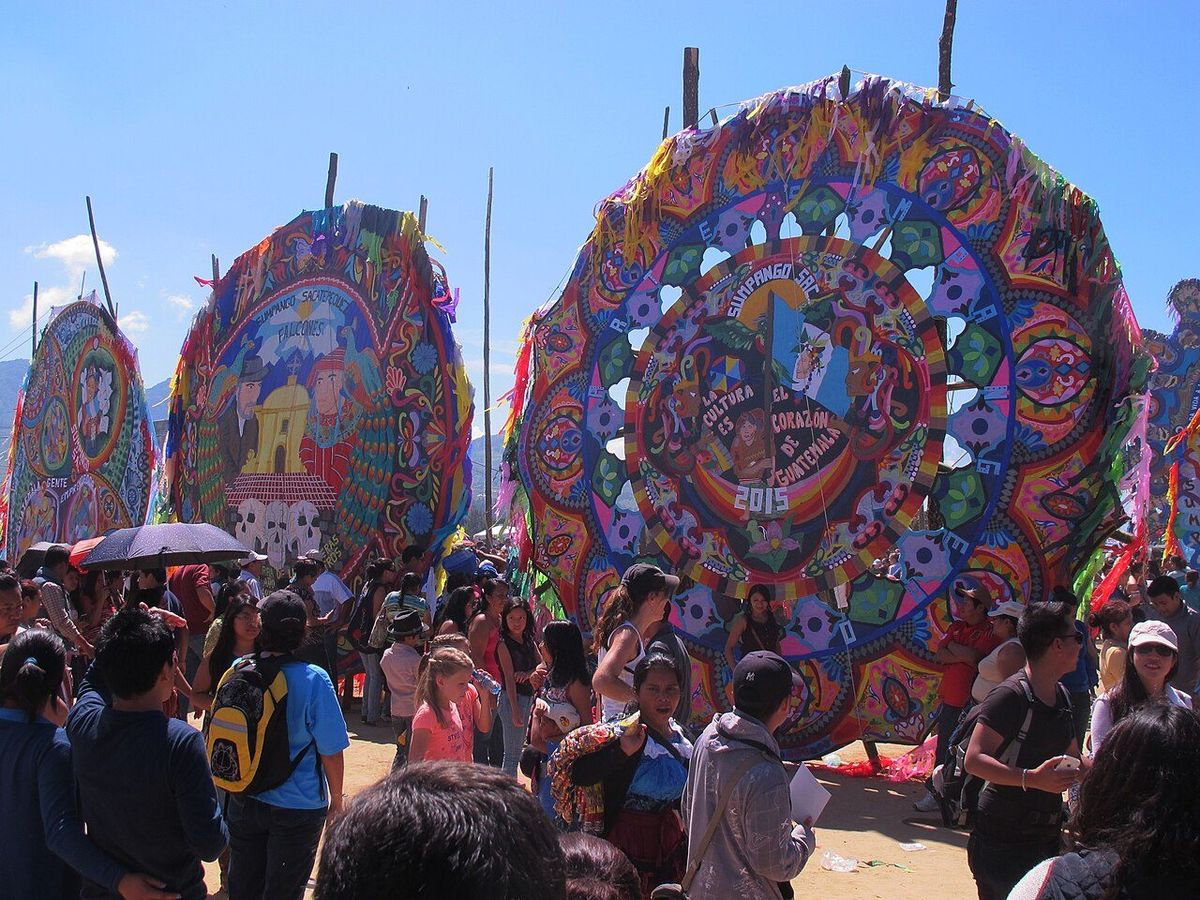
In Sumpango and Santiago Sacatepéquez, two towns less than 50 kilometers west of Guatemala City, November 1 means barriletes gigantes: enormous round kites built from paper and bamboo, painted with intricate designs, and raised in the cemeteries as part of Day of the Dead observances (Santiago’s festival runs November 1-2). Sizes vary depending on who’s measuring, but some are taller than a house. The twist is that at Sumpango the true giants don’t actually fly — they’re propped upright on the ground as towering artworks, and only the smaller kites, roughly 4 to 6 meters across, go up into the wind. On December 4, 2024, UNESCO inscribed the kite-making technique (the craft, not the festival itself) on its Intangible Cultural Heritage list, per Emisoras Unidas.
Source: Emisoras Unidas; Cultural Survival.
6. Pumpkin Regattas — Hollow Out a Giant Pumpkin, Climb In, Paddle for Your Life
Somewhere along the way, giant-pumpkin growers ran out of things to do with a 1,000-pound squash and landed on “boat.” The first pumpkin regatta was held in Windsor, Nova Scotia in 1999, organized by Danny Dill, and it inspired the rest, per Wikipedia; Goffstown, New Hampshire had one by 2001, and Damariscotta, Maine has one too. The biggest is the West Coast Giant Pumpkin Regatta in Tualatin, Oregon, co-founded in 2004 by Jim Sherwood and Ron Wilson on the Lake of the Commons. That first year drew a handful of competitors and a few dozen onlookers; by 2007 it was about 2,000 spectators, and Wikipedia now puts the crowd at roughly 20,000.

The mechanics are exactly as ridiculous as you’d hope: pumpkins are lowered into the water by forklift, racers must be over 18 and in family-friendly costumes, and the course is a quarter mile. For scale, a 2016 world-record attempt had a 1,240-pound pumpkin paddled down the Taunton River in Massachusetts.
Source: Wikipedia, West Coast Giant Pumpkin Regatta; Wikipedia, Pumpkin regatta.
5. The Asbury Park Zombie Walk — 9,592 Undead on the Jersey Shore, Guinness-Certified
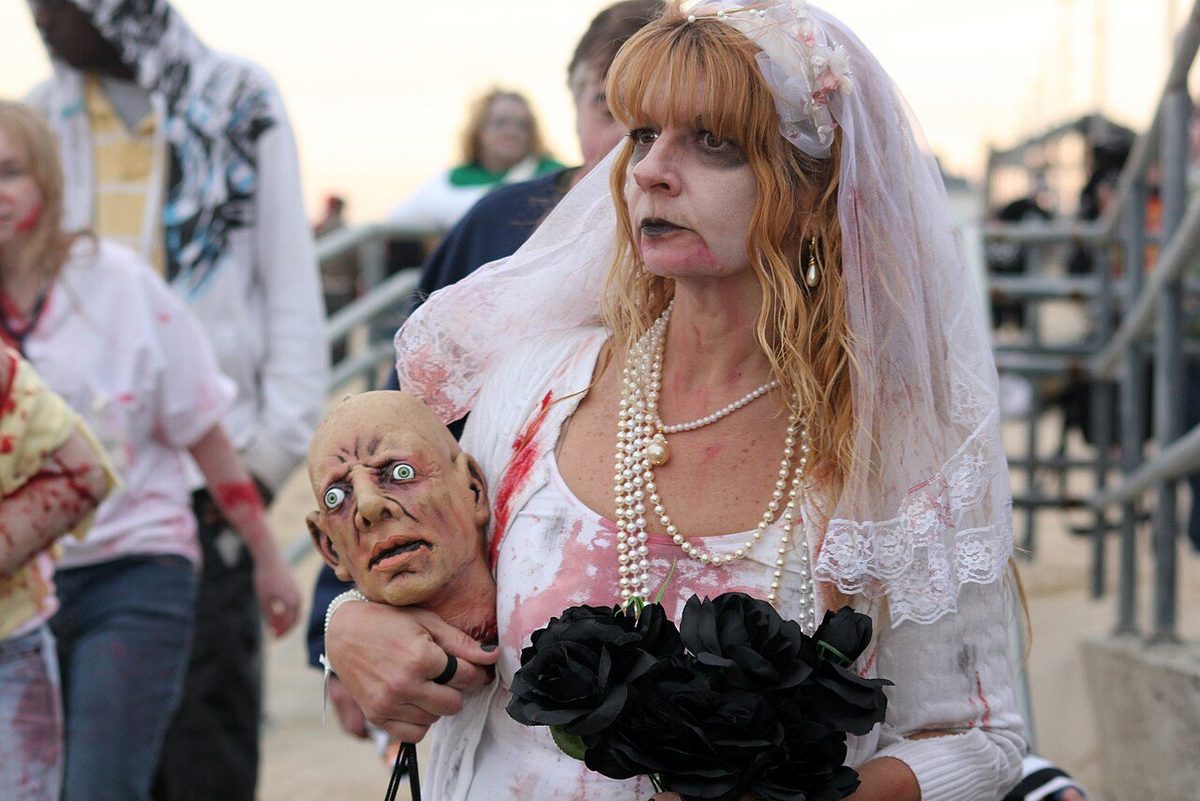
New Jersey holds a world record most states would not think to compete for. In October 2013, Guinness World Records recognized 9,592 zombies at the Asbury Park Zombie Walk, taking the title for largest zombie gathering back from Minneapolis, whose Zombie Pub Crawl had counted 8,027. It was a reclaiming, not a first: Guinness had already recognized the Asbury Park event at 4,093 zombies in October 2010, when it was only in its third year. Picture a boardwalk full of the undead, shambling, with nobody in a hurry to get anywhere.
Source: Guinness World Records; WHYY.
4. Detroit’s Devil’s Night — From More Than 800 Fires to Neighborhood Block Parties
This is the entry that isn’t fun, and then slowly becomes a civic success story. In Detroit, the night before Halloween became known as Devil’s Night, and by the 1980s that meant arson. In 1984 the city recorded more than 800 fires in that one night, per Wikipedia and Mental Floss, against a normal night’s tally of roughly 50 to 60. The city threw more police and firefighters at it in 1985, imposed a curfew on minors in 1986, and eventually organized volunteer patrols under the name Angels’ Night — residents simply being visible in their own neighborhoods on the worst night of the year.
It worked, slowly. Fires fell to 52 in 2015 and 21 in 2017, the lowest recorded. On November 1, 2017, Mayor Mike Duggan ended the Angels’ Night patrols and shifted the resources into neighborhood Halloween parties, rebranded “Halloween in the D.” In 2021 the city counted 3 structure fires. That’s the whole arc: a night that once defined a city’s reputation, turned into a block party by people who refused to leave their porches.
Source: Wikipedia, Devil’s Night; Mental Floss.
3. Anoka, Minnesota — the Self-Declared “Halloween Capital of the World” Since 1920
Anoka’s claim is simple: it threw one of the first organized Halloween celebrations in the country, in 1920, and hasn’t stopped. The origin story, per Afar, is pure small-town problem-solving. Local pranksters had made Halloween a headache — a November 4, 1914 Anoka County Union clipping describes soaped windows and torn-down fences, and local legend adds loose cows, tipped-over outhouses, and chickens on roofs. Civic leader George Green steered the kids toward tamer fun with a parade, a bonfire, and treats, and the town has held the celebration every year since except 1942 and 1943, when World War II got in the way.
The Grand Day Parade is held the Saturday before Halloween, and organizers estimate 30,000-plus visitors for the month’s events, with some estimates running to 40,000 — those are the organizers’ numbers, not an independent count. There’s also the beloved story that a local boy named Harold Blair went to Washington in 1937 to ask Congress for the “Halloween Capital” title. As the story goes, anyway — an Anoka archivist told Afar the paper trail is hard to find.
Source: Afar; Wikipedia, Anoka, Minnesota.
2. Salem, Massachusetts — a Million-Plus Visitors for a Holiday That Has Nothing to Do With the Trials
The irony at the heart of Salem’s October is that Halloween and the witch trials have, in the words of Destination Salem’s own director, no direct relationship. In 1692, twenty people were executed — nineteen hanged, one pressed to death — and for most of the following three centuries the town would have preferred to forget it. Haunted Happenings, the citywide festival that now swallows all of October, began as a one-day family festival planned for Halloween weekend in 1982, per its official history. The witch connection was marketing that eventually ate the calendar.
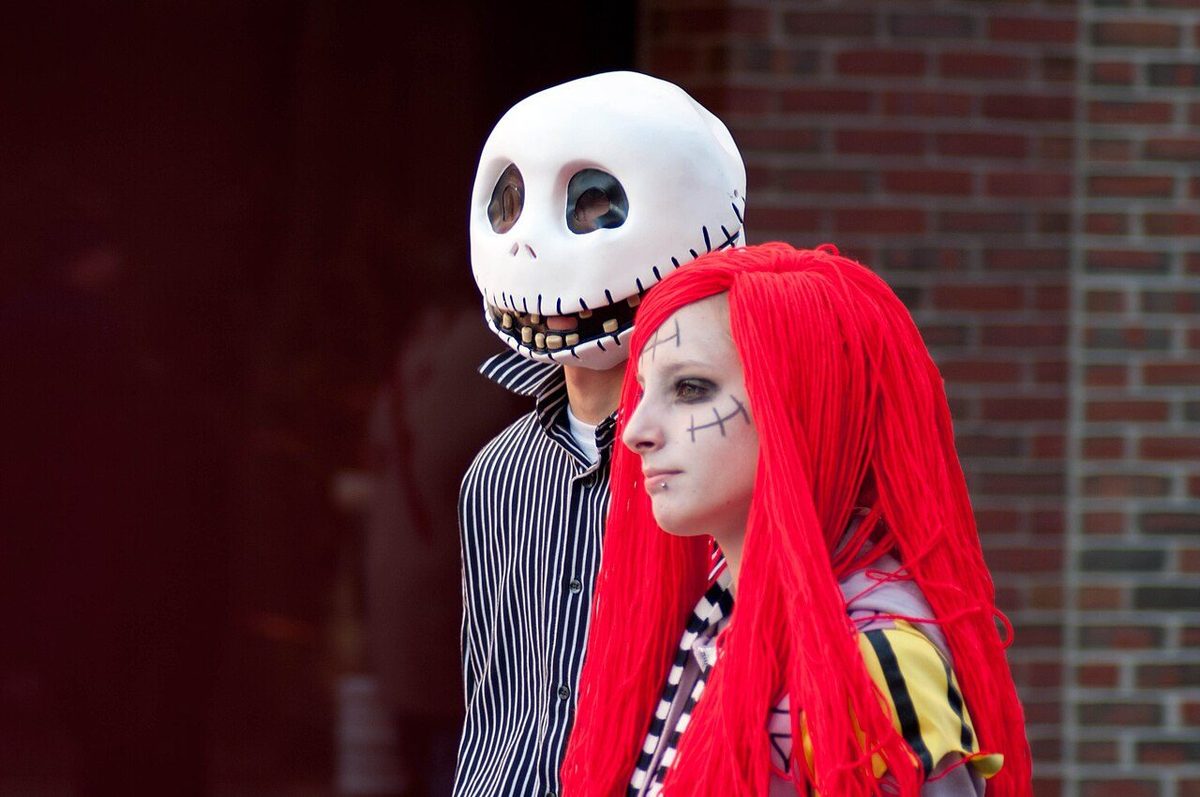
The numbers are now enormous. The city counted a record 1,040,600 visitors in October 2024, per CBS Boston; Destination Salem reported 1.1 million unique visitors in October 2025; and NBC Boston reported about 96,000 people downtown on Halloween night 2025 alone. One caveat: those figures come from different sources using different counting methods, so treat them as the same order of magnitude rather than a clean year-over-year series. Either way, a town that spent centuries not talking about 1692 now hosts a million people a year who came specifically to talk about it.
Source: Haunted Happenings, History; NBC Boston; CBS Boston.
1. The Greenwich Village Halloween Parade — a Children’s Puppet Walk That Became the World’s Largest Nighttime Parade (So It Says)
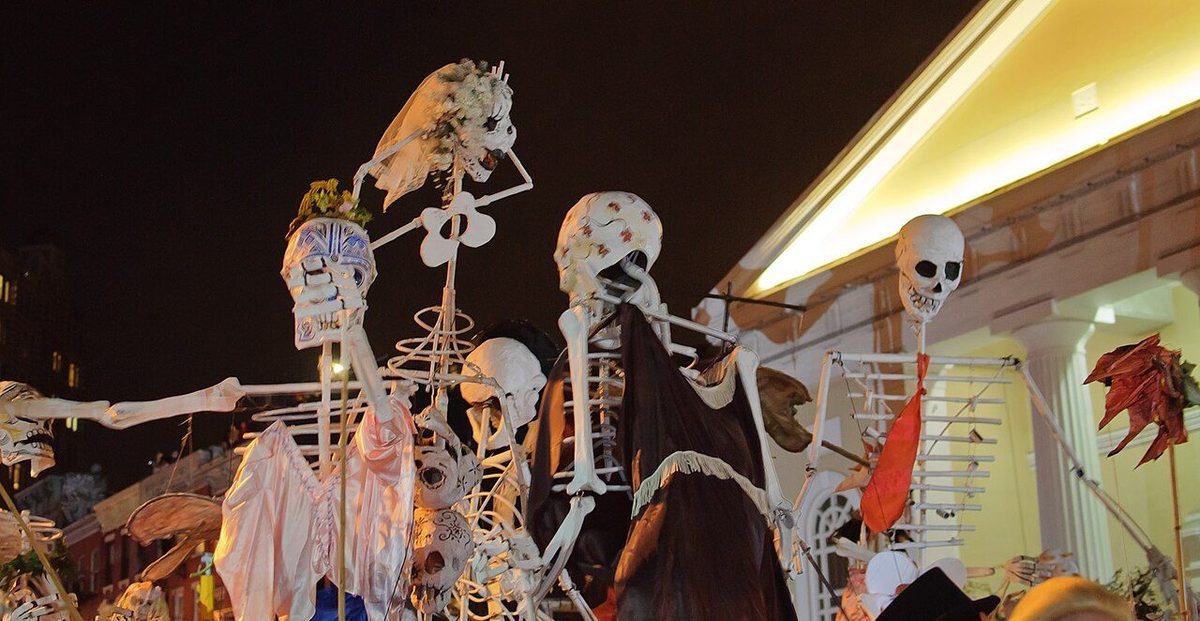
On October 31, 1974, puppeteer and mask-maker Ralph Lee organized an informal children’s puppet parade around the Westbeth Artists Community in Greenwich Village. Fifty-two years later, that walk is the Village Halloween Parade, which claims 50,000 costumed participants and 2 million spectators and bills itself as the world’s largest nighttime parade — both of those are the parade’s own claims, and 2024 sources put the figures at 65,000-plus marchers and 1.5 million spectators, so the exact size depends on who’s counting. Its roots run through New York’s queer community, and its signature is still the puppets: giant rod puppets animated by hundreds of volunteers, with Processional Arts Workshop serving as the official puppet designer since 1998. Dancing skeletons traditionally lead the march.
The parade’s history doubles as a history of the city’s bad years. In 2001, less than seven weeks after 9/11, it went ahead anyway, led by a giant puppet called “Phoenix Rising.” Hurricane Sandy canceled it in 2012, and a 2013 Kickstarter raised $56,000 to bring it back. COVID canceled it in 2020. It has always come back — and anyone can march, as long as they’re in costume. Which is the whole point of the night.
Source: Wikipedia, Village Halloween Parade.
Ten traditions, each checked against the source linked under its entry rather than a secondhand “spooky facts” list, with the organizer-supplied crowd numbers labeled as such. The pattern that jumps out: nearly every one of the American entries started as a way to channel mischief — soaped windows in Anoka, arson in Detroit, a town that wanted to forget 1692 — into something a whole community could show up for. Happy Halloween. Go perform a joke for your candy.