
I was today days old when I learned that a backyard moonshine still exploded in Wilkes County, North Carolina, this week — and that I’ve almost certainly had a jar of its apple or peach moonshine before. Then I kept reading, and the story got a lot bigger than one still: this is the exact county where teenagers hauling liquor past federal revenue agents turned into the sport we now call NASCAR.
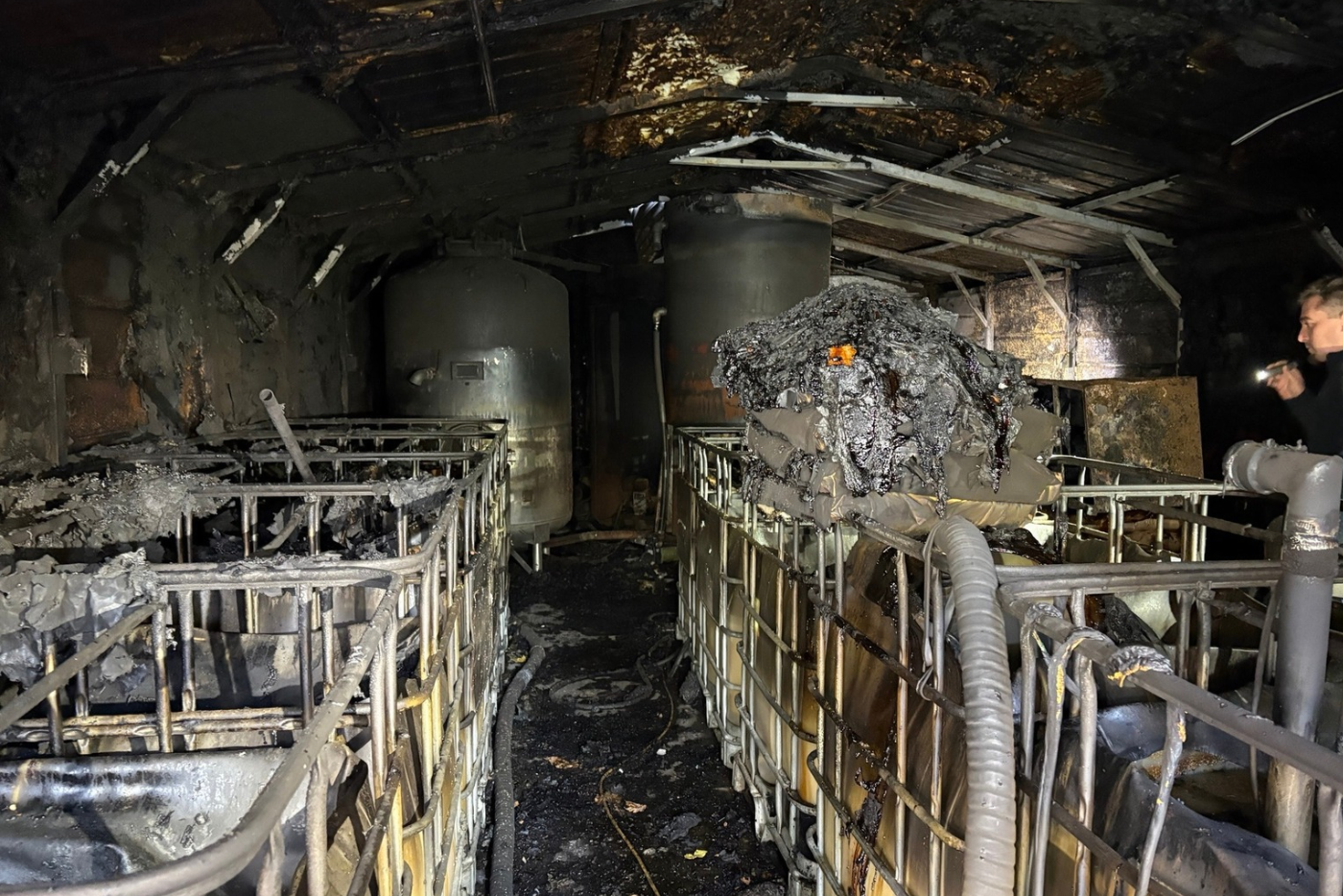
Photo: NC Department of Public Safety.
The still on Cove Creek Drive
On Monday, October 26, 2026, an explosion and fire on Cove Creek Drive in Wilkes County brought out the local firefighters. When they got the flames down, they found what had been burning: an active 200-gallon liquor still. They called in North Carolina Alcohol Law Enforcement, and ALE agents ended up seizing the still itself, roughly 1,800 gallons of mash, and 161 gallons of finished moonshine. That’s a lot of product for a backyard. Source: NC Department of Public Safety.
Billy Ray Anderson, 69, of North Wilkesboro, was charged with six misdemeanors: manufacturing non-taxpaid liquor, possession for sale of non-taxpaid liquor, possession of non-taxpaid liquor, possession of distillery equipment, possession of distillery ingredients, and allowing his property to be used for manufacturing non-taxpaid liquor. Nobody was hurt — no injuries or deaths were reported by anyone, which, given 1,800 gallons of fermenting mash next to an open flame, feels like the luckiest part of the whole thing. Source: NC Department of Public Safety.
Here’s my personal connection, and I’ll be honest about how confident I am in it: apple and peach moonshine from this area is a known local product, the kind that shows up in Mason jars at gatherings without anyone asking too many questions about provenance. I have had it, more than once. I can’t prove a specific jar traced back to Cove Creek Drive, but given how this stuff moves around a county that size, I’d put the odds very high that I’ve tasted this exact operation’s work. Reading a state press release about a 200-gallon still and thinking “oh, that’s the peach stuff” is a strange way to start a Tuesday.
Turns out this county’s bootleggers gave us NASCAR
This is the part I didn’t know. Wilkes County, and North Wilkesboro specifically, is where the moonshine-running origin story of stock car racing actually happened — not in the abstract, but on the same back roads where this week’s still was sitting.
The emblem of that story is Junior Johnson, nicknamed “The Wilkes County Wildman.” As a teenager, Johnson learned to drive by hauling his father’s moonshine on Wilkes County back roads, outrunning federal revenue agents who wanted to seize the cargo and arrest the driver. That is not folklore embroidered after the fact — it’s the documented beginning of his driving career, and it’s the subject of Tom Wolfe’s famous essay “The Last American Hero.” Source: Wikipedia, Junior Johnson.
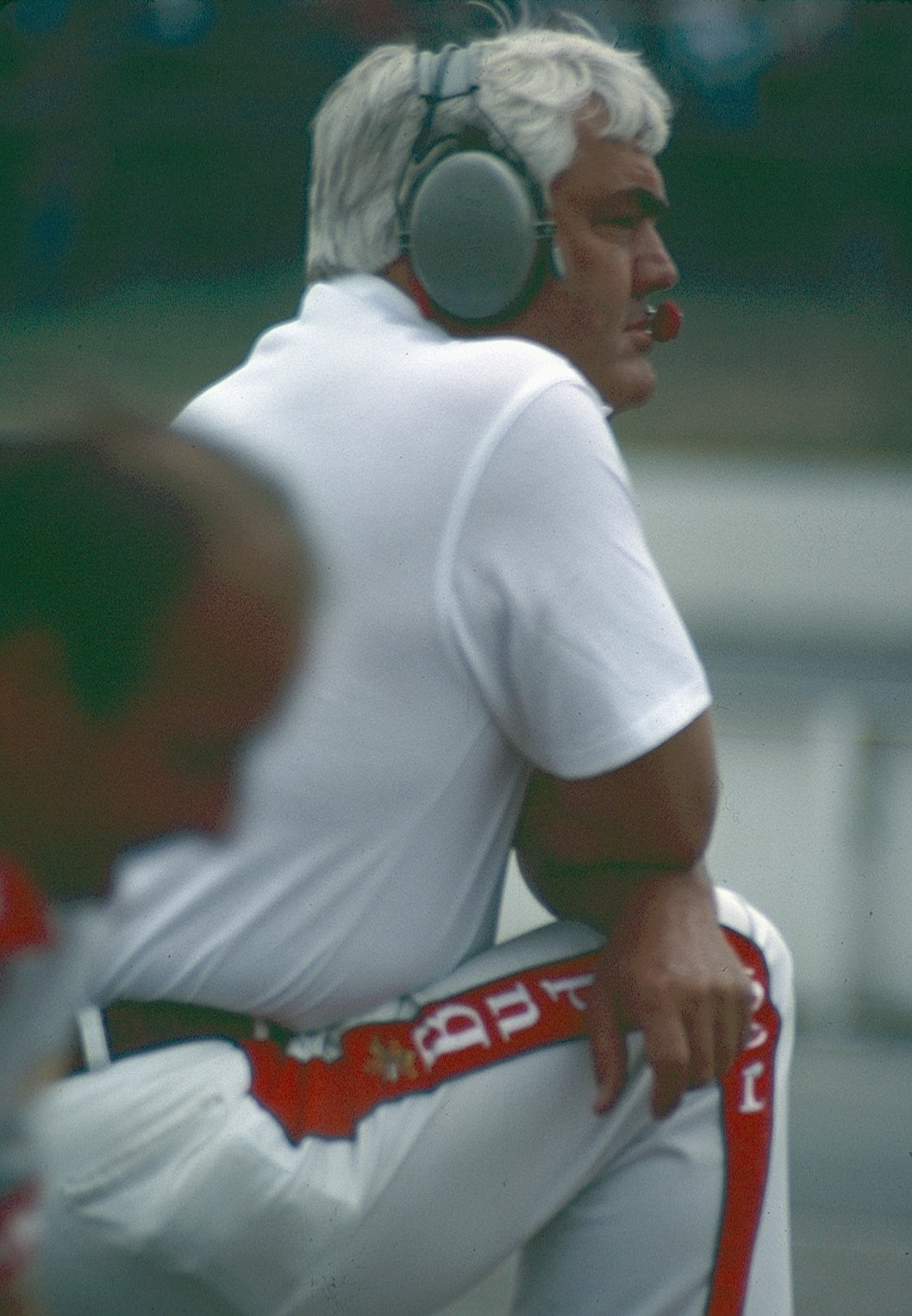
Johnson ran his first race at North Wilkesboro Speedway in 1949, and the skills he’d built evading the law turned out to translate directly to a racetrack. He won 50 NASCAR races as a driver, then another 132 as a car owner, and was inducted into the NASCAR Hall of Fame. And in the single detail I can’t get over: his actual moonshine-running still — the one he used before the racing, not a replica — is on permanent display at the NASCAR Hall of Fame. The sport put a bootlegger’s still in its museum, because the sport knows exactly where it came from. Source: Wikipedia, Junior Johnson; NASCAR Hall of Fame.
To be precise about the claim: nobody signed NASCAR’s founding paperwork in Wilkes County, and I’m not saying the sanctioning body was born there. What I am saying is that the thing the sport is built on — fast, ordinary-looking cars driven by people who learned to drive them hard because the law was behind them — was being perfected on these roads by Wilkes County moonshine runners, and its most famous practitioner went on to one of the greatest careers in racing history. So when a 200-gallon still blows up on Cove Creek Drive in 2026, it isn’t a random crime story. It’s the same county, the same product, and the same reason the revenue agents are still showing up 70-plus years later.
And the “Moonshiners” TV show? It’s complicated
If your mental image of all this comes from Discovery Channel’s “Moonshiners,” here’s the honest reality check. The show premiered December 6, 2011, and is still going — season 16 premiered September 29, 2026 — and it’s officially labeled a “docudrama,” not a straight documentary. That label is doing real work. Source: Wikipedia, Moonshiners (TV series).
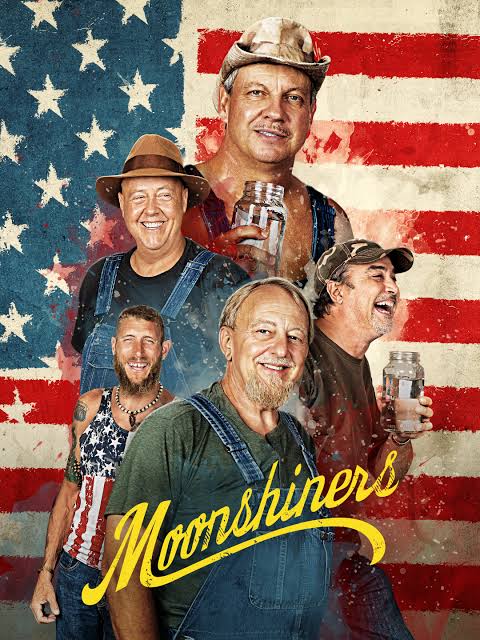
The show is set across Appalachia broadly — Virginia, Kentucky, North Carolina, South Carolina, Tennessee — and its best-known current cast members, Tim Smith and “Tickle,” are based in Virginia. I looked for a direct tie between any specific episode and Wilkes County or North Wilkesboro and didn’t find one, so I’m not going to claim the show was filming down the road from this week’s explosion. It wasn’t, as far as I can tell. Source: Wikipedia, Moonshiners (TV series).
As for how real it is: Virginia’s Alcoholic Beverage Control Bureau has publicly disputed the show’s authenticity, saying that “if illegal activity was actually taking place, [we] would have taken action,” and that producers ignored its request to add an on-screen “dramatization” disclaimer. The production company, Magilla Entertainment, has stood by the show as real. So the fair read is that it’s a hybrid: real people with real distilling knowledge, shaped and edited like any reality show, with at least one law-enforcement agency on the record saying it’s more staged than it looks. I’m not going to settle that argument here. Source: Wikipedia, Moonshiners (TV series).
What I can tell you is that the Cove Creek Drive still was not a dramatization. The mash was real, the fire was real, the six charges are real, and the county it happened in has been making this exact product — and producing drivers fast enough to get it out of there — since before NASCAR had a name. I just didn’t know, until today, that I’d been drinking a small piece of racing history.