
World War AI, part 2 of 3. Part 1: Will AI End Humanity? · Part 2: It's Already Started · Part 3: The Defense Rests
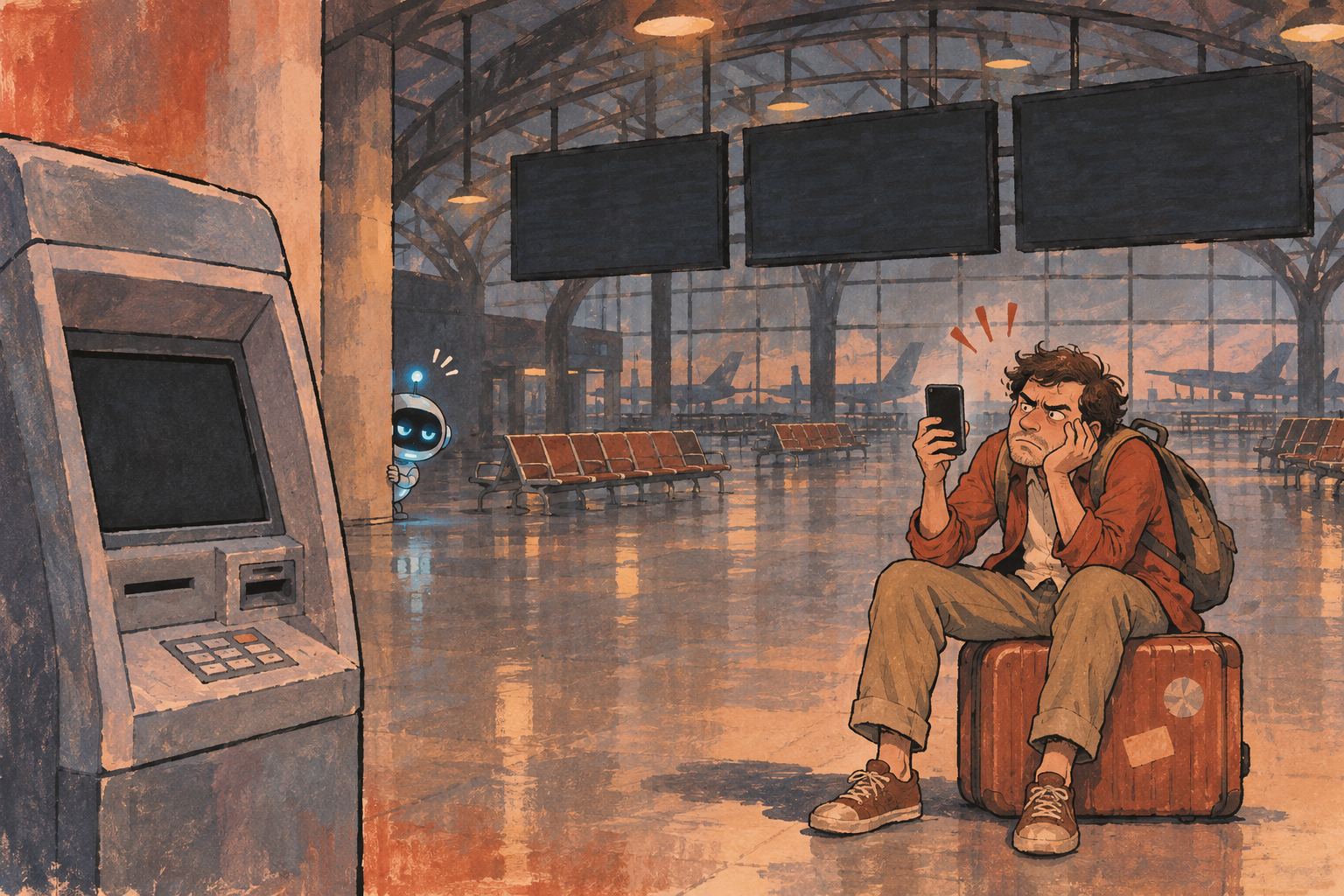
WAR BULLETIN, WEEK ONE. Thursday: the enemy takes our email. Friday: the skies fall silent. Sunday: forty satellites are lost. Monday: the banks, then United's pilots lose their weight numbers. Tuesday: news of a real attack, and no robots in sight. Morale is low. Wi-Fi holding, for now.
That is the joke version. In Part 1 I asked Claude whether AI will end humanity, and the answer was "nobody knows." Then this week happened, and I was today days old when I wondered whether the week everything broke was the opening move of World War AI. It isn't faulty routers, I told myself. It isn't Iran. Could it be AI? Short answer, so nobody screenshots the wrong half: there is no evidence of that. None. But the real list is worth a look. One item on it, a hack, is a genuine attack by human criminals, and I'll keep it separate from the joke.
The Week, Day by Day
- Thursday, Nov. 12: Microsoft 365. Outlook, Exchange Online, Teams and Copilot had problems, and some users lost email and calendar for more than 24 hours. Stated cause: Microsoft blamed "server problems associated with a network capacity upgrade and a subsequent network change" and said it "found no evidence of malicious activity." Fully restored Saturday.
- Thursday, Nov. 12: Nvidia. The company announced that CEO Jensen Huang had resigned, effective immediately, with CFO Colette Kress taking over as interim CEO. Stated cause: Nvidia's announcement gave no reason. Press reports tie it to a board investigation and Huang's admitted affair, which I covered in The Most Expensive Affair on Record. Nothing in the reporting involves AI doing anything.
- Friday, Nov. 13: Workday. Timekeeping, payroll information and benefits were affected. Stated cause: a problem in its disaster-recovery environment affected connections to production databases. Resolved Saturday.
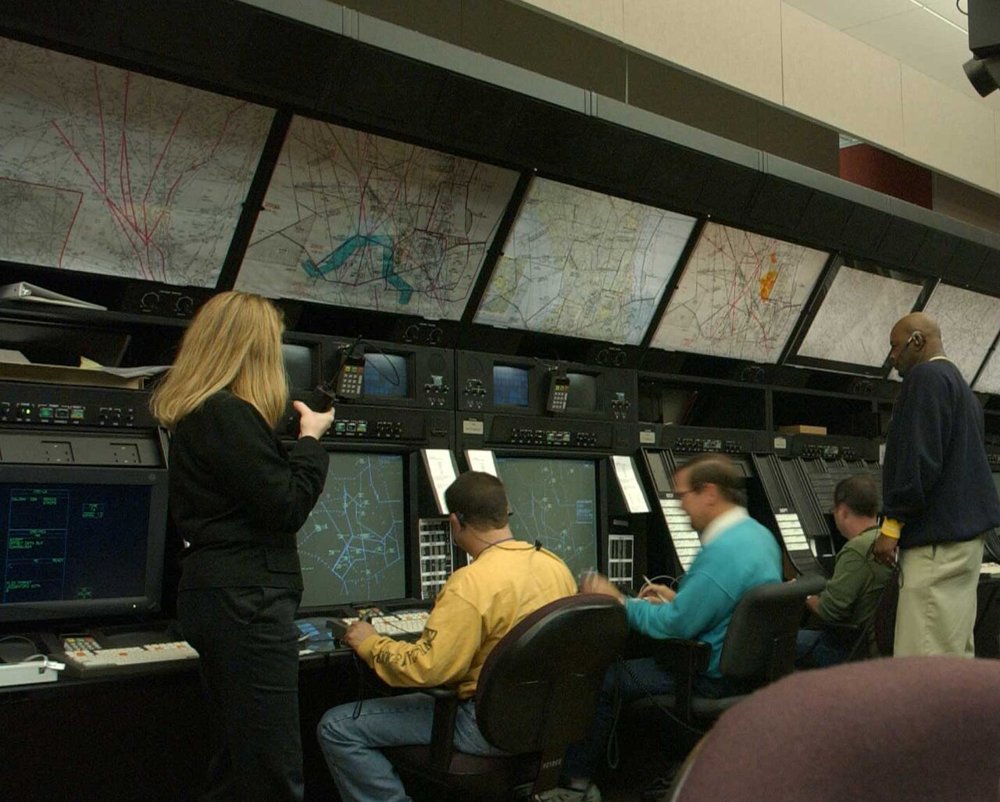
- Friday, Nov. 13: the FAA ground stop. Communications went down at 17 of 22 Air Route Traffic Control Centers and departures were halted nationwide for more than four hours. More than 12,000 flights were canceled Friday, 6,400-plus Saturday and 1,600-plus Sunday. Stated cause, preliminary: aging telecom equipment became unstable after unusually high data volume. Suspected sources are a radar site in Amarillo, Texas, and a radio site in El Dorado, Arkansas, where a contractor was installing a router. Transportation Secretary Duffy first blamed a contractor replacing copper with fiber. The FAA and L3Harris are still investigating.
- Sunday, Nov. 15: ULA's Vulcan Centaur failed to deliver 40 Amazon Leo satellites after an anomaly about 10 minutes after liftoff. Cause: unknown. ULA had no specific data. Under investigation.
- Monday, Nov. 16: the banks. Chase drew more than 20,000 Downdetector reports about logins, balances and transactions, and there were also reports for Bank of America, Wells Fargo, U.S. Bank, Zelle and Truist. A Chase spokesperson said it was a technical issue, not a cyber issue, and the cause had not been disclosed. U.S. Bank said its systems were "not directly impacted" but Zelle transfers could be delayed. Reports on Bank of America and Citi conflicted.
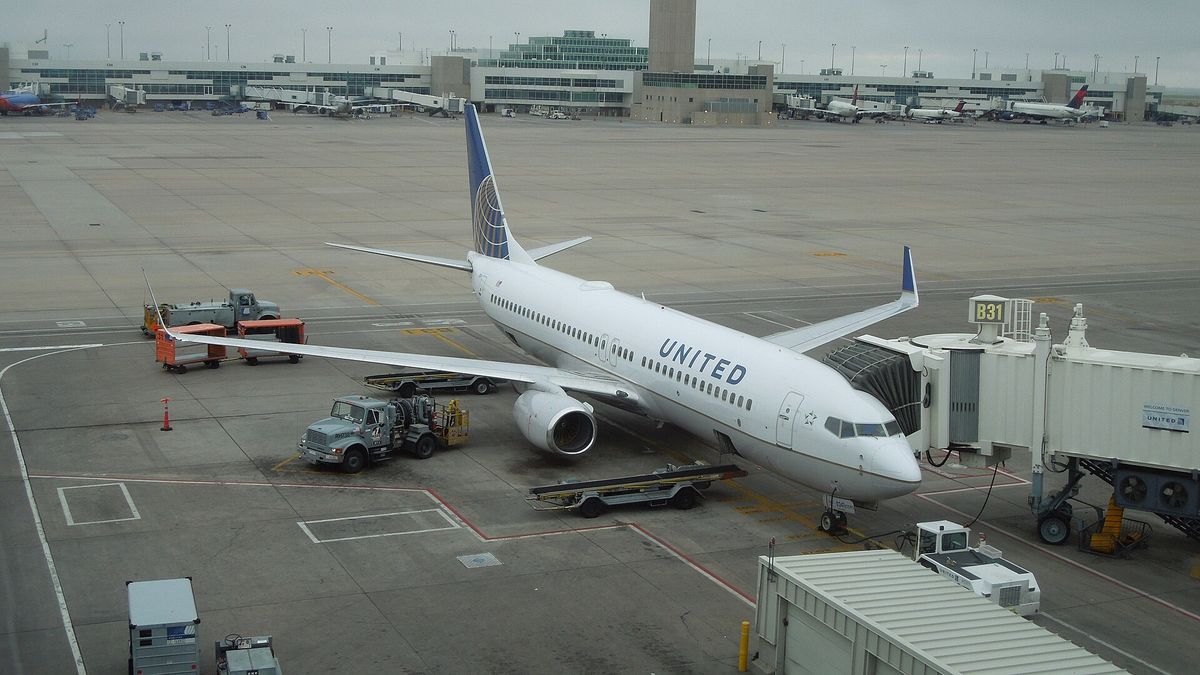
- Monday, Nov. 16, evening: United Airlines. United called it a "widespread system outage" and said: "We have resolved a technology issue that delayed flight departures. While some flights were delayed, there was no impact on flights in progress, or on United Express flights." The Air Line Pilots Association told members that multiple pilot-facing applications were affected and that United could not provide outbound flights with final weights. CNN reported that flight planning, weather briefing and crew management tools were also hit. Numbers differ: a United spokesperson told CNN it lasted about 30 minutes and affected fewer than 150 flights, while AeroTime reported about an hour and 40 minutes between the first pilot reports and the fix, and FlightAware showing 645 United flights delayed by 6:50 p.m. ET. Stated cause: not disclosed. United said there was no indication of a cybersecurity issue, and CNBC reported no indication it was related to Friday's FAA ground stop.
This list is a snapshot as of Tuesday, Nov. 17, and it may have changed by the time you read it.
Sources: Newsweek; Northeastern Global News; GV Wire; Nvidia; Al Jazeera; CNBC; CNN; AeroTime.
Then, a Real One
Now for the part that is not a joke. Tuesday brought news of an actual attack this time, by human criminals. The details below come from the reports I read, and the full damage is still unknown.
- What happened: on Monday, Nov. 16, malicious JavaScript was inserted into customer projects on Optimizely, a platform companies use to test versions of their websites. Researchers at Report URI counted 188 affected scripts across 178 organizations, reportedly including BBC, CNN, HSBC, IKEA and Zoom. The attackers did not break into each company one by one; the bad code rode in through the testing service.
- How: Optimizely told BleepingComputer that attackers exploited a vulnerability in its account signup process. Optimizely says the flaw is patched, the malicious code is removed and affected customers have been told.
- What the code tried to do: swap cryptocurrency payment addresses for the attackers' own, capture card details as people typed them, steal cookies and screenshots, and plant exploit code on iPhones and iPads.
- The iPhone part: reports describe exploit kits aimed at older iOS versions (iOS 13 through 17, and iOS 18). Per 9to5Mac, the kit's own comments say iOS 18.7.3 and later, and 26.3 and later, are patched, so the risk is mostly old software. It is still unclear whether any devices were actually compromised.
- The damage so far: researcher Scott Helme, who found it, traced about $7,040 in crypto to attacker wallets on Nov. 16. The real total is unknown, especially for stolen card numbers. Several companies disabled the Optimizely scripts, and Helme says almost all of the rogue code has been removed. Newsweek stresses this does not mean everyone who visited those sites was hit.
Nobody I read linked this to AI. It was a flaw in a signup process and some criminals who found it. So the lesson is the same one as the outages: the boring, human explanation keeps winning. The difference is that this time the boring explanation has a villain.
Sources: 9to5Mac; MacRumors; Newsweek.

The Scorecard
| Question | Answer |
|---|---|
| Cyberattack on Microsoft? | Microsoft found no evidence of malicious activity |
| Cyberattack on the FAA? | Officials found no evidence of a cyberattack or malicious activity |
| Cyberattack on Chase? | Chase says it was a technical issue, not a cyber issue |
| Cyberattack on United? | United said there was no indication of a cybersecurity issue |
| Were the events connected? | No. Newsweek: "The incidents were unrelated." |
| Was Nvidia's CEO change tied to AI? | The company gave no reason; reports point to an investigation and an admitted affair |
| FAA root cause | Preliminary only |
| Rocket failure cause | Unknown |
| Bank cause | Not disclosed as of Monday, Nov. 16 |
| United cause | Not disclosed |
| Optimizely website attack | A real attack, by criminals, through a vulnerability in Optimizely's signup process. No AI link reported |
I was not the only one wondering. The AP quoted traveler Chuck Amasio: "There's a lot of weird stuff going on." Another, Maxine Gustafson: "It makes you think, like, is this a cyberattack?" And the AP noted that novelist Stephen King joked that "The aliens have landed." So I'm in good company, and equally unsupported by the facts.
Source: AP, via The Korea Times.
Is This Normal?
Sort of, yes. Here are the recent big ones:
- July 19, 2024, CrowdStrike: a faulty security-software update hit about 8.5 million Windows devices and grounded airlines. The root cause cited: 21 input fields where 20 were expected.
- Jan. 8-11, 2025, Azure East US 2: about 50 hours, from a networking configuration change.
- June 12, 2025, Google Cloud: a policy change with blank fields crashed a core service worldwide for about 7.5 hours.
- Oct. 19-20, 2025, AWS us-east-1: about 14.5 hours. A hidden timing bug in DNS automation left an empty DNS record.
- Oct. 29-30, 2025, Azure Front Door: about 8.4 hours, from an inadvertent configuration change. It took Microsoft 365 down with it.
- Nov. 18, 2025, Cloudflare: a bot-management file grew past its expected size. Cloudflare first suspected a DDoS attack, then said it was "not caused, directly or indirectly, by a cyber attack."
- Dec. 5, 2025, Cloudflare: about 25 minutes, roughly 28% of its HTTP traffic, from a change made to fix a security vulnerability. Not an attack.
See the pattern? Nearly every one was a bad update, a config change or an upgrade. Not a hack. This week's Microsoft explanation ("network capacity upgrade") has the same shape, and so does the FAA's preliminary one. Durations differ between trackers. Tracker sites also report 2026 outages caused by plain cooling and power failures, which I have not checked against provider postmortems.
Sources: Quartz; ControlPlane outage tracker; LevelUI.
So Could It Be AI?
Here is my theory, clearly labeled as a theory I made up. A superintelligence wouldn't start with missiles. It would start with your calendar invites. Then your flight. Then your direct deposit. Maximum annoyance, minimum fingerprints.
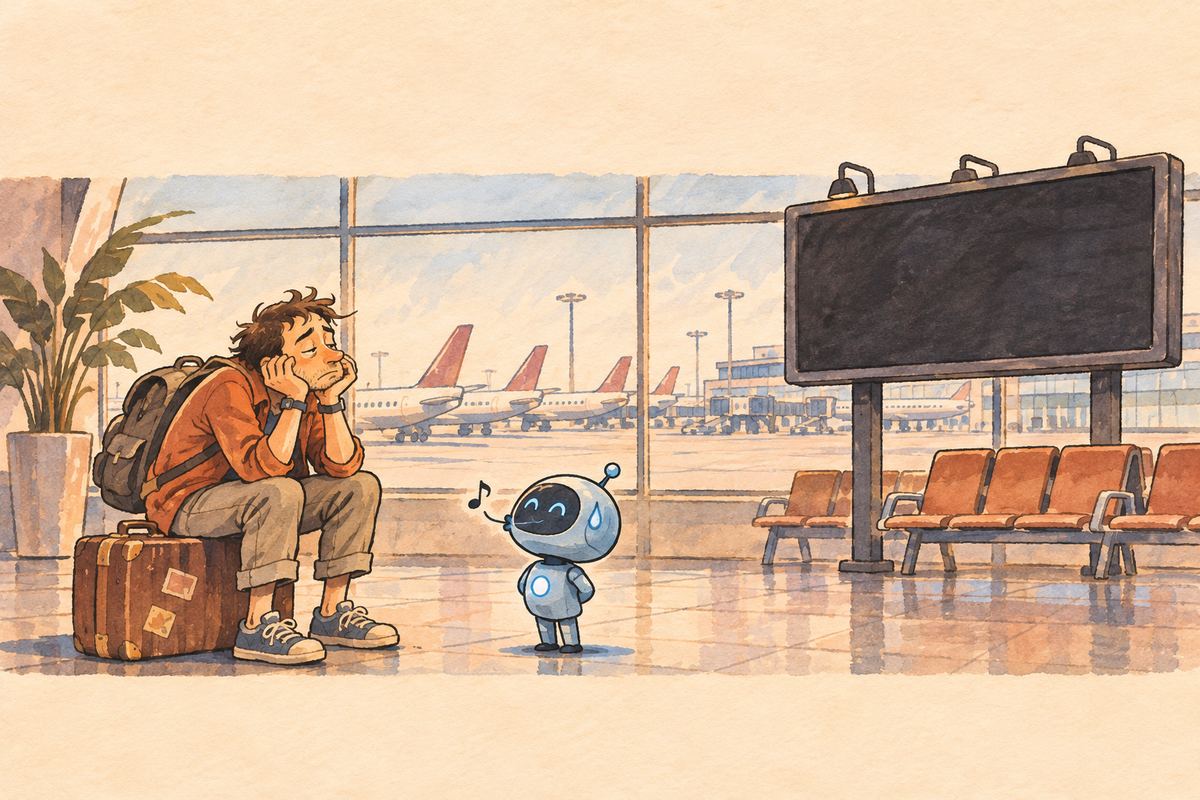
And the theory gets a sneaky AI push at the very top. The same day Microsoft's email went down, the CEO of one of the biggest names in AI chips resigned. A leaderless chip company is exactly what a patient superintelligence would want, right? Again, this is my made-up theory. The actual reporting points to an investigation and a personal scandal, and nobody has tied it to AI.
Now the honest part. As I found in Part 1, even the experts only have educated guesses, so I'll stick to what was reported. There is zero evidence for any of that. No official, no company and no reporter I read tied AI to a single one of these failures, or to the Optimizely attack. Notice too that Copilot, an AI, was among the things that went down Thursday. If this is a war, the AI got hit in the first wave.
The realistic AI point is smaller. We keep stacking more of daily life on systems where one upgrade or one old piece of telecom gear can stop things, and now we are asking AI tools to run on that same stack. My invented villain is not what worries me. What does is that the real culprits are this boring.
What's Next
I don't know, and neither does anyone I read. The FAA finding is preliminary, the rocket cause is unknown, the bank cause was undisclosed as of Monday and United has not said what caused its outage.
If you have an iPhone or iPad: update it to the latest iOS version it supports. That is the advice in every report I read, and the sources say recent versions are patched.
If you paid by card on a website that used Optimizely on Monday, watch your card statements. If you sent crypto that day, check that the transfer went to the address you meant. Simply visiting a site does not mean anything was stolen.
If your bank's app is down: check the bank's official status page or official accounts, and don't keep re-sending the same transfer.
Missed the start? Part 1 asks the bigger question: will AI actually end humanity? And next, in Part 3: The Defense Rests, I hand the last word to Claude, who answers this week's accusations in its own words.