
I was today days old when I realized the points sitting in my account are not really a balance. They are a promise, and the people who made the promise can change the terms whenever they like. In Part 1 I followed the money behind a rewards card from the store’s swipe fee to my statement. This is the other half: what the points are worth once you have them, whether a $795 or $895 card ever pays for itself, and who in the system is actually footing the bill. The last answer surprised me most, so I’ll start there.

Who funds the points
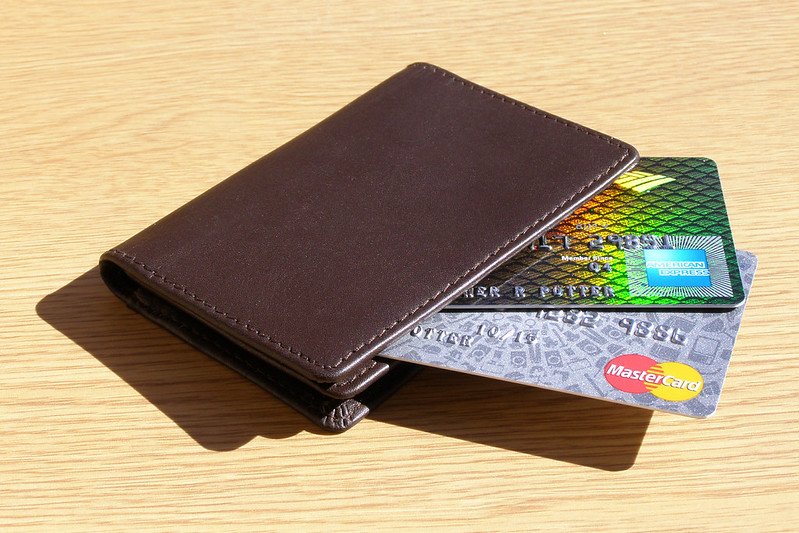
Card companies divide customers into two groups. Transactors pay in full every month. Revolvers carry a balance and pay interest. In Story #169 I worked out that I’m a transactor hiding inside the national debt number. Here is what each group puts in and takes out:
- Consumers who carry debt “earn just 27 percent of rewards… while paying 94 percent of the interest and fees.” The blog post does not state the data year, so treat it as a recent-years figure rather than a 2026 one. Source: CFPB blog, May 2, 2024.
- In 2022, rewards on general-purpose cards topped $40 billion, against more than $130 billion in interest and fees, about $105 billion of it interest. For revolvers, interest and fees “almost always outweighed” their rewards. Source: CFPB 2023 report, via Consumer Finance Monitor.
- By 2024 the interest side had grown to $160 billion, plus $31.3 billion in fees. About 15% of general-purpose cardholders made only the minimum payment, and roughly half of accounts revolved. Source: CFPB Consumer Credit Card Market Report, Dec 2025. The CFPB has not published a matching 2024 rewards total, so the two sides cannot be netted for that year.
- Federal Reserve economists, using 2014–2019 account data, found heavy revolvers paid 72.18% of all interest, light revolvers 20.81%, and transactors 0.70%. Transactors were 21.47% of accounts but 39.11% of purchase volume, and paid about $0.55 a month in interest. Source: Fed FEDS Note, Sept 9, 2022.
- The same note puts issuers’ rewards expense at about 1.5 cents per purchase dollar by late 2021, finds the purchase side of the business roughly break-even to slightly negative (about –4%) after interchange and rewards, and attributes about 80% of card profitability to revolving balances.
Put plainly: the merchant fee from Part 1 roughly covers the points, and the profit comes from people paying interest. The Fed note is careful not to say revolvers “pay for” transactors’ rewards, and I won’t either. But the two groups are sitting at the same table, and only one of them is picking up the check.
Why the seat you were saving for keeps moving
The CFPB’s 2024 rewards spotlight (now an archive page, since the agency’s posture has shifted) describes the mechanism in one sentence: issuers and partners “raise the points or miles needed for redemption, which lowers the value of rewards already earned.” Source: CFPB, May 9, 2024. The airlines have been doing exactly that, on the record, for a decade:
- Delta, Feb 2015: removed its published award chart for U.S. and Canada-origin awards, so there was no longer a fixed price to hold it to. Source: MileValue.
- United, effective Nov 15, 2019: award pricing on its own flights went dynamic with “no minimum or maximum award price,” and United stopped publishing a partner chart. Source: One Mile at a Time.
- American, Apr 5, 2023: ended Saver and AAnytime awards for a “starting from” chart on its own flights. One-way business class, Saver price vs. new starting price: Europe 57,500 → 75,000 miles; Asia Region 1 60,000 → 95,000; long-haul South America 57,500 → 90,000. Partner awards did not change. Source: View from the Wing.
Two fairness notes. First, dynamic pricing cuts both ways: in that same American update, the domestic business “starting from” price fell from 25,000 to 15,000 miles, and the author’s view was that the change mostly formalized prices already in effect because cheap Saver seats had dried up. The pain lands mainly on premium cabins and peak dates. Second, these are airline decisions, not bank decisions. Your bank’s points transfer into these programs, which means the bank can hold its own value steady while the thing you transfer into gets more expensive.
What a point is worth depends on who is counting
There is no official exchange rate, and the people publishing one usually have a stake in the answer:
- The Points Guy values Chase Ultimate Rewards at 2.05 cents and Amex Membership Rewards at 2.0 cents in its 2026 monthly valuations. TPG earns commissions on card sign-ups, which is worth knowing when you read its numbers. Source: The Points Guy.
- Roaming Cactus, an aggregator that takes the lowest of several published valuations, uses 1.5 cents for both, and notes TPG’s figures run above its own. Source: Roaming Cactus.
- Cash out or redeem through a basic portal and you are typically closer to 1 cent. That is the conservative floor our arithmetic below assumes, not a sourced valuation.
So a “you’ve earned $500 in travel” pitch can mean $250 to $500 depending on how skillfully you redeem, and the high end assumes you transfer to an airline partner and find a seat at a good price, which is exactly what the section above says is getting harder. Then there is the money that never gets used at all. Rewards cards accounted for 92% of general-purpose card spending in 2023 and 2024, and the average rewards account was sitting on more than $190 in unredeemed rewards by 2024, up from roughly $122 in 2019. Source: CFPB, Dec 2025, pp. 139–140. The 2024 spotlight adds that rewards can disappear on account closure or expiration “often without prior notice,” and that about 1 in 10 rewards dollars are tied to sign-up bonuses rather than everyday spending.
Does a $795 card pay for itself?
The two best-known premium cards both raised their fees in 2025:
- Chase Sapphire Reserve: $550 → $795, for new applicants from June 23, 2025 and existing cardholders from Oct 26, 2025. The $300 annual travel credit stayed. Chase advertised more than $2,700 in annual benefits. Source: WTOP.
- Amex Platinum: $695 → $895 in September 2025. Reported credits include $600 in hotel credits (split semiannually, with a two-night minimum for The Hotel Collection), a $200 airline incidental credit on one chosen airline, up to $400 at Resy restaurants, Lululemon, Equinox, digital entertainment and CLEAR+. Most are monthly, quarterly or semiannual and do not roll over. Source: Motley Fool.
Here is the honest way to run the numbers. This is our arithmetic from the fees above, not a sourced statistic, and the assumptions are visible:
- A $795 fee minus a $300 travel credit you would have spent anyway is $495 a year in real cost.
- To cover $495 with points alone, you need about 49,500 points at 1 cent, 33,000 at 1.5 cents, or roughly 24,000 at 2.05 cents, and those have to be points you would not have earned on a no-fee 2% cash-back card.
- On an $895 card, if the credits you would genuinely have bought anyway are the $200 airline credit and $200–300 of dining, that is $400–500 of value against the fee, for a net cost near $400 before any points.
- Count only the credits you used last year without changing your behavior. A credit that nudges you into a $300 purchase you otherwise would not have made is a discount, not a rebate.
The result is not a verdict on the cards. For someone who flies often, books hotels that qualify, and treats the credits as routine, the math can come out well ahead. For someone who travels twice a year, it usually does not, and a flat no-fee card is the quieter answer. The CFPB’s Dec 2025 report notes that annual-fee increases have been driven by premium products, which suggests the industry knows exactly which customers it is building these for.
The transactor’s advantage, in one example
One more piece of our own arithmetic to make the first section concrete. Take a cardholder carrying $3,000 at roughly 22% APR, around the average rate on balances that actually accrue interest in Story #169.
- Interest on that balance runs about $660 a year.
- To earn $660 back in rewards at 2% cash back, that person would have to put $33,000 a year on the card. At 1%, $66,000.
- A transactor spending the same $33,000 pockets about $660 and pays nothing in interest.
Same card, same rewards program, same points. Whether the points are a bonus or a rounding error depends entirely on the balance underneath them. That is the fine print.
I still run everything through a rewards card, and I’m not here to talk anyone out of theirs. Rewards are real money for people who pay in full, and the Fed’s own numbers say issuers barely profit on that side of the business. What changed for me is how I read the pitch. A points balance is an IOU whose value the issuer and its partners set after the fact, worth 1 cent or 2 depending on who is counting, most valuable to people who already travel a lot, and underwritten by a business that makes its money from the customers who redeem the least. Once you know that, “worth $X” starts to sound less like a number and more like an opening offer. Card balances nationally stand at $1.26 trillion as of the New York Fed’s Q2 2026 report, so there is no shortage of people on the other side of the table.
Sources
- CFPB blog, “More competition and less complexity,” May 2, 2024: consumerfinance.gov
- CFPB Credit Card Rewards Issue Spotlight, May 9, 2024: consumerfinance.gov
- CFPB Consumer Credit Card Market Report, Dec 2025: files.consumerfinance.gov
- Consumer Finance Monitor on the CFPB 2023 CARD Act report, Oct 27, 2023: consumerfinancemonitor.com
- Federal Reserve FEDS Note, “Credit Card Profitability,” Sept 9, 2022: federalreserve.gov
- Federal Reserve Bank of New York, Q2 2026 Household Debt and Credit Report, Aug 11, 2026: newyorkfed.org
- MileValue, “Delta No Longer Has an Award Chart,” Feb 7, 2015: milevalue.com
- One Mile at a Time, United MileagePlus changes, Apr 5, 2019: onemileatatime.com
- View from the Wing, American AAdvantage ends Saver and AAnytime awards, Apr 2023: viewfromthewing.com
- The Points Guy monthly valuations (affiliate-funded): thepointsguy.com
- Roaming Cactus points valuations, Oct 2026: roamingcactus.com
- WTOP, Chase Sapphire Reserve $795 fee, June 2025: wtop.com
- Motley Fool, Amex Platinum fee increase, 2025: fool.com