I’m heading to Italy soon, and I did what I always do before a trip like this: started digging into what’s actually changed since the last time anyone I know went. I expected packing tips. What I found instead was a brand-new EU border system that’s already live at the exact airports I’m flying into, a data-plan trick that could save me a real chunk of money, a restaurant charge I’d been quietly assuming was a tourist scam, and a very Italian public amenity I had no idea existed. Four things, all verified before I left, all worth knowing before you go too.
The EU’s New Biometric Border System Is Already Live
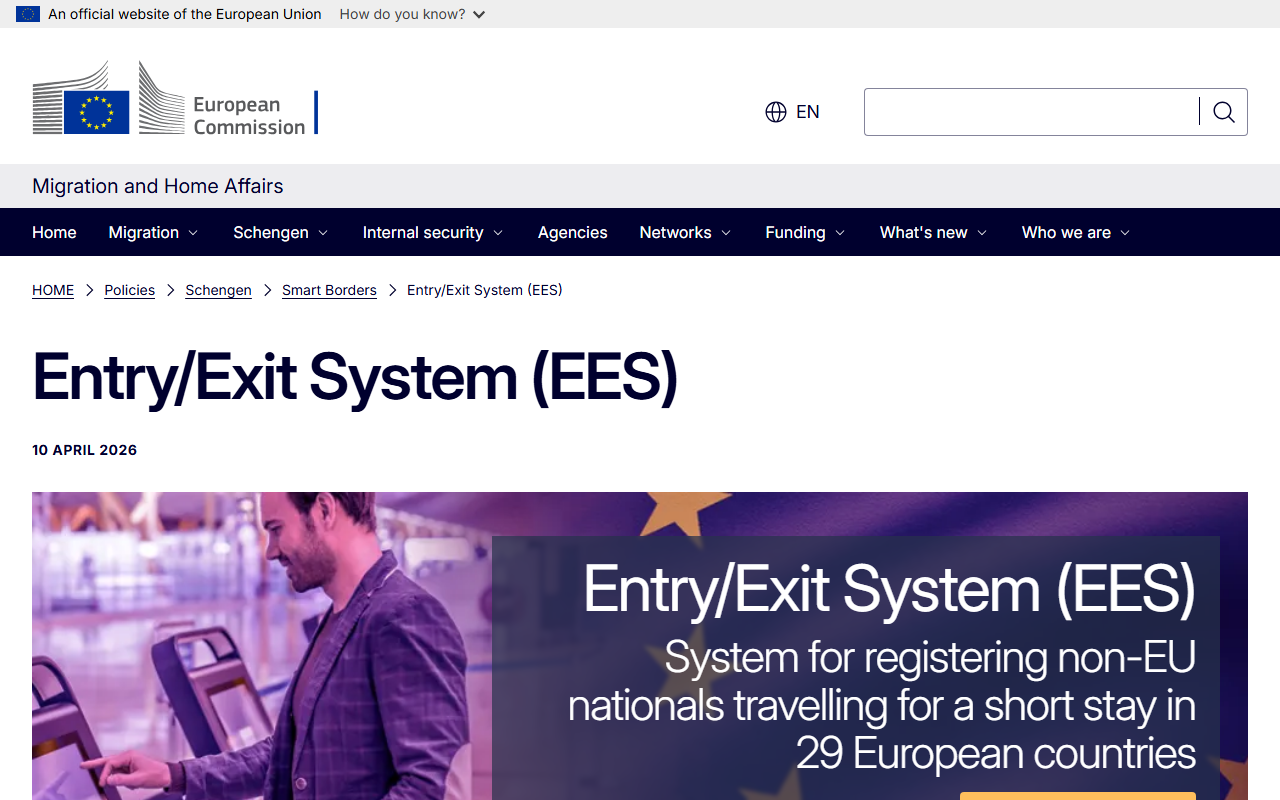
The big one, and the one most likely to catch a traveler off guard at passport control: the EU’s Entry/Exit System (EES) became fully operational on April 10, 2026, replacing the old ink passport stamp with a digital record — fingerprints and a facial scan — for US travelers (and other non-EU visitors) entering the Schengen Area. Source: European Commission, Entry/Exit System.
There’s no pre-registration, no app to download beforehand, no fee. Your biometric data — fingerprints plus a facial image — just gets collected at the border on first entry, then stored for three years, so a return trip within that window skips re-registration. Rome Fiumicino and Milan Malpensa were among the very first Italian airports to introduce it, going live October 12, 2025 (Palermo and Genoa followed October 20, 2025), well ahead of full nationwide coverage by the April 10 deadline. Source: Tourissimo, A Guide to the EU Entry/Exit System in Italy.
The part worth planning around: early reports out of Spain, France, and Portugal point to longer wait times at border control during peak travel, tied to the extra biometric steps. Source: Travel Pirates, Europe EES Biometric Border Delays Summer 2026. If you’re flying into a major Italian airport during high season, that’s extra buffer time worth building into a tight connection rather than finding out the hard way.
eSIMs Beat Roaming by a Landslide
Standard carrier data roaming can run around $2 per MB in some cases — which means opening a single app like Instagram (roughly 25MB) could cost about $50 at that rate, before you’ve sent a single text. Source: Travel Tom Tom, Best eSIM Cards for Italy.
A local eSIM sets up in about 5 minutes before you even leave home, and typically runs $4–$21 for a week to a month of data — saving up to 80% versus roaming. A few options that turned up in the research, worth comparing rather than treating any single one as the automatic pick: Saily (from $3.99/week), Holafly (unlimited data, from $3.90/day), aloSIM, and Jetpac. Source: Saily, eSIM Italy.
The Coperto Isn’t a Tourist Scam
The coperto — that per-person line item on Italian restaurant bills, typically €1–3 — is not a shakedown. It’s a standard cover charge that covers bread and table settings, every Italian pays it too, and it’s required by Italian law to be clearly listed on the menu before you sit down. Source: Roaming Historian, Guide to Tipping in Italy.
Separately, if a servizio (service charge, usually 10–15%) is already on the bill, no further tip is needed — and like the coperto, it has to be listed on the menu to be legally charged. Tipping in Italy isn’t mandatory the way it is in the US; where there’s no servizio, which is most trattorias outside tourist zones, a few euro left in cash on the table is generous. Cash matters here specifically — tips added to a card payment often end up in general restaurant revenue rather than going to the server who actually helped you. Source: Italo Treno, Tipping in Italy: What’s Expected and What’s Not.
Rome Has 2,500+ Free Public Drinking Fountains
These are called nasoni — “big noses,” named for their curved metal spout — and they run cold, fresh water around the clock, drawing from the same safe drinking water (acqua potabile) that flows to Roman homes. They’re completely safe to drink from directly, no bottle-filling stations or filters involved, just the spout. Source: Wanted in Rome, Nasoni: Rome’s Free Drinking Fountains.
There are over 200 in the historic center alone. At their peak there were roughly 5,000 scattered across the city; today it’s an estimated 2,500–2,800. Bring a reusable bottle and you genuinely never need to buy bottled water in Rome. Source: Wikipedia, Nasone.
One trip, four things I’m glad I checked before I left — a border process that would’ve genuinely surprised me at Fiumicino, a data plan that costs a fraction of what I assumed, a restaurant charge I can stop side-eyeing, and a very good reason to pack a reusable water bottle. If you’re headed to Italy too, hopefully this saves you the digging.