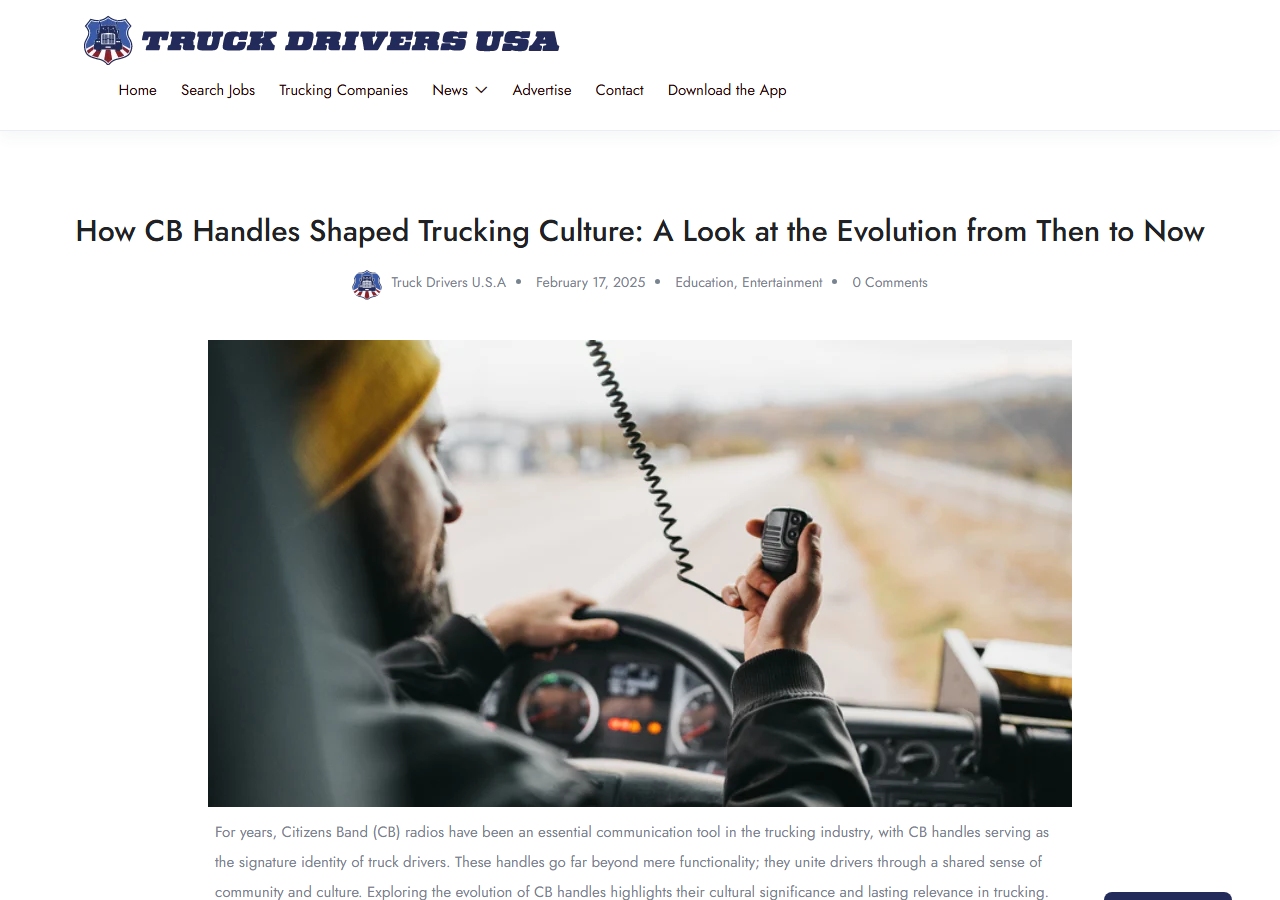
I was today days old when I learned that CB radio never actually died — it’s having a real, ongoing comeback, driven by rural cell dead zones, off-roaders and RVers who need to talk to each other with no towers around, and a preparedness crowd that wants a backup that doesn’t depend on the internet at all. And the barrier to entry is basically zero: no license, no test, no paperwork, just an FCC-certified radio you can buy for around $30 and switch on.
The Zero-License Angle
Here’s the actual point of contrast: CB radio operates under what the FCC calls “license by rule.” There is no paper license, no registration number, and no test to pass. If you use an FCC-certified CB radio and follow the service rules, you are already legally authorized to operate — that’s it. Per the FCC’s own Citizens Band Radio Service page: “An individual license is not required to operate a CB station,” and anyone is eligible “regardless of age,” with a short list of exceptions (foreign governments, and anyone under an active FCC cease-and-desist order). Source: FCC, Citizens Band Radio Service (CBRS).
Compare that to this site’s own ARRL Field Day (Discovery #076) — amateur (“ham”) radio, which is the other major flavor of get-on-the-air-yourself radio communication, and which absolutely does require passing an FCC exam before you can transmit. Ham radio buys you far more spectrum, far more power, and a genuinely serious emergency-communications community. CB buys you almost none of that range or capability, but it buys it with zero friction. Same basic idea — radio communication that works without a cell network — at two completely different price points of effort.
The Actual Technical Basics
CB is authorized 40 channels between 26.965 MHz and 27.405 MHz. Max power output is capped at 4 watts for AM and FM, or 12 watts PEP for SSB (single sideband) — measured at the radio’s antenna connector. You cannot legally raise the power output of a CB transmitter, and you cannot attach a linear amplifier or any other power amplifier to one. Sources: FCC and Wikipedia.
Channel 19 Is the Trucker Highway
Channel 9 is reserved by the FCC itself for emergency communications and traveler assistance — that’s not internet lore, it’s printed on the FCC’s own channel chart. Channel 19, meanwhile, is the channel truckers have used for decades as the de facto highway network — where drivers hear about accidents, construction, speed traps, and road conditions from the truck three exits ahead, often before any traffic app catches it. Source: Truck Drivers USA.
Why It’s Actually Coming Back Now
This isn’t pure nostalgia for a 1970s CB craze. A few real, current drivers are pushing CB radio back into relevance:
- Rural cell dead zones. CB doesn’t need a tower. In stretches of highway or backcountry where cell service is nonexistent or overloaded, a CB radio still works, which is exactly why it never fully went away for long-haul trucking in the first place.
- Off-roading, RVing, and overlanding communities. Convoys traveling together on trails or remote routes use CB for real-time coordination — warning the group about washouts, wildlife, or a vehicle in trouble — where cell signal is often nonexistent and hand signals don’t scale past a couple of vehicles.
- Emergency preparedness. The same infrastructure-independence that makes CB useful off-road makes it valuable to the preparedness community as a backup communication method that doesn’t depend on cell towers or the internet staying up.
- A real cultural comeback in CB handles. The on-air nicknames truckers have used since the CB boom are having a documented resurgence — a blend of old tradition and modern creativity, not a relic.
Source for all of the above: Truck Drivers USA and Fmyly.
How to Actually Get Started
Basic handheld CB radios start around $30 — Cobra alone sells several models in that range — which is a far lower barrier to entry than most ham radio setups, before you even get to the exam. There’s no application, no waiting period, no callsign to look up. Buy an FCC-certified CB radio, follow the service rules (don’t modify the power output, don’t bolt on an amplifier, keep Channel 9 clear for actual emergencies), and turn it on. You’re already legally on the air.