
Rumble — the video site I mostly knew as “the company suing Google over YouTube” — reportedly crossed 78 to 80 million monthly active users in 2026, up from roughly 44 million two years earlier. I’m looking at it because of our earlier story on YouTube as a “bully monopoly”, where my travel channel was erased over association with a separate, already-banned channel. Now I’m checking every YouTube alternative with a pulse, one at a time, starting with the biggest. The surprise: for most creators on Rumble, the money doesn’t come from ads.

Logos are trademarks of their respective owners and are shown to identify the services; no endorsement is implied.

The numbers, with the asterisk they deserve
- 78 to 80 million monthly active users, per 2026 Rumble-versus-YouTube comparisons from Thumbnailtest, Unilink, and Gumlet. These are secondary creator-economy sources, not an audited count, so read it as “roughly.”
- About 44 million two years earlier — close to a doubling, and the direction is consistent across all the sources.
- 2.7 billion logged-in users on YouTube, which makes Rumble around 3 percent of the thing it’s trying to be an alternative to.
That’s not a knock. Every one of these platforms is a rounding error next to YouTube, and Rumble is simply the largest rounding error.
Who’s actually there
Rumble markets itself as a free-speech-oriented platform with looser moderation than YouTube, and its audience skews politically right-leaning and heavy on news and commentary. That’s the brand, not an accusation. Upload a show about politics or current events and you’re walking into a room built for you. Upload a 30-minute travel video and most people there came for something else.
I lost my channel over a 7-second speedboat clip and a policy that bans every channel you own, not a moderation disagreement. Rumble not having that policy is genuinely appealing. Rumble not having my audience is the catch.
Who’s actually winning there
Rumble doesn’t publish a follower ranking, so “who’s big on Rumble” has to be answered sideways. The closest thing to a public leaderboard is Streams Charts, which ranks channels each month by live-stream hours watched and peak live viewers. Two things to hold onto before the names: these are live-stream numbers, not views on uploaded videos, and the whole list is dominated by established, mostly US political and news shows. Source: Streams Charts’ April 2026 and March 2026 Rumble reports.
The April 2026 leaders, all live:
| rank | channel | metric (live, April 2026) | note |
|---|---|---|---|
| 1 | The Alex Jones Show | 1.26M hours watched | #1 by hours watched |
| — | The Dan Bongino Show | over 1M hours watched | #1 by peak viewers |
| — | Steven Crowder | #2 by peak viewers | 65,000 live viewers in one early-April broadcast |
| — | Real America’s Voice | #1 organization-owned channel | by hours watched |
| — | Newsmax | #2 organization-owned channel | 4,000 hours watched behind the leader |
The same report lists Rampage Jackson among the top streamers and calls him an outlier, which tells you how uniform the rest of the list is. In March 2026:
- Nicholas J. Fuentes, Newsmax and Steven Crowder were all in the top five by hours watched.
- Kim Iversen was the only woman in the top ten by peak viewers.
- The top women by hours watched were Wendy Bell Radio, Julie Green Ministries, Candace Owens and Kim Iversen, in that order.
- Platform-wide that month: 27 million hours watched and 5,546 active channels, up 5.6 percent.
Streams Charts’ own summary is that Rumble is “a home for political and news-oriented content,” that talk, commentary and news formats dominate in a way they don’t on Twitch or YouTube Gaming, and that among women the strongest lanes are political commentary, faith programming and independent journalism.
The live-viewer counts on Rumble’s own browse page tell the same story. In a snapshot I took in early November 2026:
- News: 49.7K live viewers
- Politics: 25.1K
- Podcasts: 11.6K
- 24x7 channels: 6.52K
- Gaming: 5.02K
Source: Rumble’s browse page. For a longer view, Media Matters, an advocacy group that is openly critical of right-leaning media, took daily snapshots of Rumble’s “Battle Leaderboard Top 50” from February to July 2023 and categorized 57 percent of the videos as right-wing media and 37 percent as from what it called conspiracy-amplifying channels, with gaming, gambling, pranking and sports together under 1 percent. Those are Media Matters’ categories and its count, published August 23, 2023, and reported here as such. Source: Media Matters.
Here’s the honest takeaway for someone like me, who uploads recorded 15-to-30-minute videos with me talking on camera about travel, history or the week’s news. Nothing in any of this data speaks to that format. Every ranking I found measures live streaming by big shows with audiences that predate Rumble; there is no public count for recorded uploads, no travel or history channel appears anywhere in any list, and the browse page doesn’t even have a category I’d fit in. That doesn’t mean a small talking-head channel can’t grow there. It means nobody has published evidence either way, and the one thing we can see, who draws the live crowd, is a room I’m not in.
The money isn’t ads — it’s a subscription split
On YouTube the story is ads. On Rumble, for most non-celebrity creators, the primary monetization isn’t ad revenue at all. Here’s how it works, per creator-guide roundups from Thumbnailtest, Unilink, and Gumlet:
- Rumble Premium: a $9.99-per-month subscription, with revenue pooled and split among creators by their share of Premium subscribers’ watch time. A small, devoted, binge-watching following can do relatively better than it would chasing CPMs.
- Rumble Rants: a live tipping feature for streams.
- Locals: a paid-community and membership layer Rumble owns outright — the Patreon-style tier built into the platform rather than bolted on.
- Ads: several creator guides claim CPMs in political, news, and right-leaning-lifestyle niches run around 1.5x to 3x comparable YouTube channels. That’s a secondary-source claim, not an audited figure, and niche-specific by its own terms. It’s “what creators are saying,” not proven.
Shorts: launched, not yet paid
As of early 2026, Rumble Shorts was not monetized at all; the company said it planned to start monetizing Shorts in the second half of 2026. If your plan is the YouTube-style funnel of short clips feeding long videos, half of that funnel currently pays nothing on Rumble. That’s a plan, not a payout.
What serious creators actually do
- Most don’t pick Rumble instead of YouTube. They cross-post to both.
- Rumble becomes the backup, the place your audience can still find you if YouTube’s automated enforcement decides you don’t exist anymore.
- Almost nobody with a real audience goes Rumble-only, because that means walking away from where nearly everyone watches video.
For someone in my position that’s a slightly deflating answer: I wanted the place to go, and found the place to also be. Rumble is a real company (publicly traded on the NASDAQ, for whatever that’s worth) with real growth. It’s also still fighting its antitrust case against Google over whether Google’s search dominance props up YouTube at competitors’ expense — a case a federal judge has allowed to proceed but which remains undecided. Source: Bloomberg Law.
Our own channels on Rumble
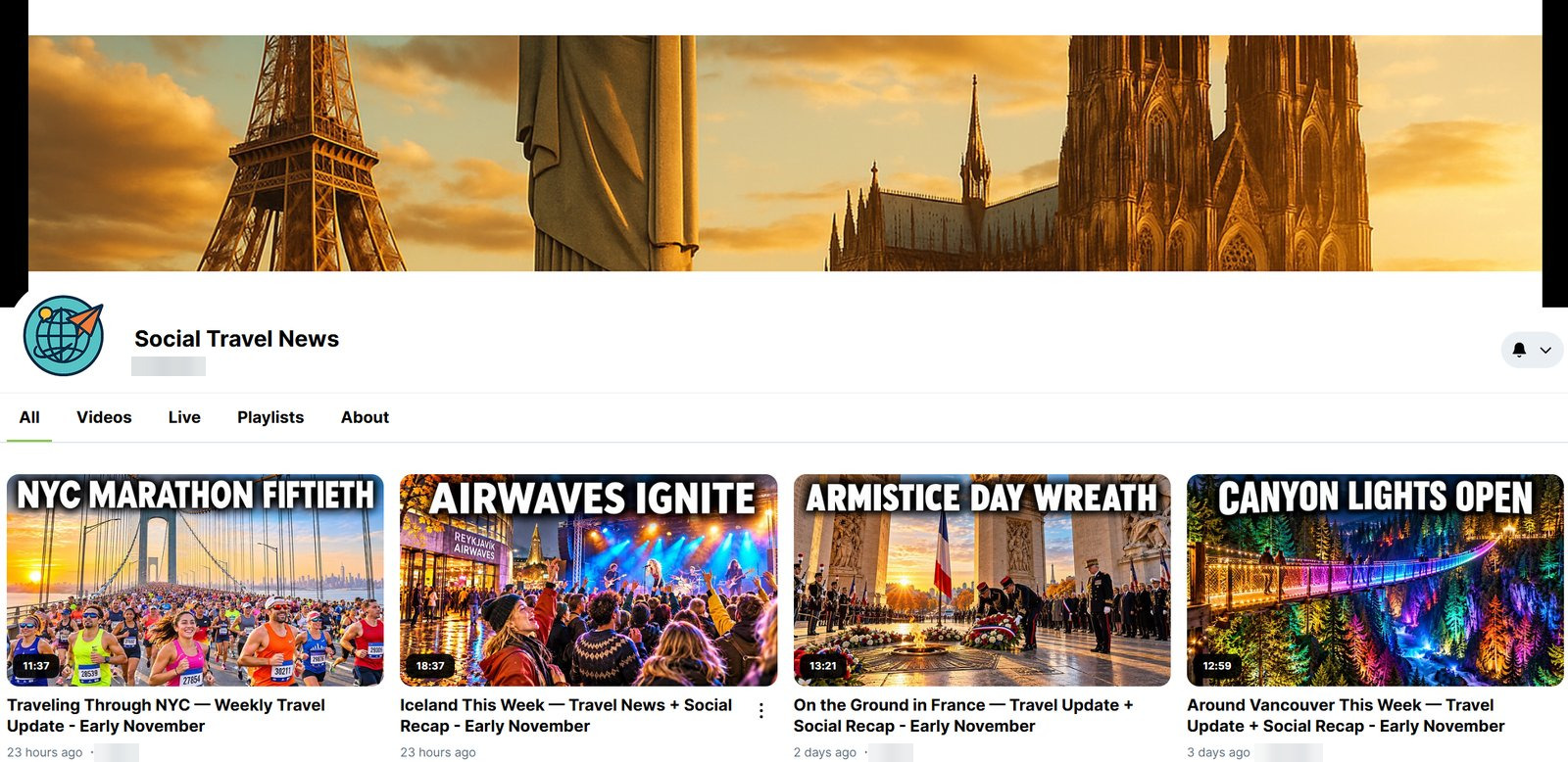
We run two channels on Rumble, Social Travel News and Social Rewind Weekly, so this isn’t purely theoretical for us:
Where I land
If your content is news, politics, or commentary, Rumble may be the best second home on the internet right now, and possibly a better first one. If it’s anything else, it’s an insurance policy against the exact thing that happened to me — worth having, not yet worth betting the channel on. Next up in this series: Odysee, the platform my travel site’s embeds already moved to, which is a very different kind of alternative.