Nine days ago, in Discovery #099, I told you the next total solar eclipse was only nine days away and worth watching for. Yesterday, August 12, 2026, it actually happened — and it turned into two very different stories playing out along the same 5,130-mile path.
Where the Shadow Actually Went
The Moon's shadow raced west to east across extreme northern Russia, then northeast Greenland, the west coast of Iceland, and finally northern Spain and Portugal, largely matching the path we mapped out nine days ago. Sources: EarthSky, CBS News.
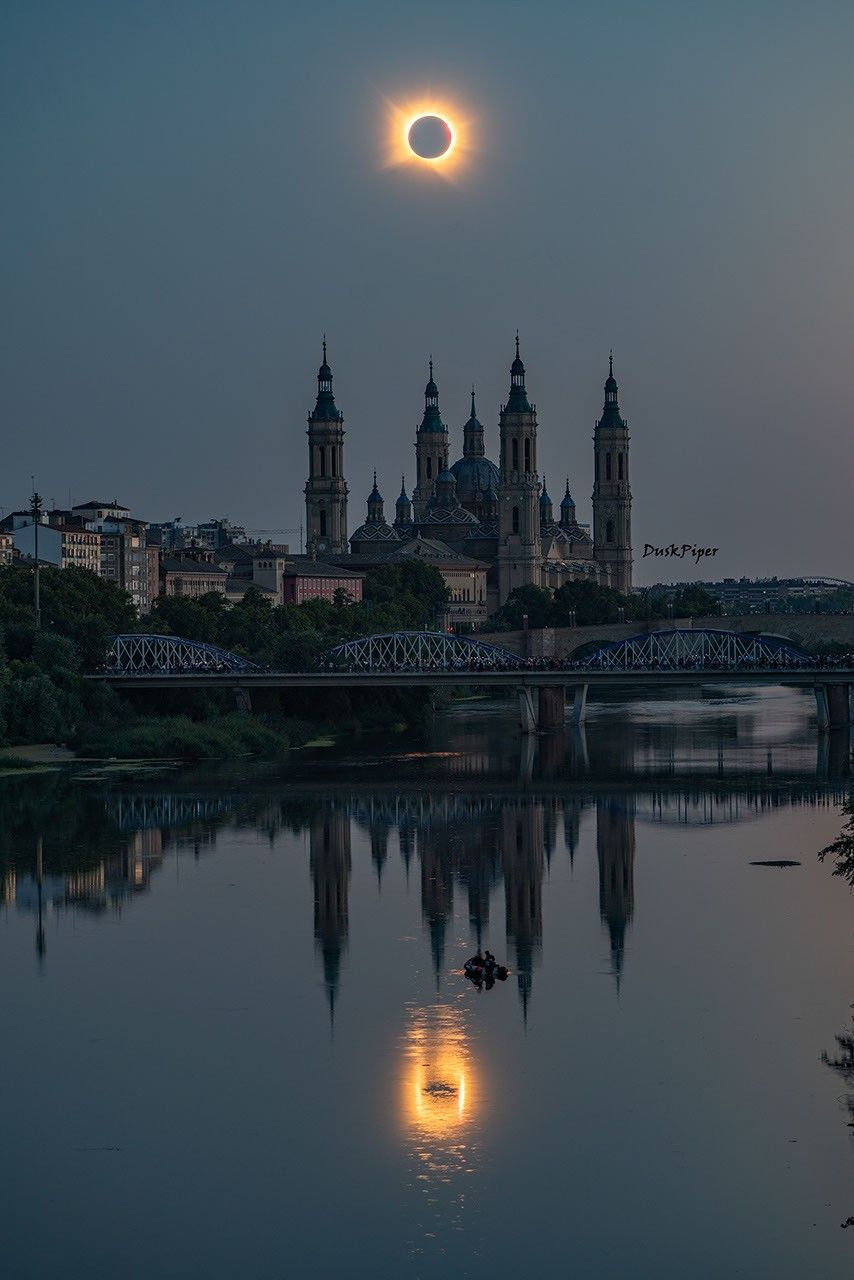
Spain's Glorious Payoff — First Totality Since 1905
The southern end of the path delivered the eclipse's real payoff. Northern Spain hadn't seen a total solar eclipse from the mainland since 1905, and this time the skies actually cooperated — clear and, by multiple accounts, genuinely “glorious.” Because totality arrived near local sunset, viewers in Spain got the rare bonus of watching a crescent sun sink toward the horizon in the eclipse's aftermath. The best-photographed spots were Zaragoza, La Coruña, and Palma de Mallorca, where photos captured visible solar prominences and corona during the roughly two minutes of totality. Sources: ESA, NASA Astronomy Picture of the Day.
Clouds Swallowed the View Up North
It wasn't as kind further north. The path's opening leg — extreme northern Russia, northeast Greenland, and western Iceland — was plagued by cloud cover, leaving many viewers there staring at gray sky instead of a blacked-out sun. It's the flip side of any eclipse that crosses this much ocean and high latitude: the weather, not the astronomy, ends up deciding who actually gets to see it. Sources: EarthSky, CBS News.
By the Numbers: A Fast, Wide-Reaching Eclipse
The whole event moved quickly. Totality was first glimpsed in extreme northern Russia around 1:00 p.m. ET, reached northeast Greenland by about 1:30 p.m. ET, western Iceland by about 1:45 p.m. ET, and hit totality in northern Spain around 2:30 p.m. ET, with the entire event wrapped up by about 2:45 p.m. ET — a west-to-east span of roughly one hour and 45 minutes, even though totality itself lasted only about two minutes for anyone standing in the path. Well beyond that narrow path, roughly 230 million people across Europe saw at least a 90% partial eclipse, including Madrid, London, and Paris; London hit 91% partial coverage at 2:13 p.m. ET. Far outside Europe, the partial view thinned out fast — New York City saw only about 9% coverage, and Fairbanks, Alaska saw about 37%. Source: CBS News.
Two very different skies, one eclipse. If you read #099 nine days ago and wondered how it would actually go: clouds up north, glory in Spain, and the next chance to see this exact pairing again — a total eclipse crossing Spain — won't come around for a long time.