I was today days old when I learned the “Hold’em” sitting on most casino floors isn’t poker-room Hold’em at all — it’s Ultimate Texas Hold’em, and the person across the felt from you is the dealer, not another player. This is the second post in the series on how to actually play the games this site has already toured the venues for (first was Three Card Poker, Discovery #146). It borrows real poker’s structure — two hole cards, five community cards, real hand rankings — and turns it into a banked table game, same shape as Three Card Poker, just built around a full hand of community cards instead of three.
Built for the casino floor, not the card room:
Ultimate Texas Hold’em was designed by Roger Snow for Shuffle Master (now part of Bally Gaming, which still holds the trademark). It started life on electronic multi-player table machines before casinos put it on live felt with a real dealer, and it’s since become, per Wikipedia, “one of the most in-demand niche table games in casinos in Las Vegas and many other states” — the second most-played poker-style table game on the Strip, behind only Pai Gow Poker and ahead of Three Card Poker.
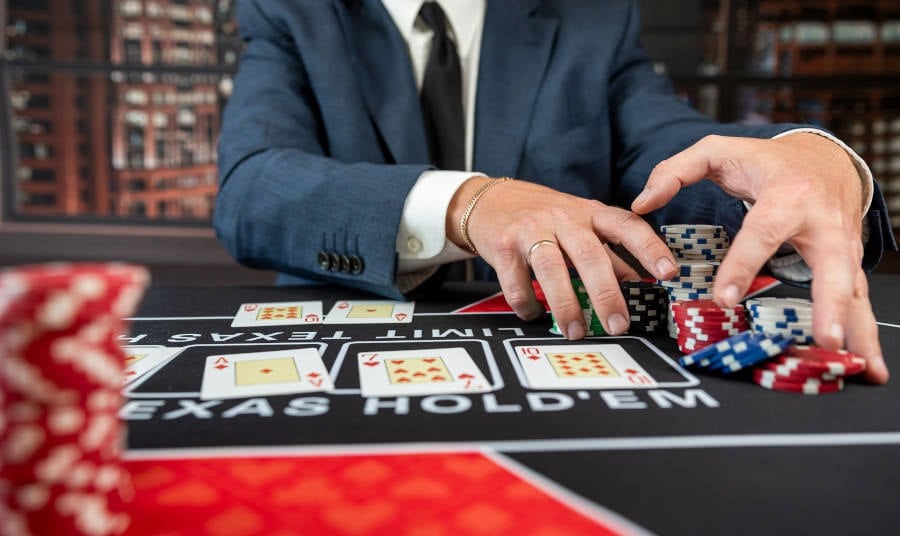
Two mandatory bets, then up to three chances to raise or fold:
You start every hand with two equal, mandatory bets: Ante and Blind. You can also add an optional Trips side bet, which pays out purely on your own final hand regardless of what the dealer has. After your two hole cards come down, you get your first decision: check, or raise 4x (or 3x) your Ante right then. If you check, the flop comes — three community cards — and you get a second chance: check again, or raise 2x. If you check a second time, the river comes — the fourth and fifth community cards together — and now there’s no more checking: you either raise exactly 1x your Ante or fold outright, forfeiting your Ante and Blind. The dealer only needs a pair to “qualify”; if the dealer doesn’t have one, your Ante pushes and your Play bet still wins.
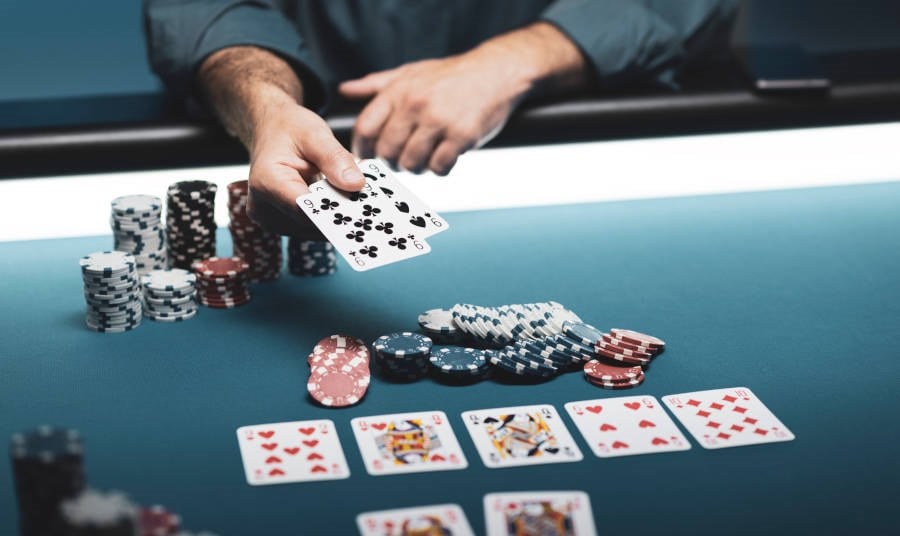
The one number worth memorizing before you sit down:
Nearly all of this game’s strategy value sits in that very first decision, before you’ve seen a single community card. Wizard of Odds’ basic strategy says: raise 4x immediately with any pair of 3s or better, or any two cards both 10-or-higher. Everything else — weaker pairs, suited connectors, anything below that — is a check, saving the bigger raise for later streets if the board helps you. It’s a blunter, earlier-acting cousin of Three Card Poker’s Queen-6-4 rule: one threshold, applied before you have nearly as much information.
A real, sourced house edge, if you actually play it that way:
Played with full optimal strategy across every decision point, Wizard of Odds puts the house edge at 2.185% per Ante bet — competitive with blackjack played well, and meaningfully better than Three Card Poker’s 3.37%. The gap between that number and what casual players actually give up is real: most of the edge lost in practice comes from either raising too big too early with a marginal hand, or folding hands on the river that were actually ahead of the dealer’s qualifying range.
Two forced bets before you see a card, three separate chances to raise or get out, and one memorizable rule that covers most of the decision that actually matters. Three Card Poker was the fastest game in this series so far; Ultimate Texas Hold’em is the one that rewards actually knowing the numbers going in — more of this site’s walk through the games it’s spent dozens of posts standing in front of without explaining is still to come.