I was today days old when I realized Apple may finally be coming for YouTube's eyeballs, and the battleground is the TV. For a lot of people, YouTube on the TV is a video podcast app. You sit down, open it, and mostly watch the same channels you already subscribe to, one new episode after another. That is a podcast with pictures. And Apple is about to put video podcasts on the television too.
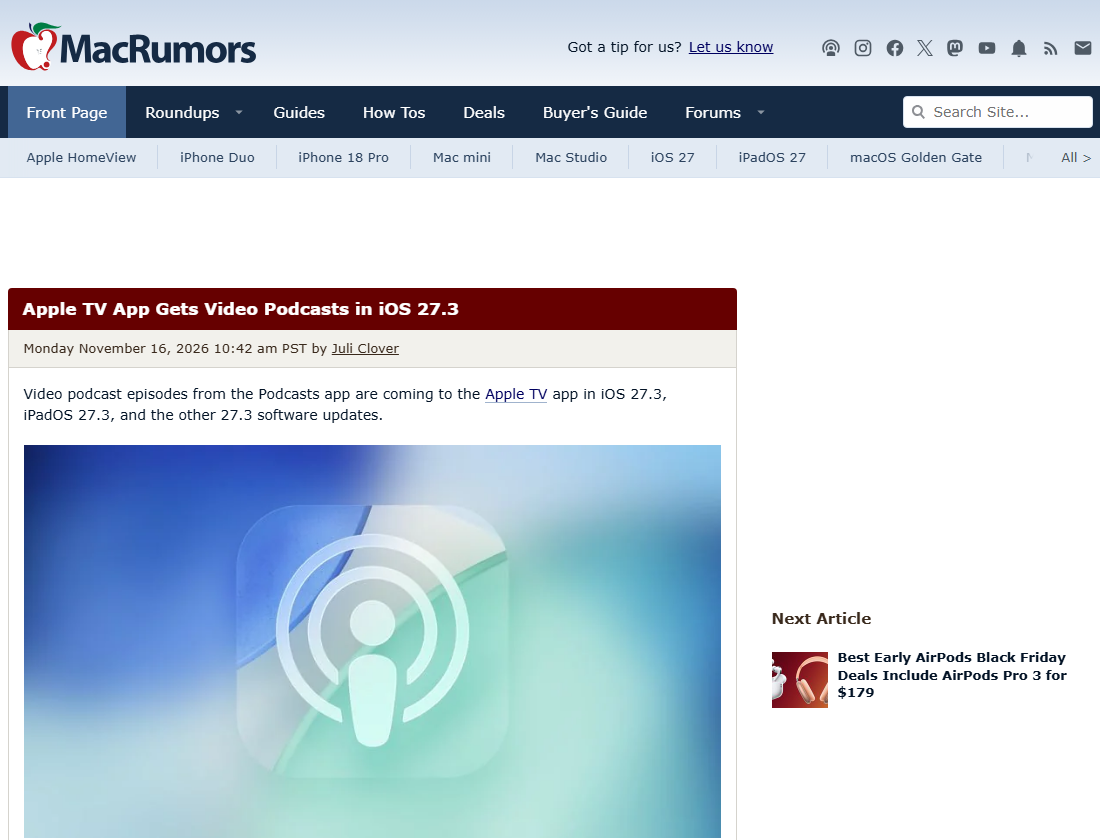
MacRumors reported on November 16 that "Video podcast episodes from the Podcasts app are coming to the Apple TV app" in iOS 27.3 and its sibling updates, free to watch. It is in developer beta now, with no public release date. Source: MacRumors. This picks up where our posts on YouTube's bully-monopoly problem, Rumble and Odysee left off.
What Apple built
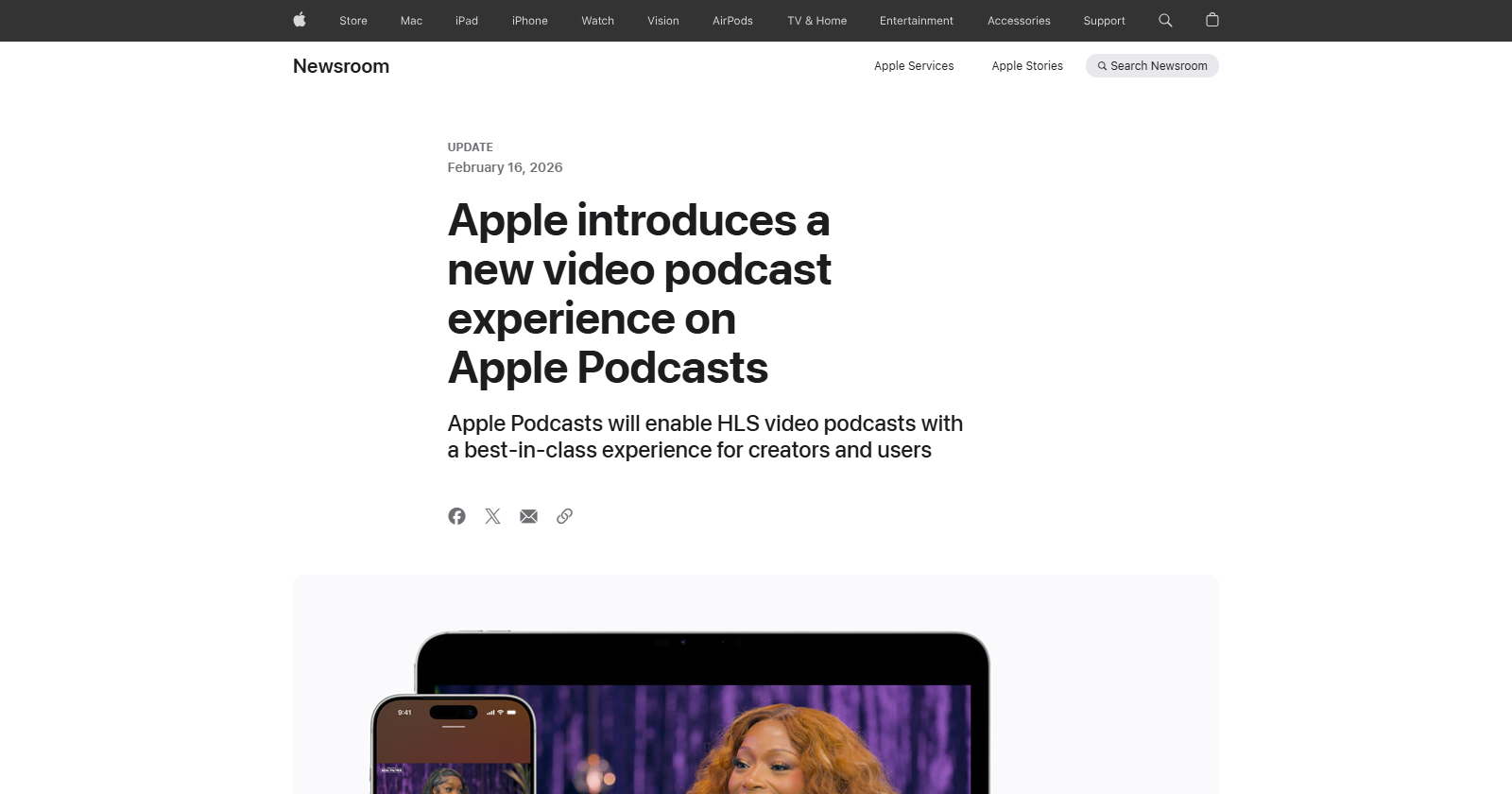
On February 16, 2026, Apple announced native video in Apple Podcasts, built on HLS (HTTP Live Streaming). Viewers can switch between watching and listening, go full-screen, and download episodes for offline viewing. Source: Apple Newsroom.
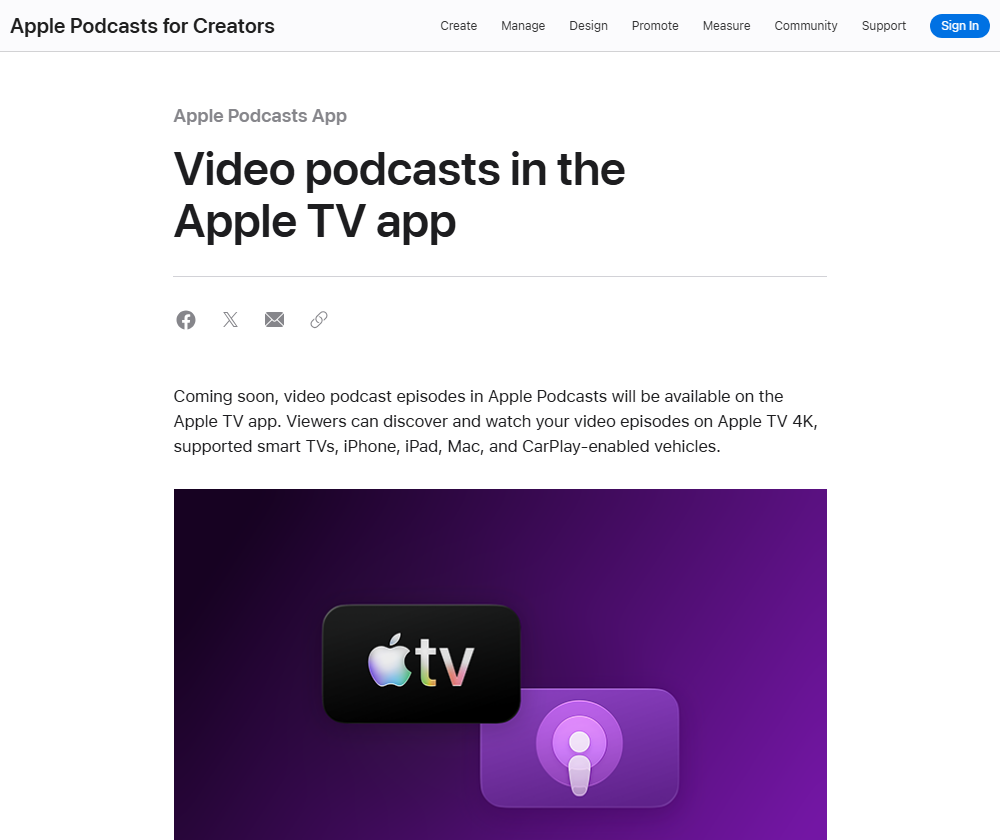
The TV step is the new part. Apple's creator page lists Apple TV 4K, supported smart TVs, iPhone, iPad, Mac and CarPlay-enabled vehicles, and still says "Coming soon." Source: Apple Podcasts for Creators.
The lock-in is the app, not the format
Nothing about a show you follow week after week requires YouTube. What holds viewers there, as I see it, is three things: an app already on the TV, a huge library of active channels, and a discovery system that always has something next.
Start with the TV itself. In Nielsen's August 2026 Gauge, YouTube took 15.8% of all U.S. TV watch time, its biggest share ever and more than double Netflix.
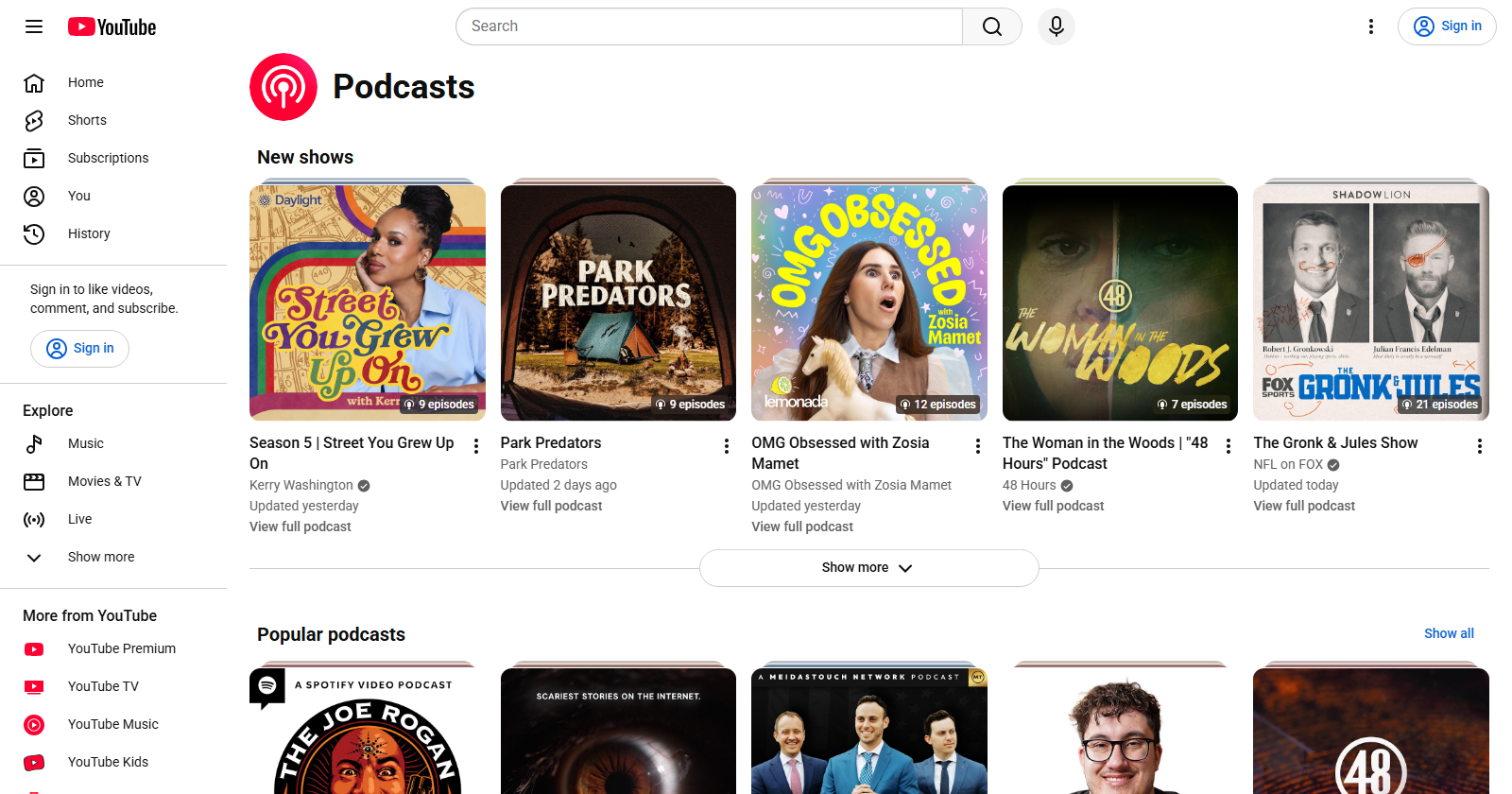
The audience is real, and YouTube has it. CNBC notes YouTube said last year it has more than 1 billion monthly active viewers of podcast content, and cites Edison Research that about 37% of people over 12 watch video podcasts monthly. Source: CNBC. Apple's own materials never mention YouTube, and nobody has data yet on whether viewers will move.
Much of the biggest YouTube is not podcasts at all. But the habit behind it, subscribing to a channel and coming back to it, is exactly what a podcast feed copies. As I see it, these are the names Apple needs to kickstart a video platform. YouTube publishes no official ranking of channels, so here is a third-party one: the 10 most-subscribed channels of all time, from Wikipedia's running list.
| Rank | Channel | Subscribers | Category |
|---|---|---|---|
| 1 | MrBeast | 527 million | Entertainment |
| 2 | T-Series | 316 million | Music |
| 3 | Cocomelon - Nursery Rhymes | 203 million | Education |
| 4 | SET India | 190 million | Entertainment |
| 5 | Vlad and Niki | 151 million | Entertainment |
| 6 | Stokes Twins | 150 million | People |
| 7 | Kids Diana Show | 138 million | Entertainment |
| 8 | KIMPRO | 135 million | People |
| 9 | Like Nastya | 134 million | Entertainment |
| 10 | Alejo Igoa | 126 million | Entertainment |
Here is my opinion. A new platform needs an anchor tenant, a name big enough that people show up just to see it. If Apple were really serious about this, the best launch move would be to land one of the channels in this table and give it an Apple video feed.
I don't expect Apple to get one. These channels were built on YouTube's own ad revenue, YouTube's app and YouTube's audience, and none of them is labeled a podcast. But whether Apple even tries is the test of how serious it is.
On podcasts specifically, Edison Research asked weekly U.S. podcast consumers which service they use most often. YouTube is first by a wide margin, and Apple Podcasts is third.
As for the shows themselves, here are the ten biggest U.S. podcasts by weekly reach. Apple's TV push will matter most if shows like these publish video feeds there.
| Rank | Show | Producer |
|---|---|---|
| 1 | The Joe Rogan Experience | Joe Rogan |
| 2 | Crime Junkie | audiochuck |
| 3 | The Daily | The New York Times |
| 4 | Call Her Daddy | Alex Cooper |
| 5 | SmartLess | Jason Bateman, Sean Hayes, Will Arnett |
| 6 | New Heights with Jason & Travis Kelce | New Heights Productions |
| 7 | This Past Weekend w/ Theo Von | Theo Von |
| 8 | Dateline NBC | NBC News |
| 9 | Rotten Mango | Stephanie Soo |
| 10 | The Breakfast Club | The Black Effect Podcast Network and iHeartPodcasts |
What an open feed changes
A YouTube channel is the show. If the channel goes, the show goes. A podcast works the other way around:
- It costs creators nothing to list. "Apple does not charge hosting providers or creators to distribute podcasts on Apple Podcasts."
- You keep the feed. Apple's creator page says "Your feed remains the source of truth." Your provider hosts the episodes, so Apple is one place that shows them, not the only place.
- No sign-up for the TV app. "No additional agreement or terms are required."
Apple is a gatekeeper too. Its content guidelines say it may "label or remove the content, suspend the sale of subscriptions, and/or suspend or terminate your account." Source: Apple Podcasts for Creators, Content Requirements. The difference, as I read it, is the fallback: lose Apple and you lose Apple's directory, not your feed or your other listeners. I'd still want to see that tested.
The three things still missing
So the format lock-in is gone. For the Apple TV app to be a nearly equal option on the couch, three things still have to happen.
First, enough channels have to publish a video podcast feed alongside YouTube. That means a hosting provider, since Apple distributes the show but does not host it, and video at 1080p or 4K.
Second, Apple needs great discovery. Every valid, publicly available video podcast appears in the catalog automatically, but being listed is not being found.
Third, as I see it, Apple has to show that creators can make money there. Apple's own pages say podcasters control their own monetization through their hosting provider, ad partners and business model, and that Apple does not charge creators or hosting providers to distribute. Video ads can be inserted dynamically through participating hosting partners, and Apple's announcement names Acast, ART19, Omny and SiriusXM. Apple says it will charge participating ad networks an impression-based fee for dynamic ads in HLS video, starting “later this year.” Source: Apple Newsroom, Feb. 16, 2026, Apple Podcasts for Creators and Mediaweek.
The revenue split is set by the middlemen, not Apple. One example, and only one provider's program, not Apple's: RSS.com says creators get 70% of the revenue from its PAID ads on Apple Podcasts video. Source: RSS.com press release via Podnews. I found no public page where Apple itself shares ad revenue with creators on free streams. As far as the public pages show, Apple takes a fee from ad networks and the creator's host or ad partner shares the rest.
YouTube's model is simpler to explain. Its partner terms say that for Watch Page ads, YouTube pays partners 55% of net revenues from ads on their public videos. Source: YouTube Help, partner earnings overview. That ties back to the anchor-tenant point: the big channels earn through YouTube's ad share, so Apple's monetization story is what decides whether any of them would move.
There are limits, too. The TV app covers only Australia, Canada, Mexico, the UK and the US, and subscriber-only podcasts don't play there at all.
Whether viewers move stays open. But what holds them, as I read it, was never the format. It is the app, the library and the recommendations, and Apple is about to supply the first of those.