I was today days old when I found a site that runs 100,000 simulated bot sessions of any craps or roulette betting strategy you can name, then reports the win rate, the house edge, the 90% profit range, and a risk score for each one. 2.37 billion rolls analyzed across 245+ strategies. $803 billion wagered, none of it real. And the punchline you only see when you start scrolling: nobody wins. Some lose slower than others. It’s DiceData, and it is the most quietly honest thing I’ve found on the internet in a while.
What it is:
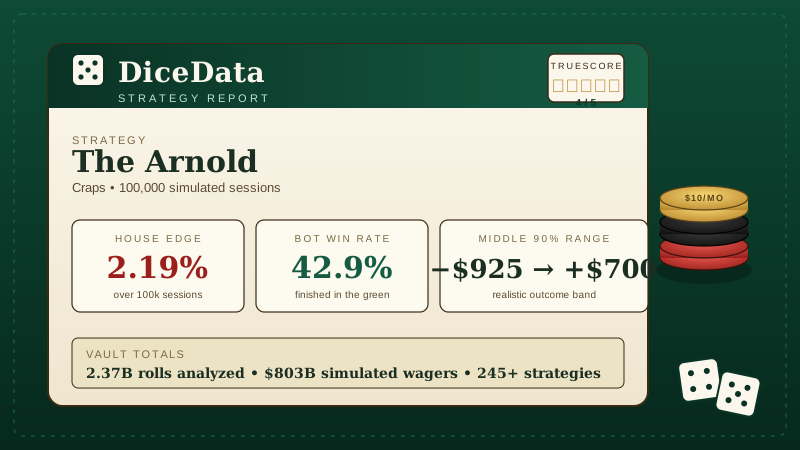
DiceData is a Monte-Carlo-style simulation platform for craps and roulette betting strategies. You submit a strategy — bet structure, progression rules, stop conditions — and the platform runs 100,000 simulated bot sessions of it. What comes back is a structured report: the win rate (how often the bot finished a session in the green), the house edge (how the math actually settles over volume), the middle-90% profit range (the realistic top and bottom outcomes once you trim the tails), and a proprietary “TrueScore” rating out of 5 that compresses risk into one number. It’s the methodology a casino math team would use, run on a strategy submitted by a guy who plays on Friday nights and thinks he’s onto something.
The numbers that matter most:
Across the whole platform, the totals are loud: 2.37 billion rolls analyzed, $803 billion in simulated wagers, 245+ strategies in the vault. A representative strategy — one called “The Arnold” — comes back with a TrueScore of 4/5, a house edge of 2.19%, a bot win rate of 42.9%, and a middle-90% outcome range of −$925 to +$700. That is, in plain English, a strategy that’s structurally above average for craps and still loses money over time. And then there are the two stats the site quietly drops that humble every craps player who’s ever felt like they were on a hot streak: the median shooter survives 6 rolls, and less than 40% of simulated shooters even make a point. Those are the lines you do not recover from. They reframe every “I was rolling forever” story you’ve ever heard at a table, including your own.
The honesty (and the price):
Here is the part that makes me trust the project: DiceData does not claim a single strategy beats the house. None of them do. The site presents its results as risk assessments — which strategy loses slower, which one blows up faster, which one has a wider middle-90% range — not as a catalog of winning systems. There is no “buy our system and beat craps” pitch anywhere on the site. That posture is rare in this niche and it’s the entire reason the numbers are worth reading. On the price side, the substantial free thing is a download called “The Shooter’s Edge” — an 18-page PDF built on 10 million simulated hands. No login wall on the headline numbers; the PDF is the on-ramp. Beyond that, Premium is $10/month and unlocks the full results for all 245+ vault strategies plus a “Test Drive” mode where you can run custom simulations of your own ideas. The operator is anonymous — no founder credit on the homepage — which I’d normally raise an eyebrow at, except the methodology and the “nobody wins” honesty earn the benefit of the doubt.
Why it exists (and who actually uses it):
New strategies enter the vault through a community-voted queue — users submit ideas and vote on what the platform should simulate next, which is how the catalog has grown to 245+ entries. The audience splits into three lanes: craps players testing the gut-feel system they’ve been running for years (and usually finding out it’s no better than the field bet), advantage-play hobbyists looking for the least-bad strategy on a given table layout, and a smaller crowd of probability and Monte-Carlo nerds who like the methodology itself more than the gambling angle. The cultural fit is “the house always wins, and here is the math of exactly how.” If you’ve ever sat at a craps table convinced you had a system, this site is the cold-water version of that conversation, run 100,000 times.
How to start (free PDF, then decide):
Go to dicedata.info and download “The Shooter’s Edge.” It’s 18 pages, it’s free, and it’s built on 10 million simulated hands — that’s a real piece of work, not a sales brochure. Read it. If the methodology holds up for you, the $10/month vault and custom Test Drive simulations are there. If it doesn’t, you’ve already learned more about craps probability than 99% of the people standing at the table next to you — which, depending on your relationship with the game, may be the single most expensive lesson you ever got for free.