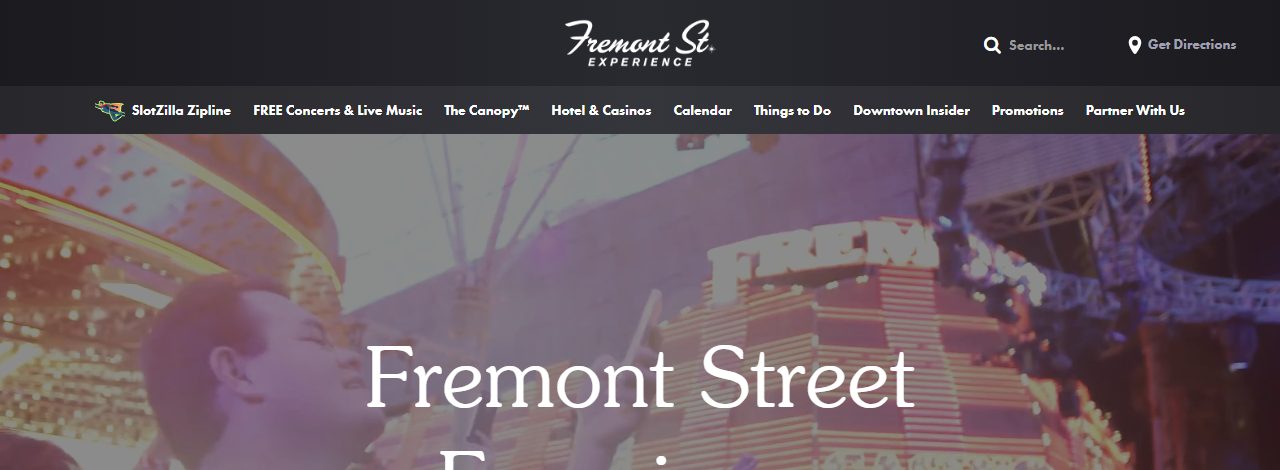
Day 3 of the Vegas mini-series that started with AREA15 (#120) and the 18b Arts District (#121): Fremont Street, the five-block pedestrian mall that was Las Vegas before there was a Strip. Per Wikipedia, this stretch — long nicknamed “Glitter Gulch” for its density of neon — was home to a run of Las Vegas firsts: the city’s first hotel (1906), first telephone (1907), first paved street (1925), and first traffic light. By the early 1990s the Strip held roughly 80% of the casino market, so a group of downtown casino owners financed the Fremont Street Experience (FSE), the barrel-vault LED canopy that opened in 1995 and still anchors everything below it. Two honest scope notes up front: the Neon Museum, a mile or so from here, is planned as its own future Discovery in this series, so it isn’t deep-dived below — and the Heart Attack Grill, long a Fremont Street fixture, is left off this list entirely because it actually closed. Per Wikipedia, its owner announced on May 18, 2026 that the restaurant was shutting down after letting its lease expire, citing casinos “pricing the average person out of the quintessential American experience of affordable indulgence.” Every stop below was checked directly against its own official site or Wikipedia rather than a generic downtown-Vegas listicle. Sources: Wikipedia, Fremont Street Experience; Wikipedia, Heart Attack Grill.
9. The Fremont East Entertainment District — a Retro-Neon Bar Row Three Blocks Long
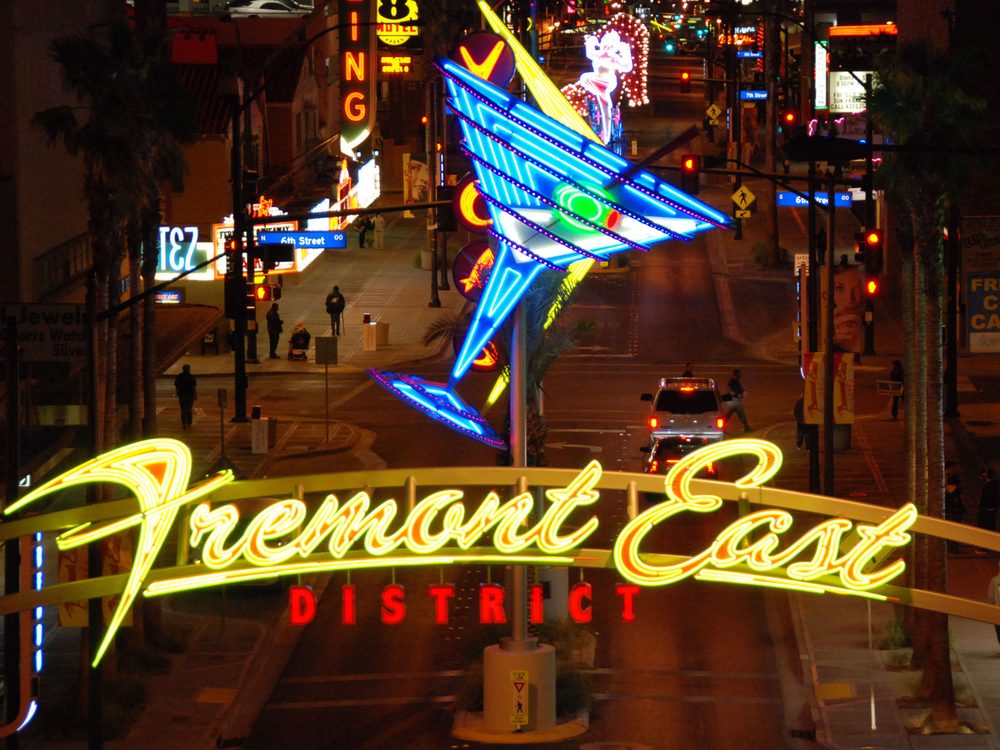
In 2002, per Wikipedia, the City of Las Vegas Redevelopment Agency joined with Fremont East property and business owners to form a business improvement district and fund a $5.5 million streetscape upgrade — new pedestrian-friendly street design, landscaping, and deliberately retro-looking neon signage across a three-block stretch centered on Las Vegas Boulevard and Fremont Street, just east of the FSE canopy. The result, still branded the Fremont East Entertainment District today, is an eclectic run of bars, clubs, and restaurants that reads more like a walkable nightlife strip than a casino corridor. Source: Wikipedia, Downtown Las Vegas.
8. Downtown Container Park — a 40-Foot Fire-Breathing Praying Mantis and a Shipping-Container Treehouse
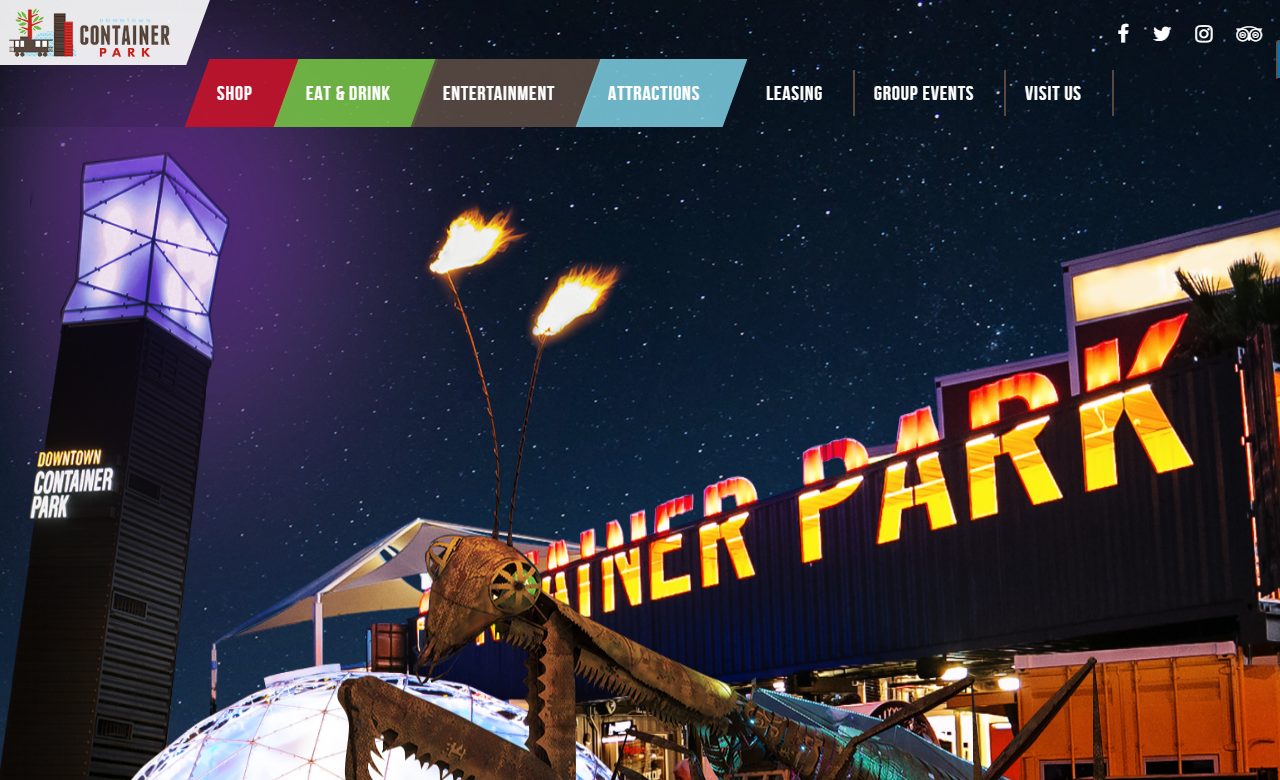
Conceived by Tony Hsieh’s Downtown Project and opened November 25, 2013, Downtown Container Park packs 39 tenants into 43 shipping containers and 41 metal cubes on a 1.3-acre site at 707 East Fremont Street, per Wikipedia. The entrance is marked by a genuinely massive fire-breathing praying mantis sculpture — 40 feet long per a 2013 VegasInc report on its installation — originally built for Burning Man, wired to play music through seven speakers, and operated by a person stationed inside it. Beyond the mantis, the park’s family-friendly side includes a playground built from four shipping containers into a treehouse with slides, plus the heart-shaped “Love Locket” sculpture at the entrance. Source: Wikipedia, Downtown Container Park.
7. The D Las Vegas — a Vintage Casino Floor With the Only Working Sigma Derby in Town
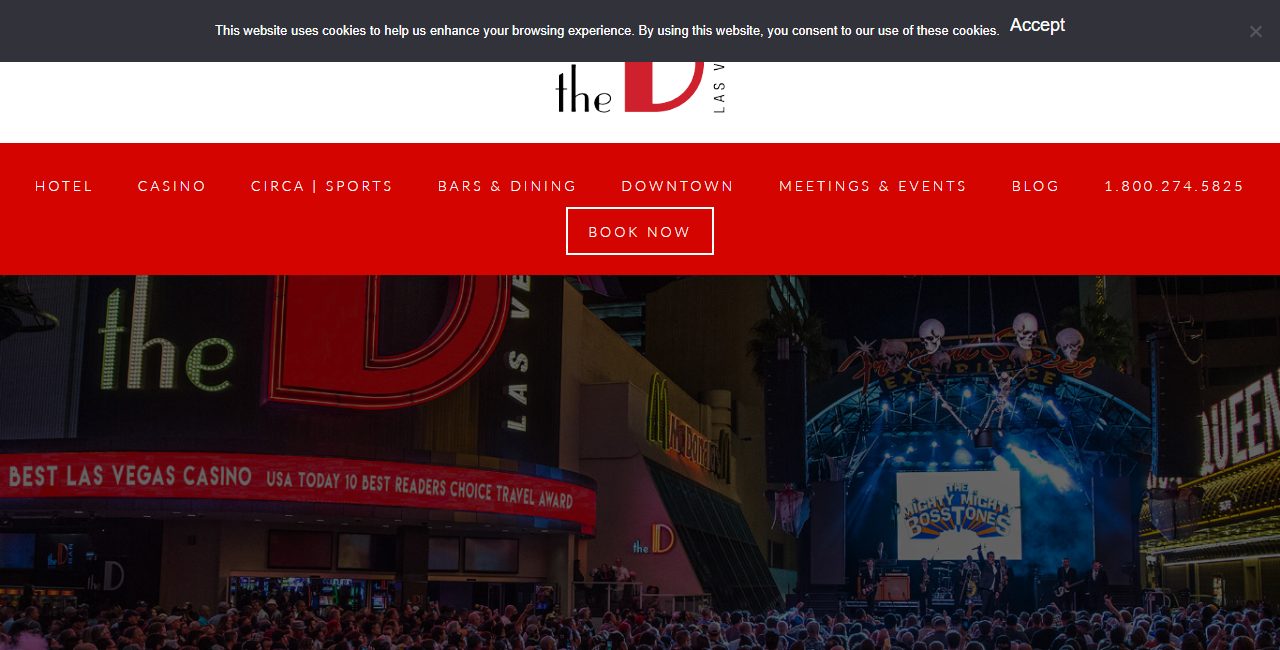
The D sits at the eastern end of the Fremont Street Experience, and per Wikipedia its building has already lived two other lives: it opened in 1980 as the Sundance Hotel, then became Fitzgeralds in 1987 with a “luck of the Irish” theme, before brothers Derek and Greg Stevens bought it in 2011 and rebranded it as The D (for “downtown,” Derek’s nickname, and the Stevens family’s hometown of Detroit) in a 2012 renovation. Its second-floor “Vintage Vegas” casino houses the only operational Sigma Derby machine left in Las Vegas, alongside Longbar, once billed as Nevada’s longest indoor bar at just under 100 feet (a record later broken by Circa’s own Mega Bar, item #3 below). In late 2013, The D also became the first casino in the world to accept bitcoin for rooms, restaurants, and gift-shop purchases. Source: Wikipedia, The D Las Vegas.
6. Binion’s — Where the World Series of Poker Was Born
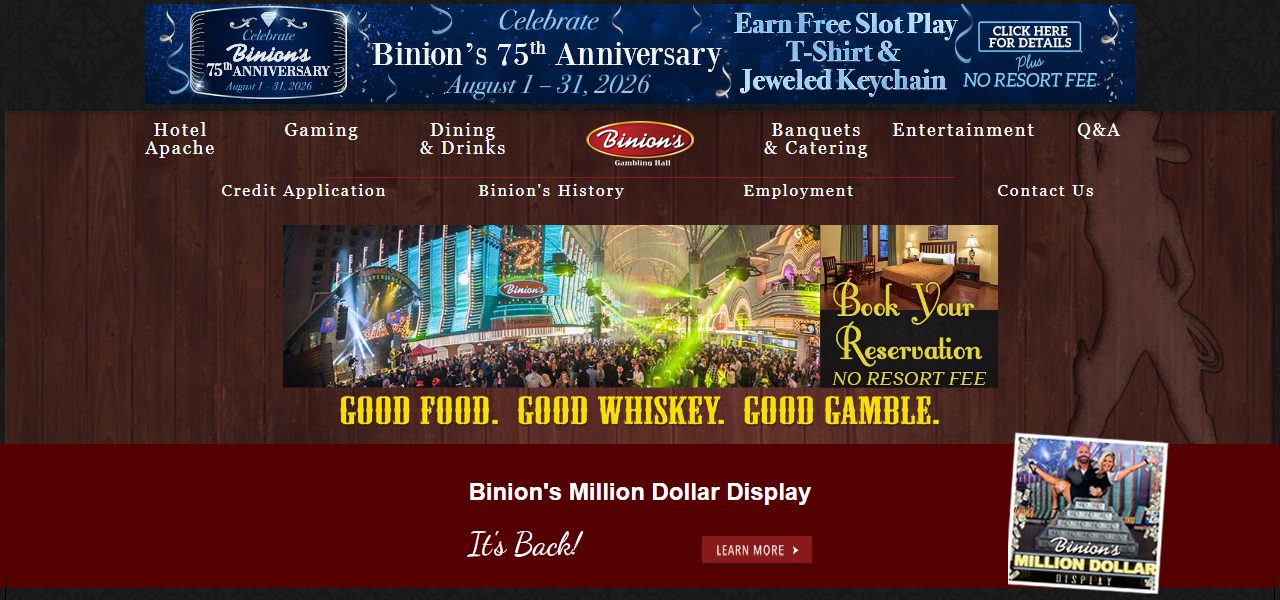
Benny Binion opened Binion’s Horseshoe in 1951, and per Wikipedia it was the first downtown casino to replace sawdust-covered floors with carpet and the first to offer comps to every gambler, not just high rollers. In 1970, Jack Binion began hosting the World Series of Poker at the Horseshoe — a claim Wikipedia’s WSOP article independently corroborates by categorizing the event itself as a “1970 establishment in Nevada” — and it grew into the largest set of poker tournaments in the world before finally outgrowing the building and moving its main event to the Rio in 2005. Binion’s still runs a large poker room with Poker Hall of Fame displays today, and per its own site (screenshotted above, mid-75th-anniversary promotion as of this writing) its famous “Million Dollar Display” of cash is back on the casino floor after a pandemic-era closure. Source: Wikipedia, Binion’s Gambling Hall and Hotel; Wikipedia, World Series of Poker.
5. The Golden Nugget’s Tank Pool — a Slide Through an Actual Shark Tank
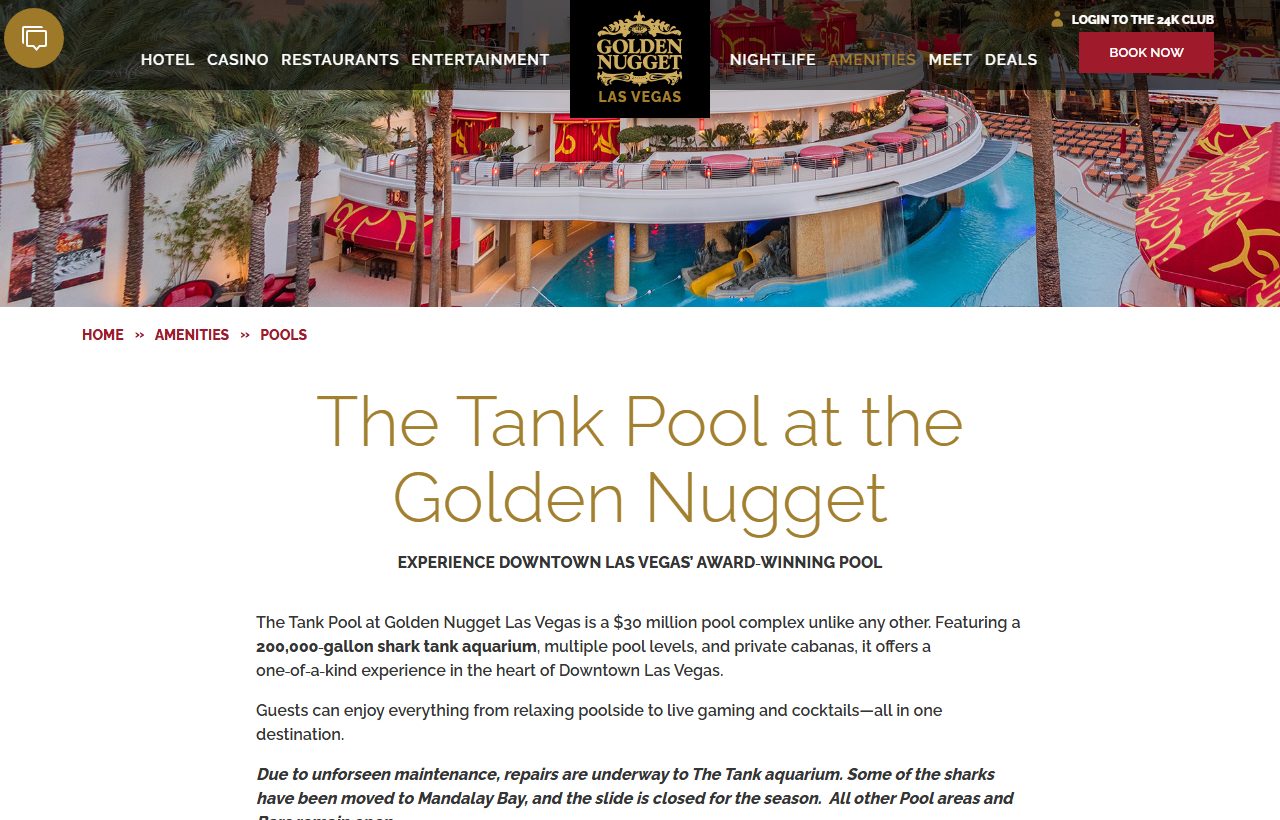
The Golden Nugget opened in 1946 and is one of the oldest casinos in Las Vegas, per Wikipedia, but its signature modern attraction is the Tank Pool: a $30 million, multi-level complex built around a 200,000-gallon shark tank aquarium, per the resort’s own site, complete with an enclosed slide that runs straight through the tank alongside real sharks. One honest, current caveat directly from the Golden Nugget’s own page as of this writing: “Due to unforeseen maintenance, repairs are underway to The Tank aquarium. Some of the sharks have been moved to Mandalay Bay, and the slide is closed for the season. All other Pool areas and Bars remain open.” So the slide-through-sharks experience is a real, verified feature of the property — just temporarily paused rather than permanently gone. Source: Wikipedia, Golden Nugget Las Vegas; Golden Nugget, The Tank Pool.
4. Vegas Vic & Vegas Vickie — the Neon Cowboy and Cowgirl Who “Married” During Construction
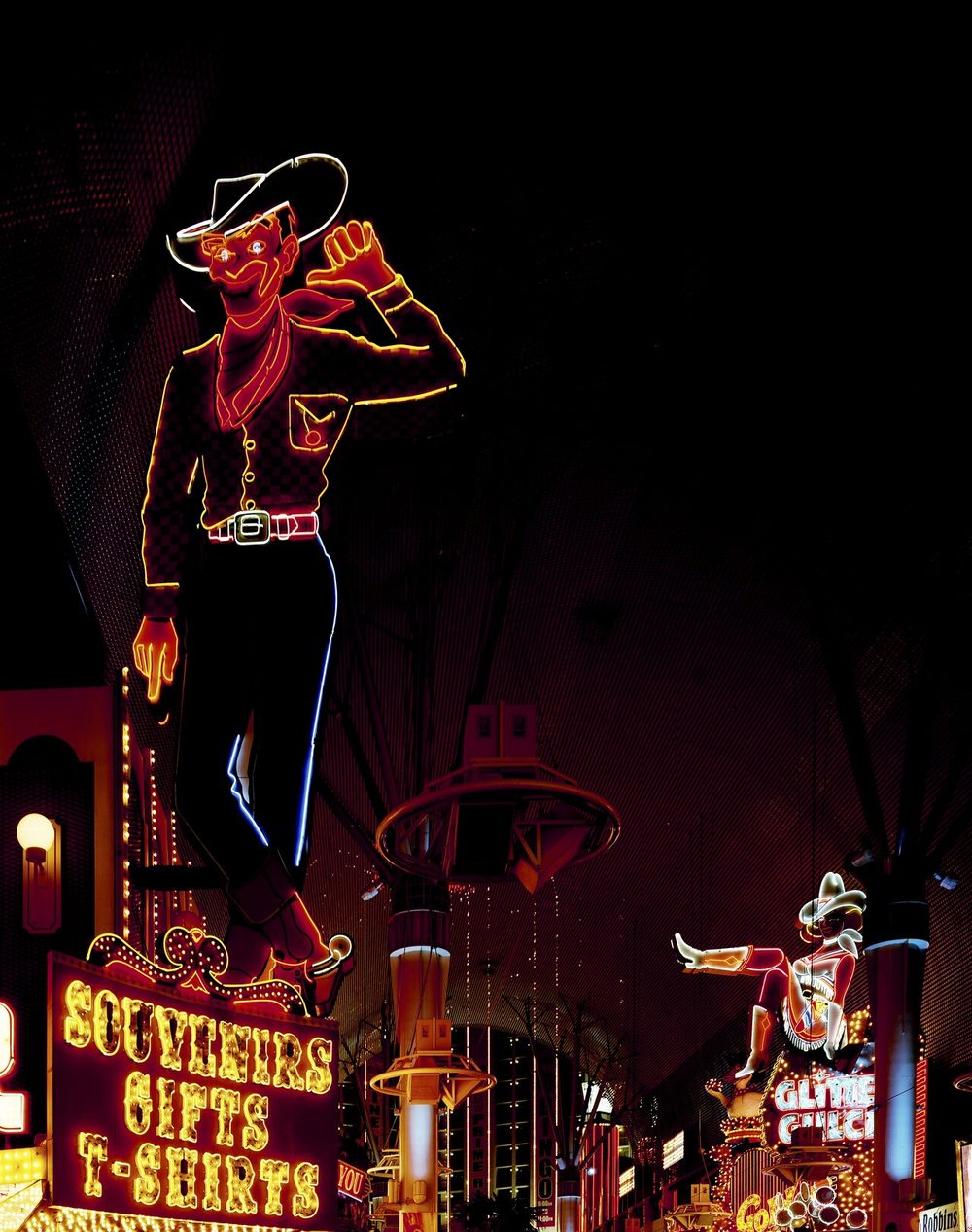
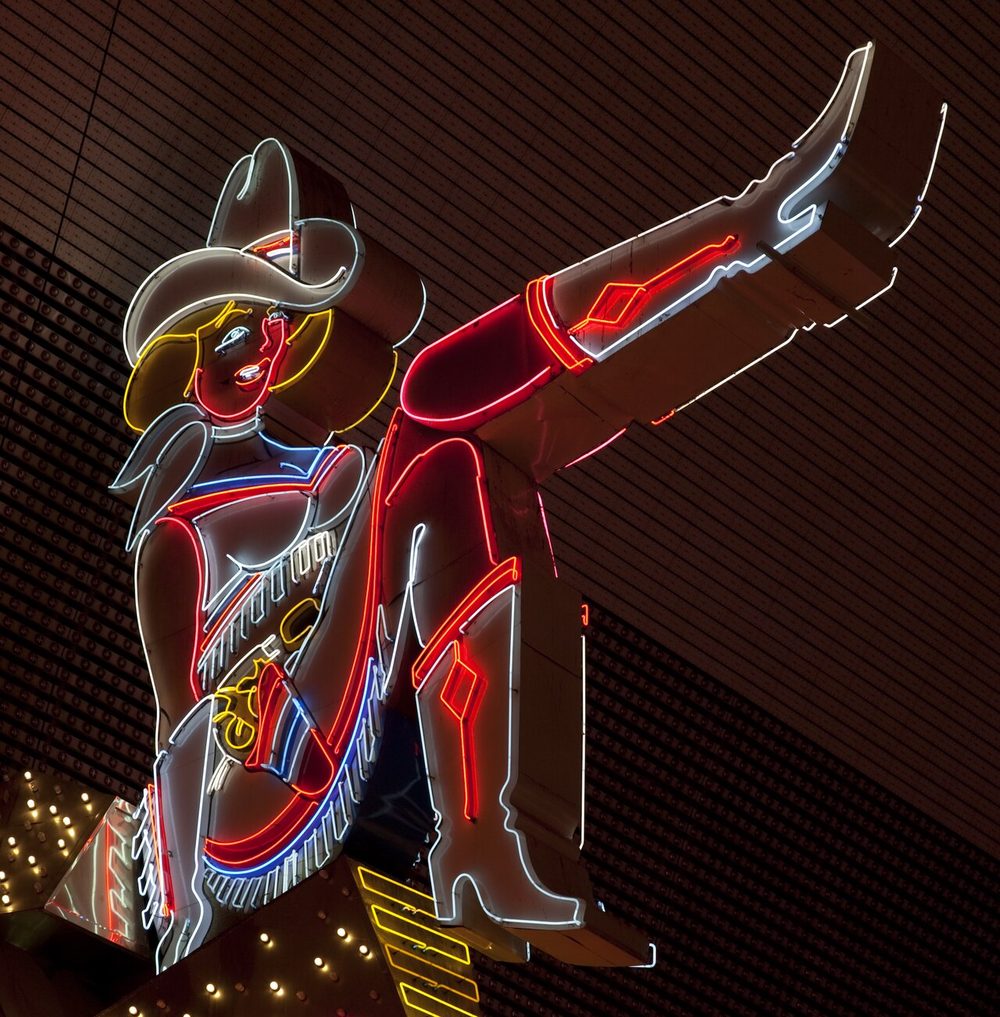
Vegas Vic, a 40-foot neon cowboy with a waving arm and a recorded “Howdy Podner” greeting (deliberately misspelled), went up on the exterior of the Pioneer Club at 25 E. Fremont Street in 1951, per Wikipedia — built by the Young Electric Sign Company off an earlier Las Vegas Chamber of Commerce ad character, with the greeting voiced by Chamber president Maxwell Kelch. He still stands there today, above what’s now a souvenir shop, though his hat brim was trimmed in 1994 to clear the new FSE canopy, and his arm stopped waving in 1991. Vegas Vickie, a neon cowgirl seated with one leg kicked out, went up across the street in 1980 above the Girls of Glitter Gulch strip club; the two were even “married” in a 1994 ceremony during the Fremont Street Experience’s construction. Vickie came down in 2017 when her building was demolished to make way for Circa, but per Wikipedia she was restored and now lives inside Circa’s lobby, in a cocktail lounge named Vegas Vickie’s built around the original sign. Source: Wikipedia, Vegas Vic; Wikipedia, Circa Resort & Casino.
3. Circa’s Stadium Swim — a Six-Tier Rooftop Pool Facing a 143-Foot Screen
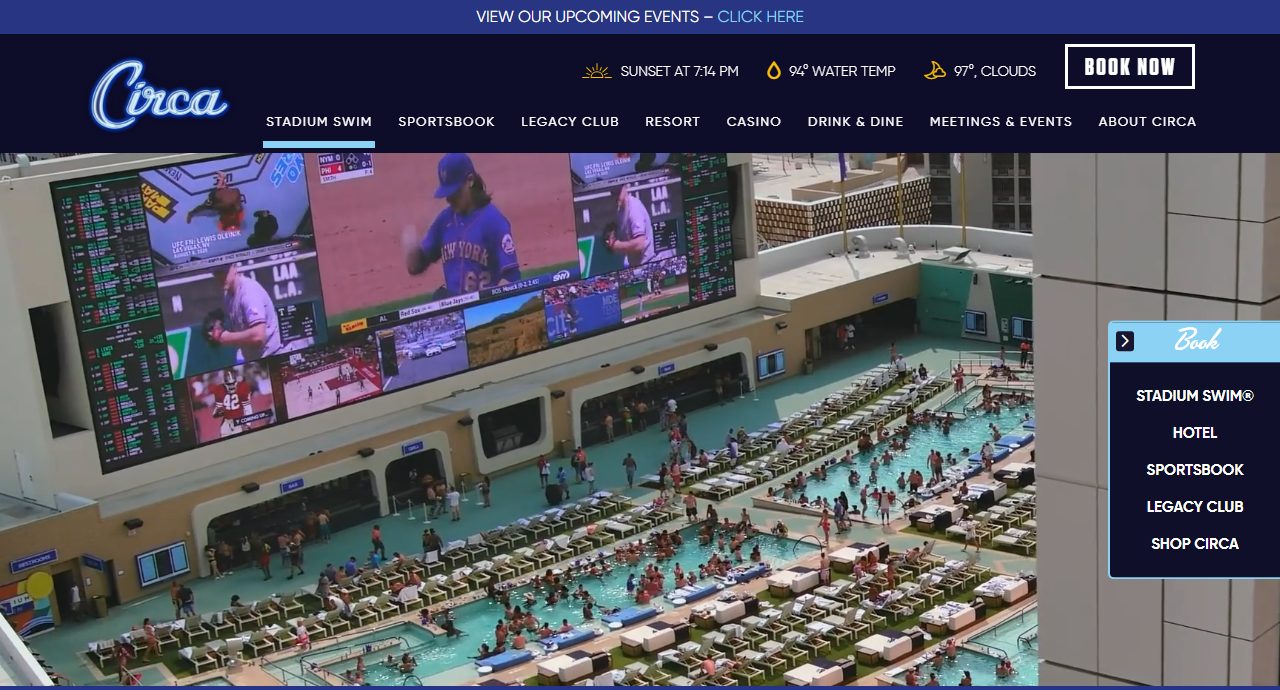
Circa opened in October 2020 as the first new hotel-casino built in the Fremont Street area since The D’s building went up in 1980, owned by brothers Derek and Greg Stevens on the former site of the Las Vegas Club. Its rooftop pool, Stadium Swim, spans six tiers and six pools across 15,756 square feet with room for 4,000 people, per Wikipedia, facing a 143-foot outdoor screen built from 14 megapixels of display — sports are the default programming, with two swim-up bars and a DJ booth built in. The pool is temperature-controlled and stays open year-round, and a three-story escalator, the tallest in Las Vegas, carries guests up to it. Source: Wikipedia, Circa Resort & Casino.
2. SlotZilla — a 12-Story Zip Line That Flies You the Length of the Whole Mall
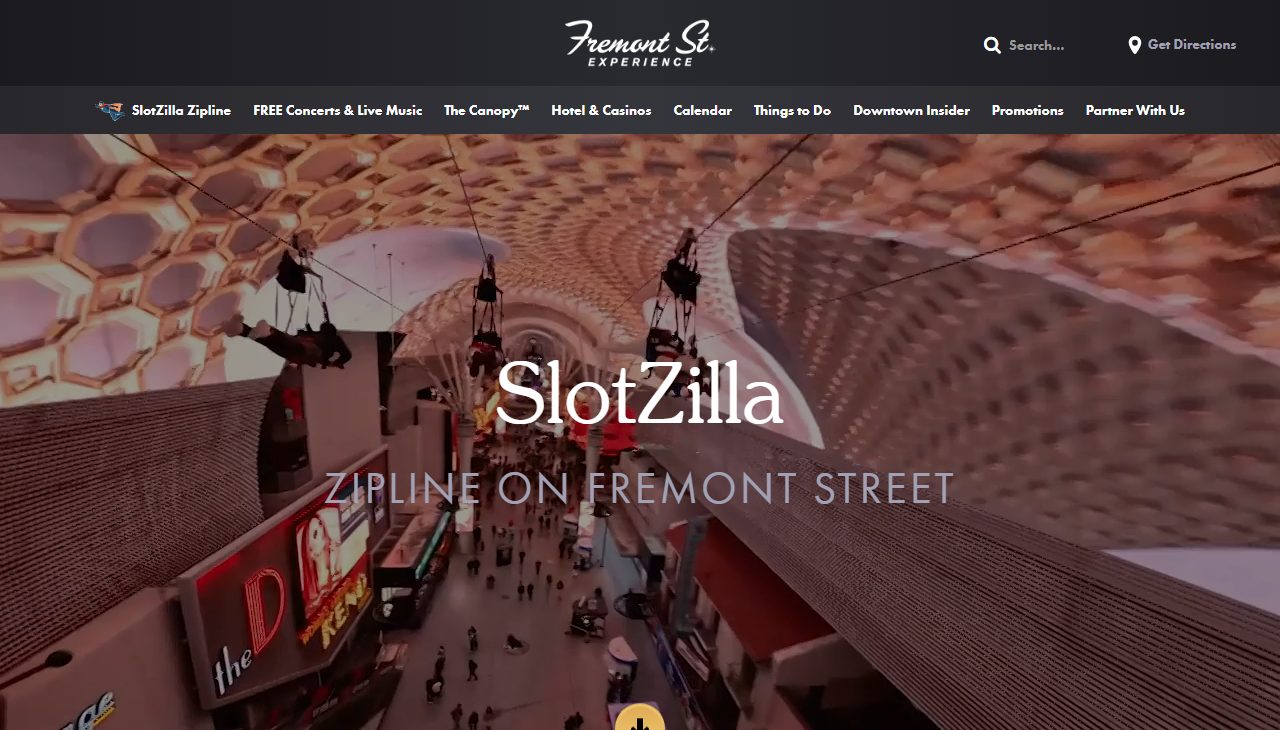
SlotZilla is a 12-story, slot-machine-themed zip line launch tower that cost $17 million to build, per Wikipedia, with a facade featuring over-sized dice, a martini glass, a pink flamingo, simulated video reels, a giant arm, and two 37-foot-tall showgirls. It runs two distinct lines: the lower “Zipline” launches from 77 feet up and travels roughly halfway down the mall seated, while the upper “Zoomline” launches from 114 feet and sends riders the entire 1,750-foot length of the pedestrian mall lying prone, “superhero-style.” One of SlotZilla’s towers also carries the “Welcome to Fabulous Downtown Las Vegas” sign. Source: Wikipedia, Fremont Street Experience.
1. Viva Vision — the LED Canopy Billed as the World’s Largest Video Screen
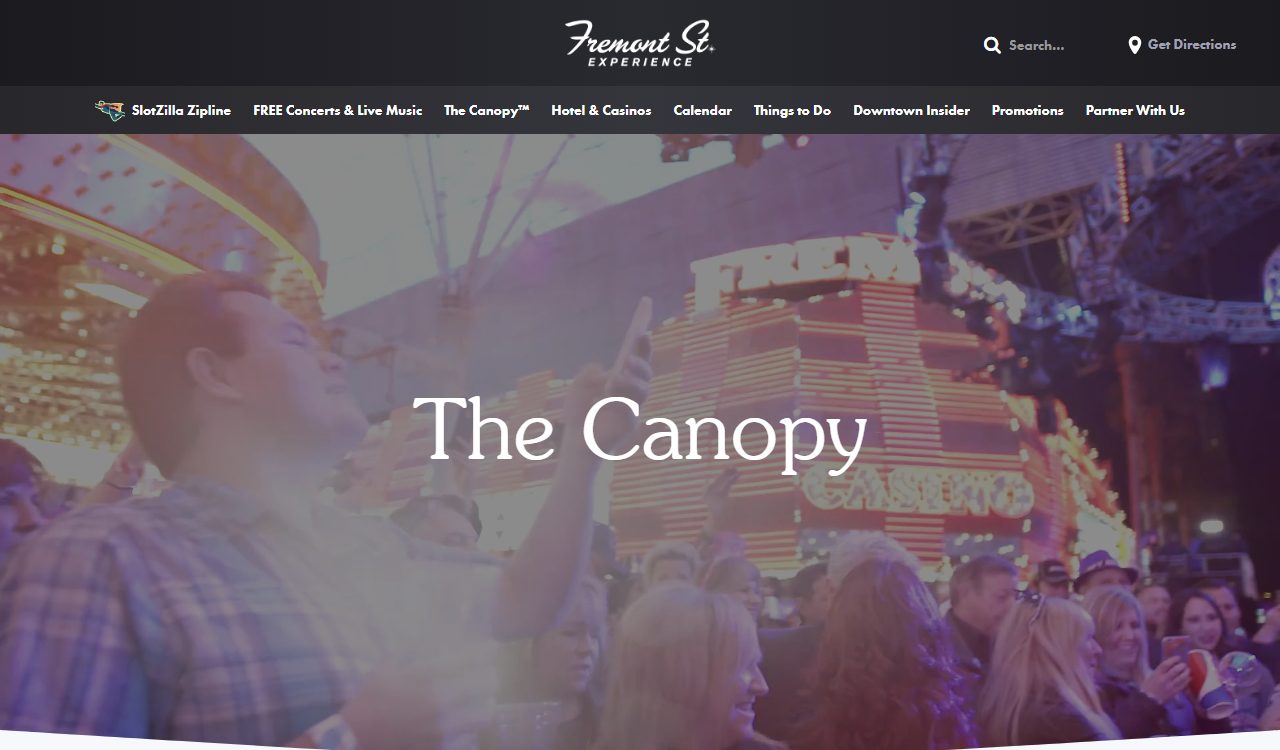
The barrel-vault canopy overhead is the reason the whole Fremont Street Experience exists: 90 feet tall at its peak and roughly four blocks (about 1,375 feet) long, holding 130,000 square feet of display space that Wikipedia and the FSE’s own site both describe as the world’s largest video screen. It opened in 1995 with a design credited to local architect Mary Kozlowski, after original designer Jon Jerde’s planned “floating sky parade” was scrapped over wind, sand, and safety concerns. The display itself has been rebuilt twice: from roughly 2.1 million incandescent bulbs at launch, to 12 million LEDs in a 2004 upgrade, to a Watchfire Signs rebuild finished in December 2019 with over 49 million LEDs — seven times brighter and four times the resolution of the previous version, bright enough (5,000 nits) to run shows in daylight. Add 220 speakers powered by 550,000 watts, and the Viva Vision light-and-sound shows run nightly from 6pm to 2am, usually free, alongside live concerts on three permanent stages. Source: Wikipedia, Fremont Street Experience.
Nine stops, all checked directly against official sites and Wikipedia rather than a secondhand “best of downtown Vegas” roundup — plus two honest calls made along the way: the Heart Attack Grill dropped for having actually closed in May 2026, and the Neon Museum skipped on purpose since it’s getting its own dedicated Discovery soon. If you only have one night, ride SlotZilla at dusk and let the Viva Vision show catch you underneath it when you land.