A couple days ago I wrote up the logistics side of my upcoming Rome trip (#085) — the border system, the eSIM, the coperto, the free fountains. What I didn’t do yet was the actual bucket list. So I asked myself a narrower question: what are the ten best things to go see and do that aren’t the Vatican Museums, the Colosseum, or the Trevi Fountain — since those three are already the obvious, done-to-death answer and I’m already planning around them anyway. Everything below is something I checked directly against an official source rather than just copying a listicle, and I cut a couple of ideas that didn’t hold up. Here’s the countdown.
10. The Appian Way — a 2,300-Year-Old Road You Can Still Walk (or Bike) On
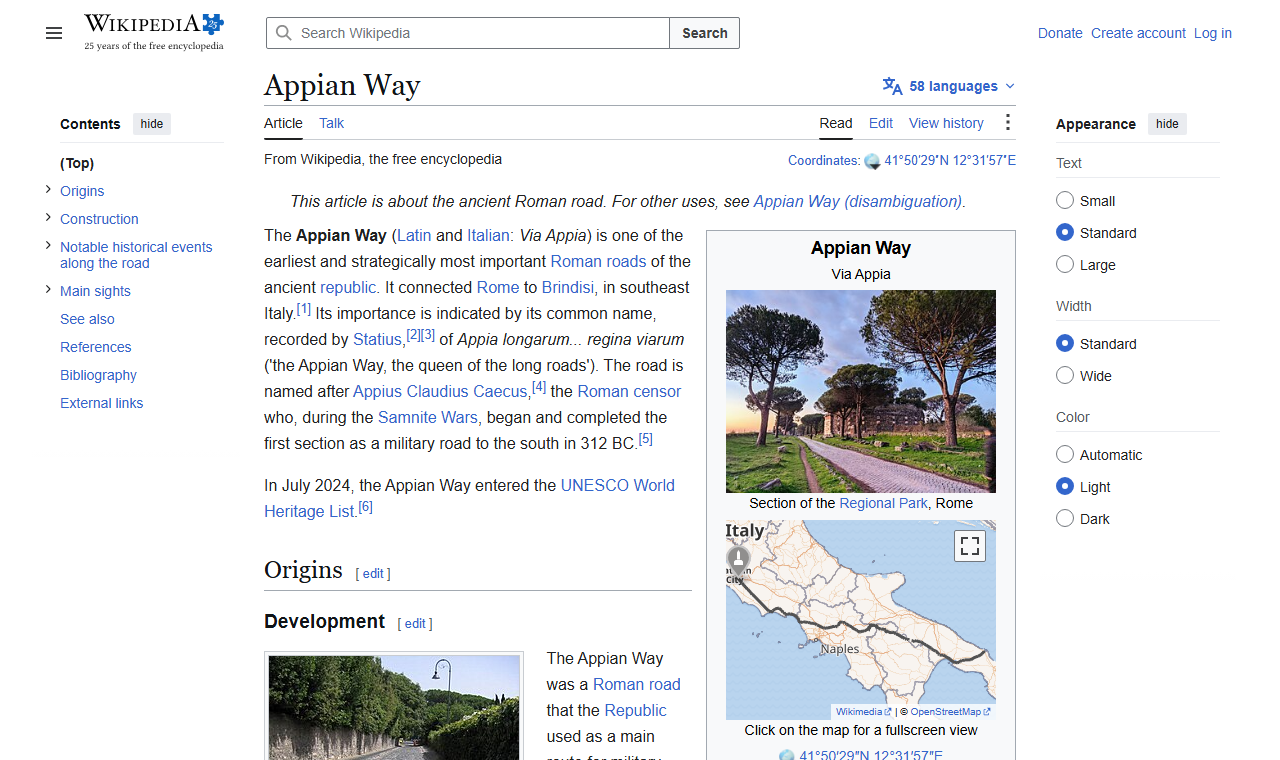
Started in 312 BC by the censor Appius Claudius Caecus, the Appian Way was the Roman Republic’s first great military road south, nicknamed regina viarum — “queen of the long roads.” It became a UNESCO World Heritage Site as recently as July 2024. Source: Wikipedia, Appian Way.
The first stretch outside the old city walls still has its original Roman basalt paving stones, worn smooth by two thousand years of wheels and foot traffic, running past tombs, catacombs, and umbrella pines. The whole road closes to most car traffic on Sundays and holidays, which locals treat as the actual cue to go — it turns into Rome’s biggest pedestrian-and-bike zone for the day. Source: QuickRome, Via Appia Antica.
9. The “Square Colosseum” — Mussolini’s Unfinished World’s Fair, Now a Fendi Headquarters
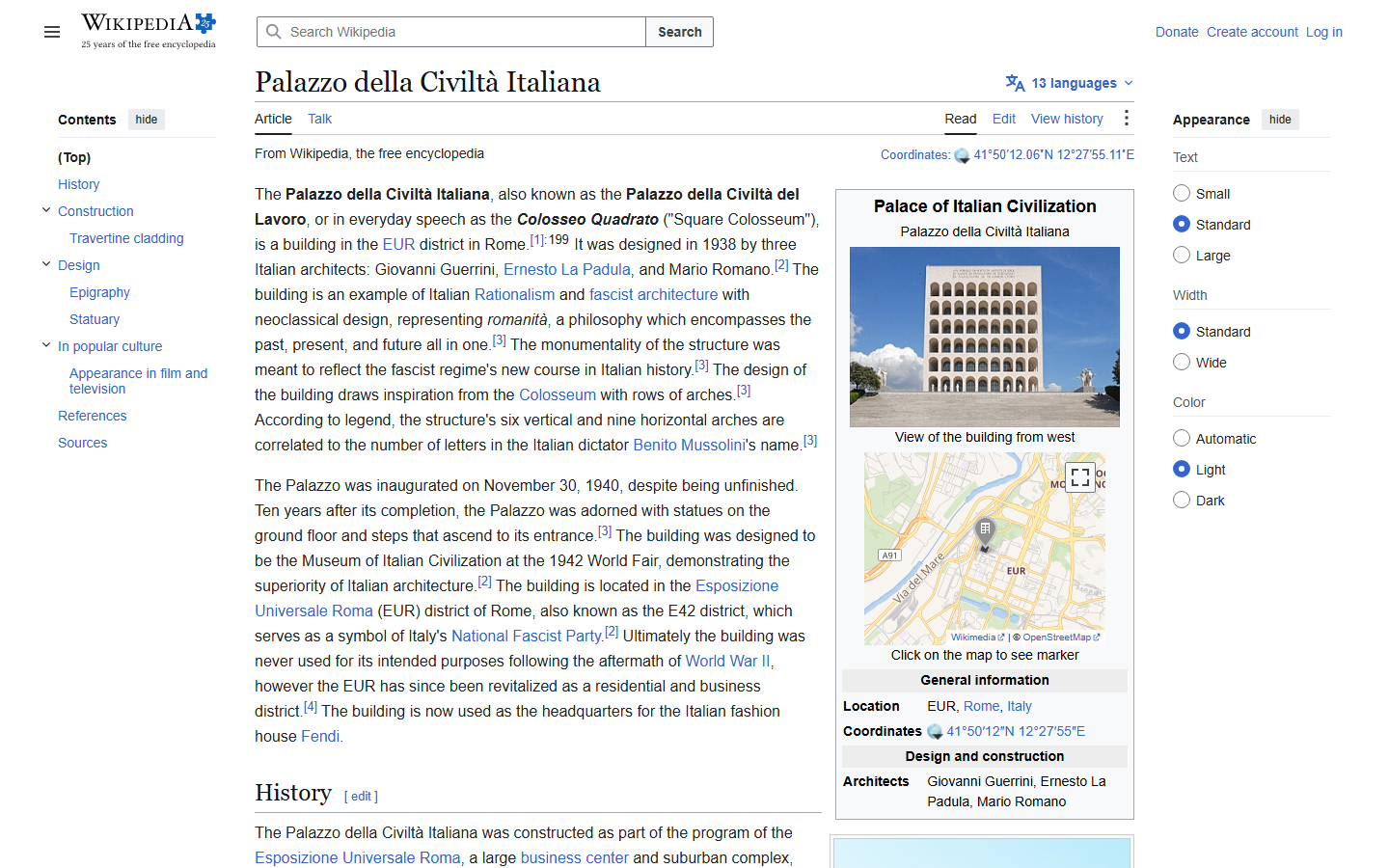
The EUR district was built in the late 1930s as the site of a 1942 World’s Fair meant to celebrate 20 years of Fascism — a fair that never happened because World War II got there first. Its centerpiece, the Palazzo della Civiltà Italiana, is a six-story building of stacked arches nicknamed the Colosseo Quadrato (“Square Colosseum”) for its obvious visual echo of the real one. Source: Wikipedia, Palazzo della Civiltà Italiana.
The detail that makes it worth a detour: legend holds that its 6 vertical arches and 9 horizontal arches aren’t arbitrary — they’re said to match the letter counts of “Benito” (6) and “Mussolini” (9). The building was never finished as intended and sat mostly empty for decades; today it’s the global headquarters of the fashion house Fendi. Source: Wikipedia, Palazzo della Civiltà Italiana.
8. The Capuchin Crypt — a Chapel Decorated Entirely in the Bones of 3,700+ Friars
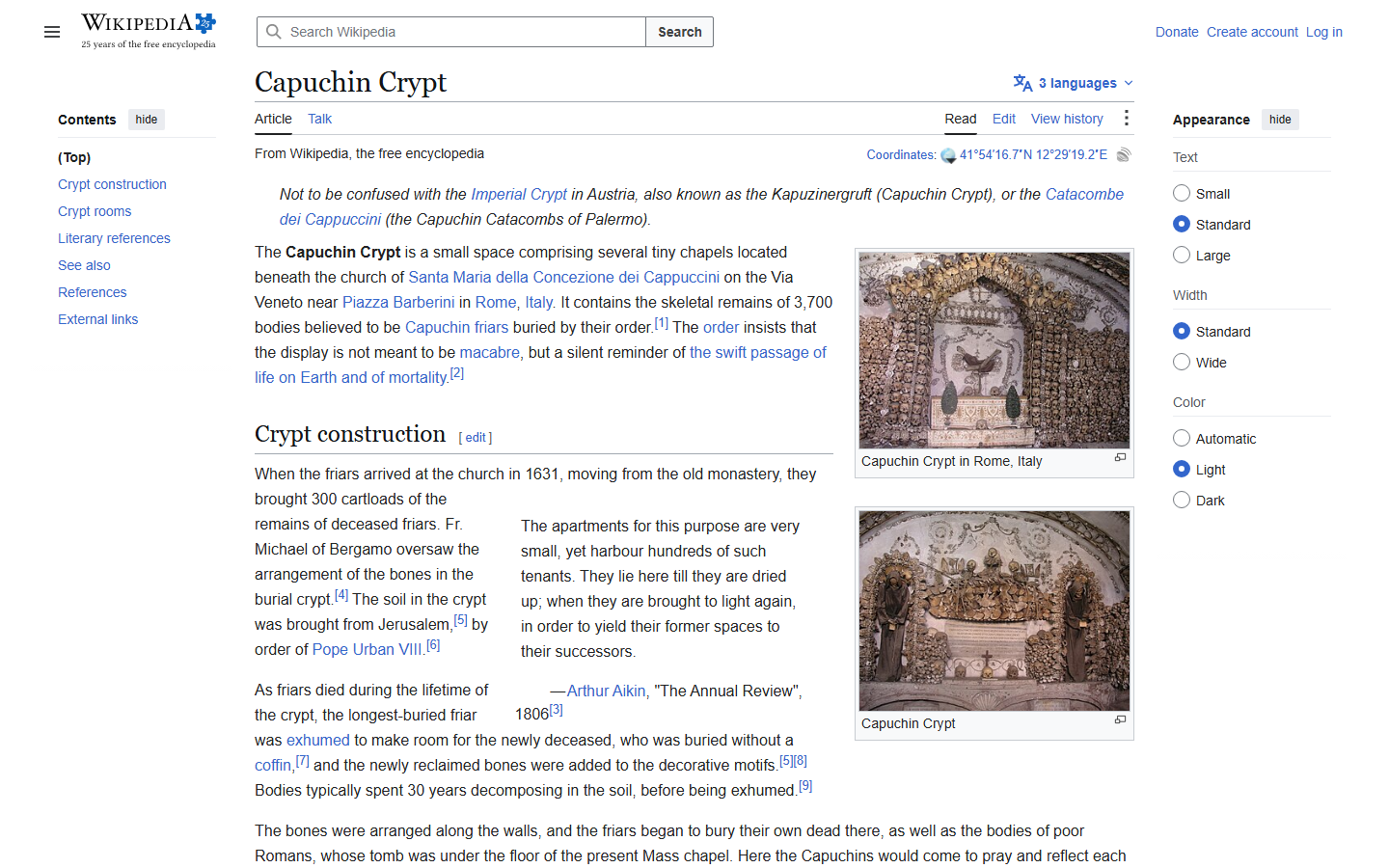
Beneath the church of Santa Maria della Concezione dei Cappuccini, off Via Veneto, is a series of small chapels containing the skeletal remains of an estimated 3,700 to 4,000 Capuchin friars, buried between 1500 and 1870. Rather than being hidden away, the bones — skulls, pelvises, femurs — are arranged directly into the walls and ceilings as elaborate decorative motifs. Source: Wikipedia, Capuchin Crypt.
The order insists it’s not meant to be macabre but a deliberate meditation on mortality, and the final room ends with a plaque, in five languages, that spells the point out directly: “What you are now we used to be; what we are now you will be.” The Marquis de Sade visited in 1775 and called it the most striking thing he’d ever seen. Source: Wikipedia, Capuchin Crypt.
7. The Janiculum Hill — a Cannon Has Fired at Noon, Every Day, Since 1847
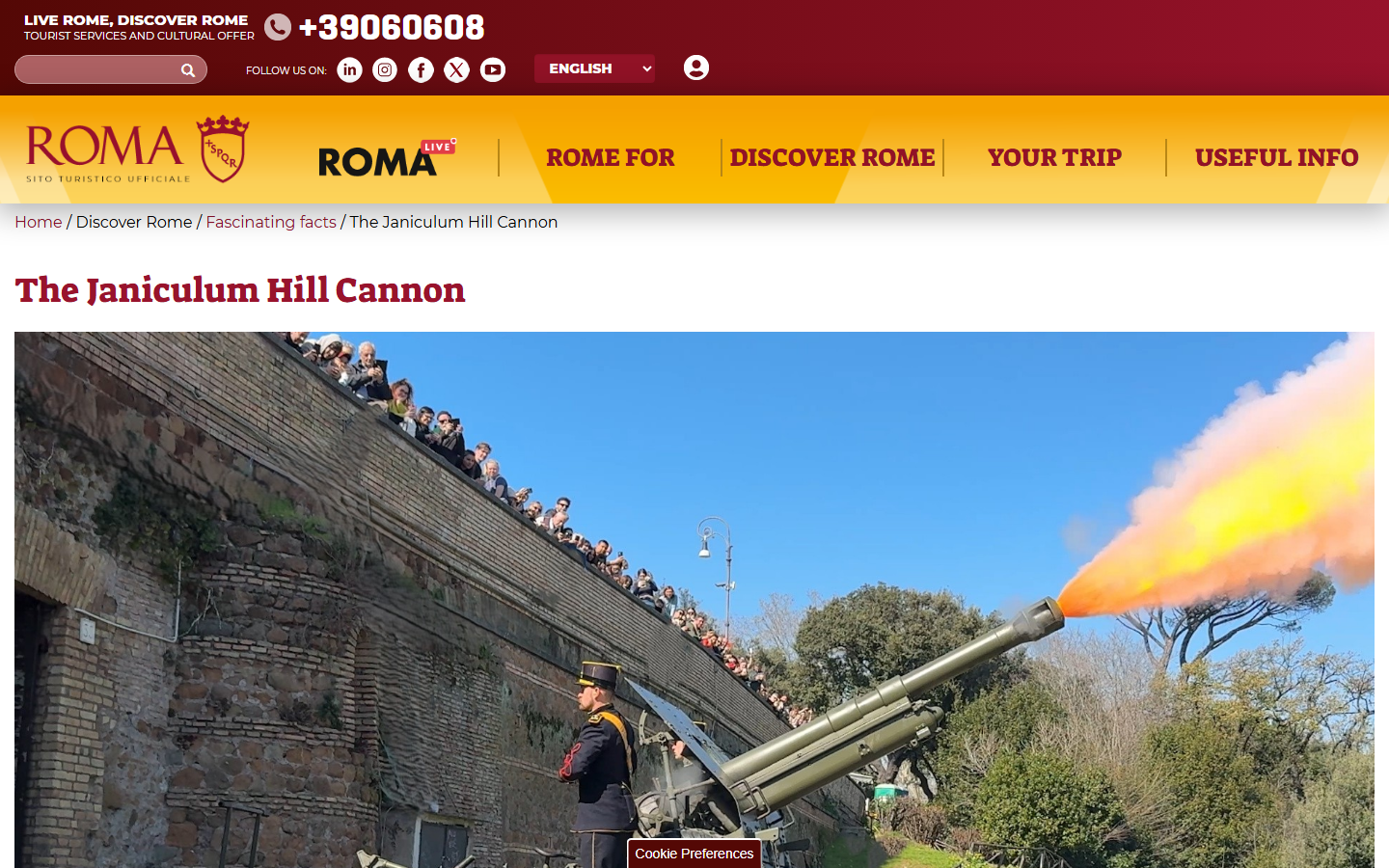
The Janiculum (Gianicolo) is Rome’s best skyline viewpoint, but the detail most visitors miss entirely: every single day at exactly noon, a blank round is fired from a cannon on the hill, rain or shine. It’s startlingly loud if you don’t know it’s coming. Source: Turismo Roma, The Janiculum Hill Cannon.
The tradition dates to December 1, 1847, introduced by Pope Pius IX for a genuinely practical reason: it gave every church in Rome a single, synchronized signal for when to ring noon bells, before the city had any other reliable way to keep clocks in sync. Nearly 180 years later, it’s still going.
6. Monte Testaccio — an Entire Hill Built From 53 Million Broken Roman Jars
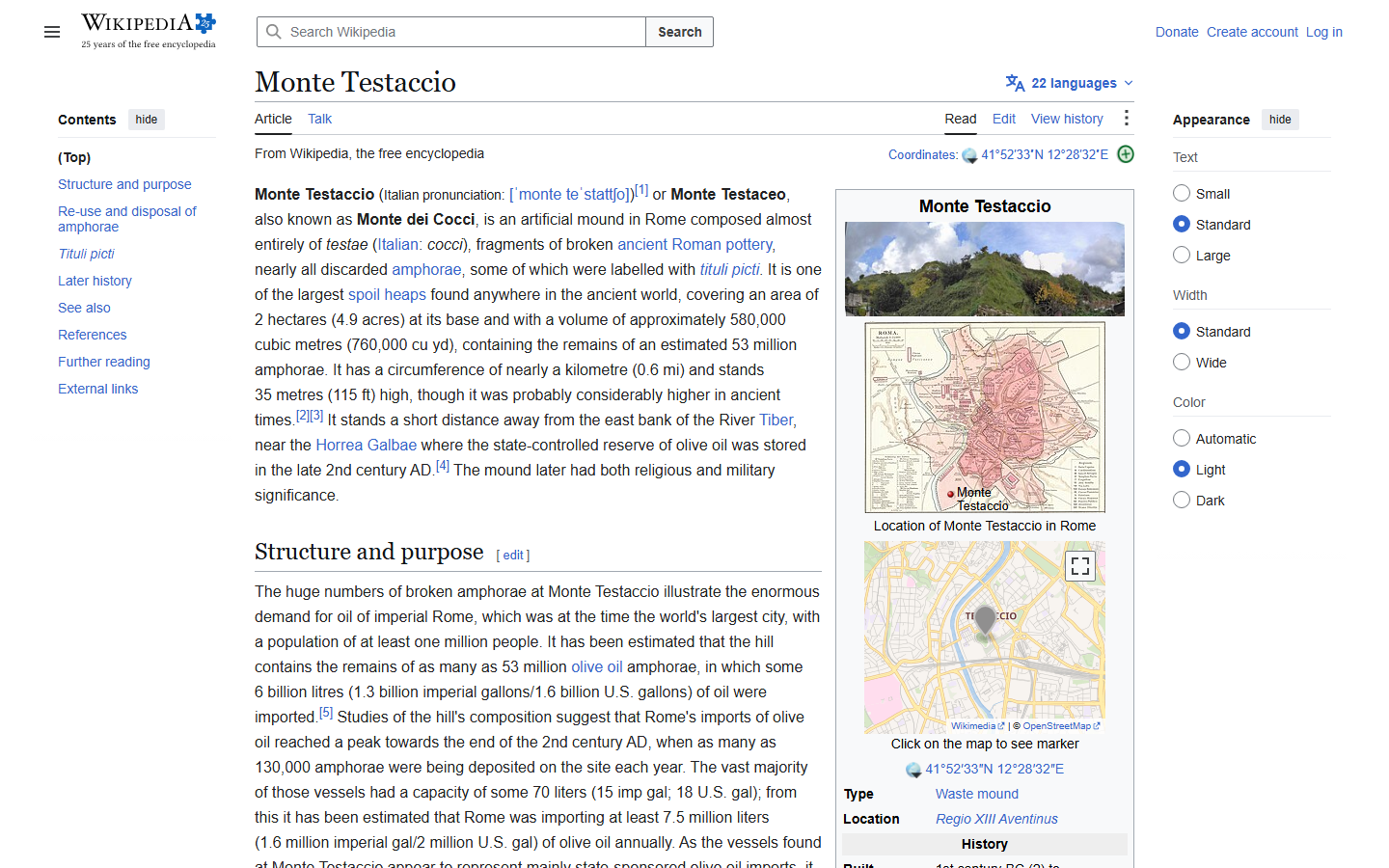
Monte Testaccio, in the Testaccio neighborhood, looks like an ordinary 115-foot hill. It is not a hill. It is a 2,000-year-old landfill — an estimated 53 million broken olive oil amphorae, carefully stacked and backfilled by Roman dock workers, that has simply been there long enough to grass over and look like terrain. Source: Wikipedia, Monte Testaccio.
It’s a genuinely strange thing to stand on top of once you know what it is, and the surrounding Testaccio neighborhood — historically a working-class dock district, now one of Rome’s best food neighborhoods — is worth the trip on its own merits even before you learn what’s underfoot.
5. Santa Maria degli Angeli — a Church Michelangelo Built Inside the Ruins of a Roman Bathhouse
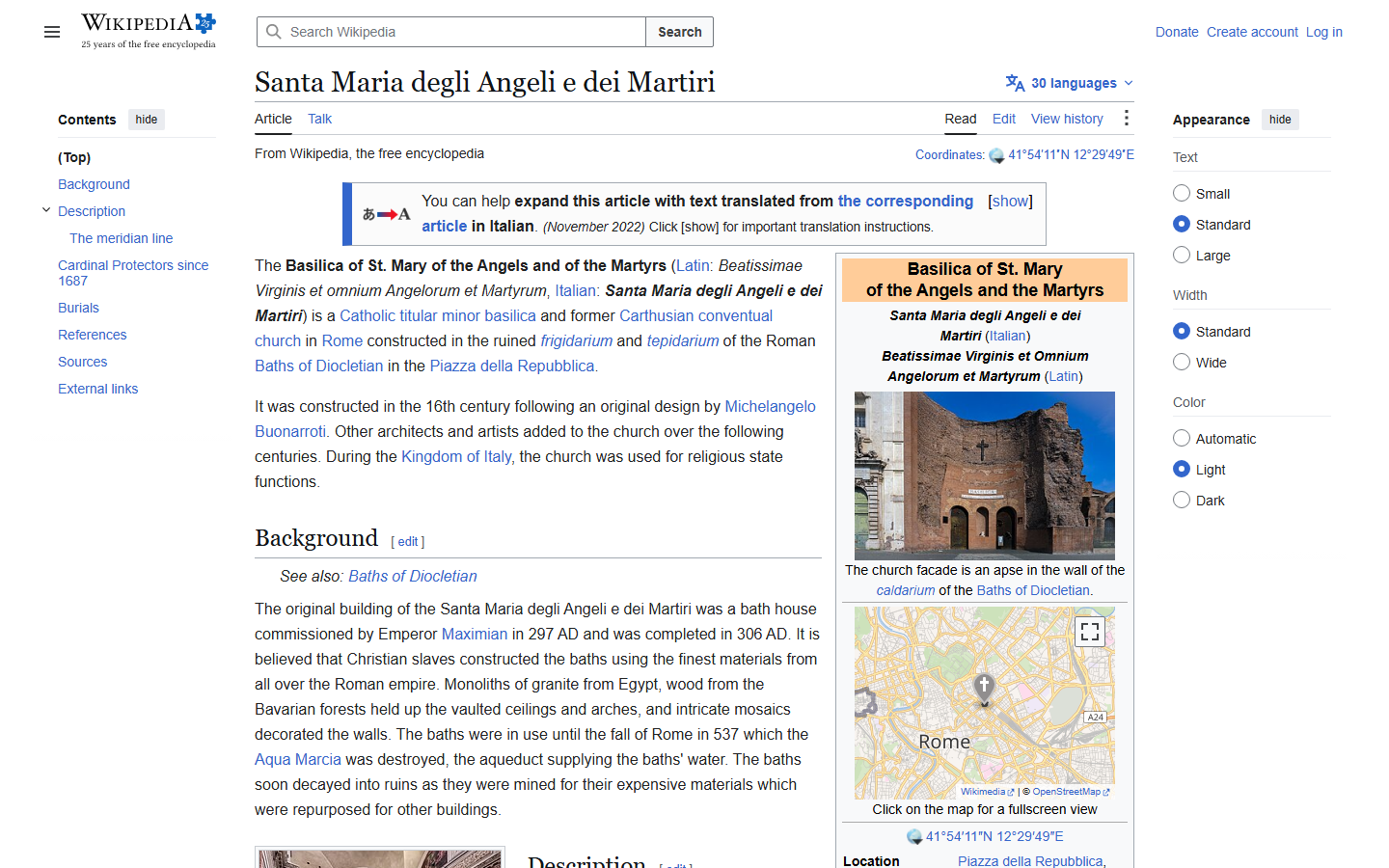
The Baths of Diocletian, completed in 306 AD, were once the largest bath complex in ancient Rome. In the 16th century, Michelangelo was commissioned to design a basilica directly inside their surviving ruins — the frigidarium and tepidarium became the nave, meaning the granite columns you’re standing among are the original 4th-century Roman ones, not a later homage to them. Source: Wikipedia, Santa Maria degli Angeli e dei Martiri.
It sits right on Piazza della Repubblica, free to enter, and gets a fraction of the foot traffic of Rome’s more famous churches — despite being, structurally, one of the most unusual buildings in the city.
4. San Clemente — a Basilica That’s Actually Three Buildings Stacked on Top of Each Other
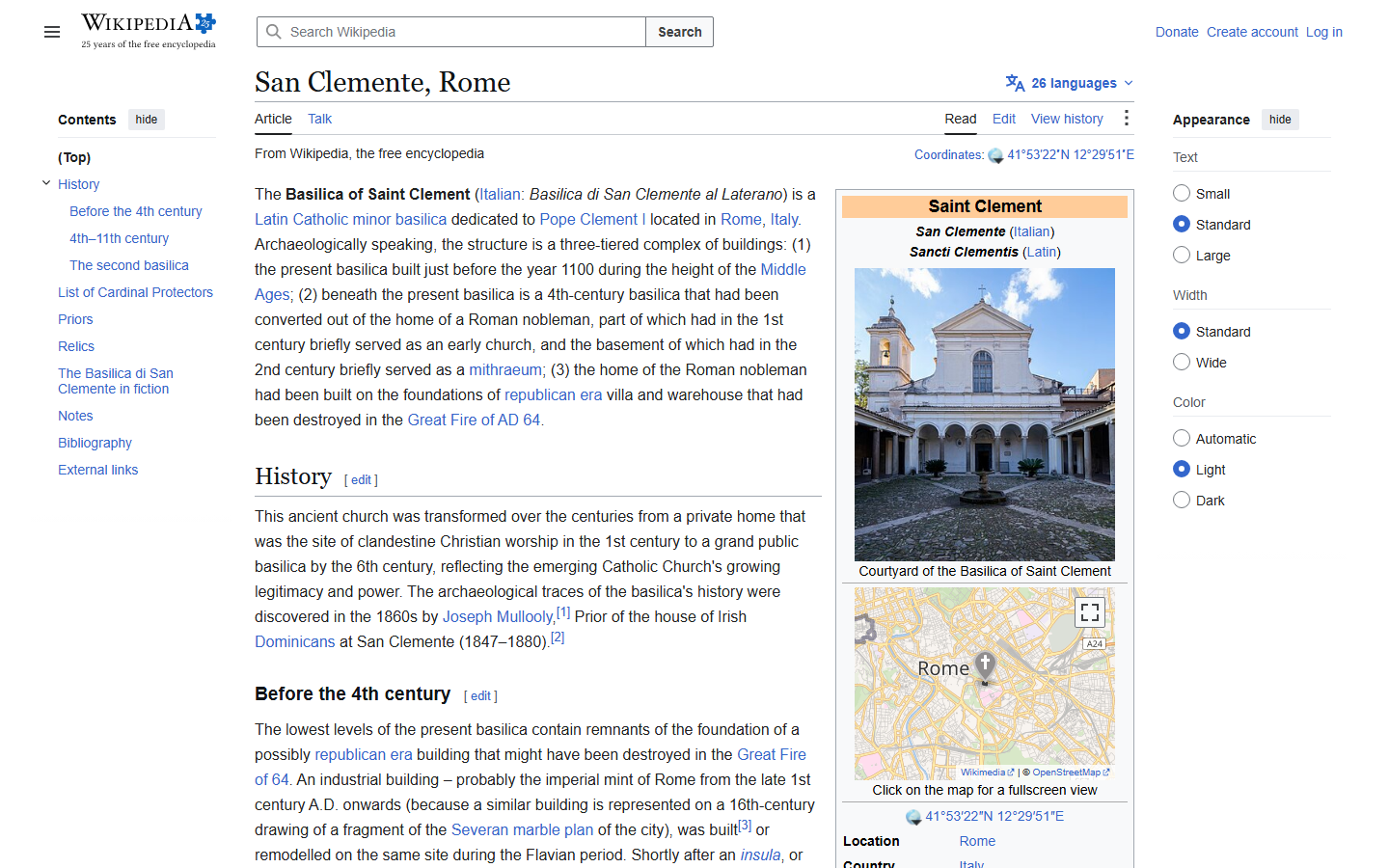
From street level, San Clemente looks like a fairly ordinary medieval basilica, built around 1100. Go downstairs, though, and there’s a second, older 4th-century basilica underneath it, converted from a Roman nobleman’s house. Go down again, and that house sits on the remains of a 1st-century building that briefly held a Mithraeum — a shrine to the god Mithras — built on foundations destroyed in the Great Fire of Rome in 64 AD. Source: Wikipedia, San Clemente, Rome.
Three distinct eras of Rome, stacked vertically, all open to walk through on a single ticket. It’s one of the clearest physical demonstrations anywhere in the city of just how many Romes are actually buried under the current one.
3. Centrale Montemartini — Ancient Roman Sculpture, Displayed Inside a 1912 Power Plant
Centrale Montemartini was Rome’s first public electricity plant, built in 1912. In 1997, when the Capitoline Museums needed somewhere to temporarily house part of their classical sculpture collection during renovations, they moved it here — and the arrangement worked so well it became permanent. Source: Centrale Montemartini, official site.
The result is genuinely strange in the best way: marble gods, emperors, and mosaics arranged directly among the plant’s original turbines, boilers, and diesel engines. It’s a fraction of the crowd of the main Capitoline Museums and one of the more visually odd museum experiences in any European capital.
2. The Baths of Caracalla — Rome’s Second-Largest Ancient Bath Complex Still Hosts Opera Every Summer
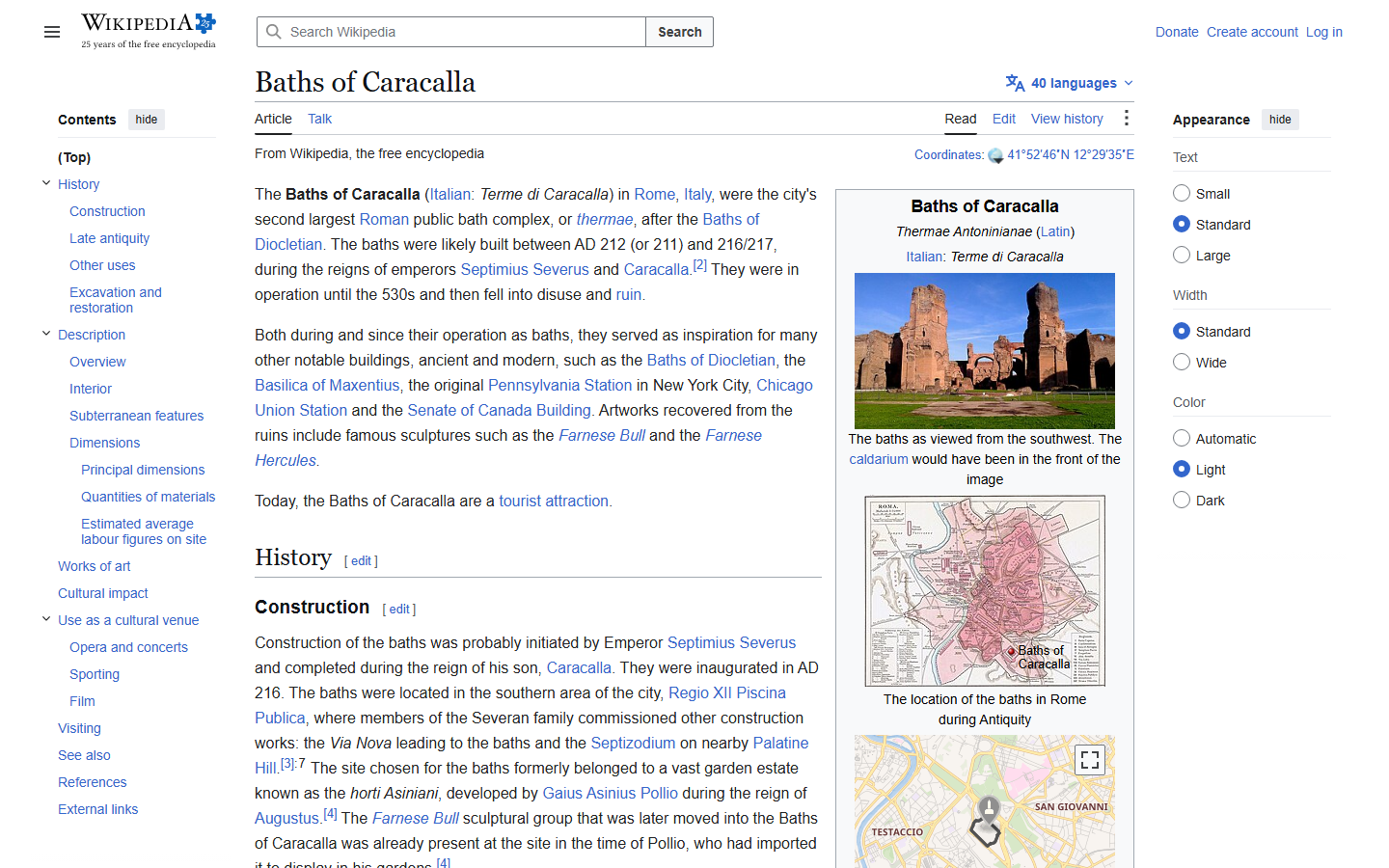
Completed in 216 AD, the Baths of Caracalla were once Rome’s second-largest public bath complex, with an estimated capacity of 1,600 simultaneous bathers and up to 6,000–8,000 visitors a day. Source: Wikipedia, Baths of Caracalla.
Since 1937, the ruins have doubled as an actual open-air opera stage — the Teatro dell’Opera di Roma runs a summer season here every year, with Verdi’s Aida and its elephant-scale processions as the recurring signature production. You can watch a full modern opera performed literally inside 1,800-year-old Roman ruins. Source: Teatro dell’Opera di Roma, Caracalla.
1. Galleria Borghese — the One Everyone Forgets Requires a Reservation, Even for Free Tickets
The Galleria Borghese, inside the Villa Borghese gardens, holds one of the best small collections in Rome — Bernini’s Apollo and Daphne and David, plus Caravaggio, Titian, and Raphael — and unlike the Vatican or the Colosseum, you cannot simply show up. Per the museum’s own official visiting page, reservation is required for all ticket categories, including free tickets for visitors under 18. Source: Galleria Borghese, official visiting information.
Visits run in strict, timed two-hour entry shifts, capped at 180 people each, on the hour from 9am to 7pm (plus a final 5:45pm shift). Show up without a booking, even in the off-season, and the answer is simply no — which is exactly the kind of thing that’s obvious once you know it and completely invisible until you don’t. This is the one item on this list I’m actually booking before I land, not after. Source: Galleria Borghese, official visiting information.
Ten stops, zero overlap with the Vatican, the Colosseum, or the Trevi Fountain, and every one of them checked against a primary source before it made the cut. If you’re headed to Rome too, hopefully this saves you some of the digging I just did.