I was today days old when I learned Italy’s health ministry runs a daily, official, color-coded heat-alert bulletin — not a vague “it’s hot out” advisory, but a graded Level 1 (yellow), Level 2 (orange), Level 3 (red) system covering 27 monitored cities, updated every day at salute.gov.it. This week, the list has grown to close to 20 of those cities on the maximum red alert, including Rome. It’s the kind of thing that matters if you’re actually there right now, and almost nobody outside Italy knows it exists. Source: Wanted in Rome.
Where Things Actually Stand
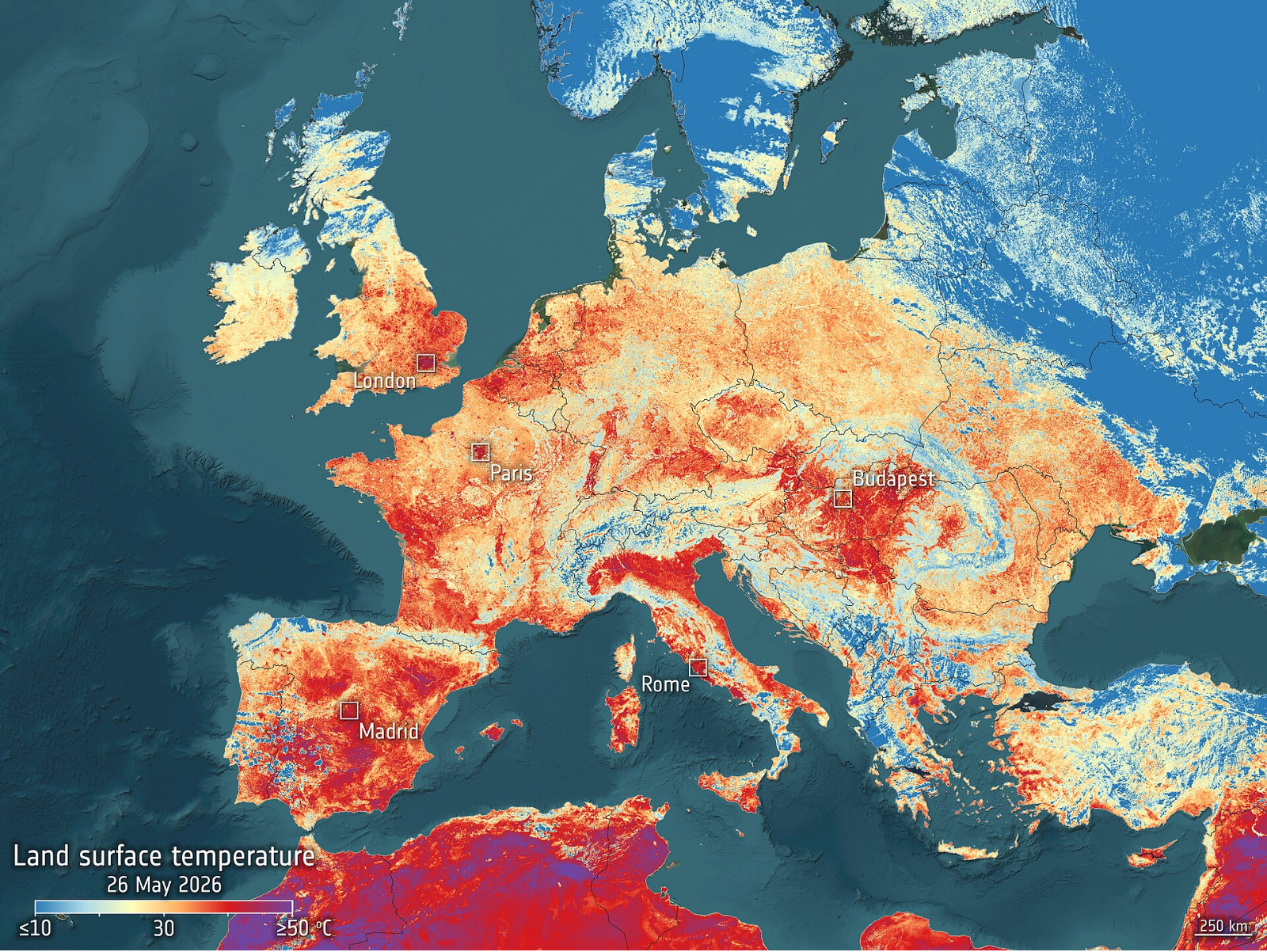
Italy is in its third heatwave of the summer, after waves in late May and mid-to-late June, and this one is the most widespread yet. The health ministry’s bulletin put 15 cities on red alert Thursday, July 16 — Turin, Brescia, Genoa, Bologna, Florence, Perugia, Viterbo, Rieti, Rome, Frosinone, Latina, Pescara, Campobasso, Cagliari, and Palermo. Milan joined on Friday, and ANSA reported the list climbing toward 19 as Ancona, Civitavecchia, and Catania were added over the following days — though exact day-by-day counts have varied slightly between outlets, with some already showing the total easing by the weekend as the wave moves through. Florence and Perugia have now logged nine straight days on red alert since the wave intensified around July 10. Forecasters expect highs near 45°C (113°F) in inland Sardinia today, with Florence and Matera around 40°C (104°F) and Rome near 39°C (102°F). A cooldown is expected from early next week, though ANSA has reported the wave overall is expected to last at least 15 days from its mid-July intensification, putting real relief around July 25. Source: ANSA, The Local.
How Italy’s Bollettino System Actually Works
The health ministry monitors 27 Italian cities and issues a fresh bollettino (bulletin) every day. Level 1, green or yellow, means no particular risk. Level 2, orange, is a pre-alert for at-risk groups. Level 3, red — the bollino rosso — is the maximum warning: a heatwave emergency with a general health risk that isn’t limited to the elderly or chronically ill, but extends to healthy, active adults too. Italy also runs a free helpline, 1500, with advice on coping with heat and information on local health and social services. If you’re traveling anywhere in Italy this summer, checking that day’s color before you plan your itinerary is a genuinely useful five-second habit — the same instinct as checking a marine small-craft advisory before you go boating. Source: Wanted in Rome.
The Human Cost, Briefly and Honestly
This isn’t a novelty weather story. The World Meteorological Organization has confirmed the June heatwave broke monthly and all-time records across multiple European countries and contributed to heat-related deaths, on top of a record-hot June for western Europe as a whole. In Italy specifically, a Ministry of Health steering committee found excess mortality among people 65 and older was, in its words, “modest” at around 3 percent through the end of June, and largely confined to the “very elderly” over 85 — lower than in some neighboring countries. Preliminary data compiled across five European countries as of mid-July puts heat-linked excess deaths at nearly 10,000 since the heatwaves began in late May. The heat has also raised wildfire risk: Sardinia extended a high fire-danger warning, and Palermo’s fire brigade responded to 33 separate fires across the province within 24 hours earlier this month. Sources: World Meteorological Organization, Il Sole 24 Ore, The Local.
What Actually Helps If You’re There Right Now
A Weather Channel meteorologist who just traveled through Rome, Florence, Pompeii, and Herculaneum during this same stretch of heat put together field-tested advice worth taking seriously. Use Rome’s nasoni — the free public drinking fountains running constantly across the city — to refill a water bottle, splash your face and neck, or cool down on the spot; Rome alone has roughly 2,500 of them. Visit major sites early, before official opening hours if you can arrange it, both for cooler air and lighter crowds. And temper expectations on air conditioning: Italy caps public-building AC at around 80°F (26.7°C) to conserve energy, and many major museums have weak air conditioning or none at all, occasionally adjusting hours or closing outright during extreme heat, so a stone-built church or basilica may run only marginally cooler than the street outside rather than icy relief. On the medical side, Italian hospital physicians warn that once temperatures pass roughly 40°C, the body can struggle to dissipate heat at all: watch for heavy sweating combined with weakness, dizziness, or dropping blood pressure (heat exhaustion), and treat confusion or disorientation as a genuine emergency, since it can signal heatstroke affecting the brain, heart, or kidneys. Alcohol worsens dehydration, so a spritz is fine, but it isn’t a substitute for water. Sources: Weather.com, Il Sole 24 Ore.