My Italy travel-logistics post (#085) already covered four things specific to this trip: the EU's new biometric border system, eSIM roaming, the restaurant coperto, and Rome's free water fountains. This one is broader — 10 verified tips that apply to Americans heading almost anywhere in Europe, not just Italy, though I've weighted the list toward what's actually useful on the Rome/Venice/Tuscany trip. Same standard as the last three lists: everything below is checked against Wikipedia, an official government source, or the relevant institution's own site, not copied from a listicle. Here's the countdown.
10. Power Plugs and 230V Voltage — Italy Runs Types C, F, and L, and Voltage Matters More Than the Plug Shape
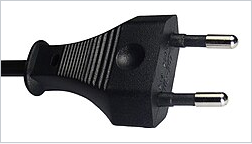
Italy's mains electricity runs at 230/400V, 50Hz, using plug Types C, F, and L — all physically different from the US's 120V, 60Hz, Type A/B system. Type L is Italy's own standard, with two different pin-spacing versions (a 10A gauge compatible with the Europlug shown above, and a wider 16A version), and hybrid outlets accepting both are common. Source: Wikipedia, Mains electricity by country.
What actually matters for a US traveler is voltage, not plug shape: most modern electronics — phone chargers, laptop bricks, camera chargers — are dual-voltage (100–240V) and only need a physical plug adapter, not a bulky step-down converter. Check the fine print stamped on the brick itself before assuming; anything without that dual-voltage label (an old hair dryer, for instance) genuinely does need a converter. Source: Wikipedia, Europlug.
9. Reserve Ahead on the Fast Trains — a Eurail Pass Doesn't Actually Include a Seat
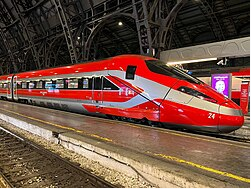
The Eurail Pass — not the Interrail Pass, which is reserved for European residents — is the rail pass built specifically for non-European tourists, launched in 1959 and covering nearly all railroads in 33 European countries across 250,000 km of track, used by 33,000+ travelers a year. Source: Wikipedia, Eurail.
What the pass doesn't include: a seat. Reservations aren't usually required for local or regional trains, but they are needed for most high-speed, international, and overnight trains, often with a separate surcharge on top. In Italy that means Trenitalia's Frecciarossa network specifically — the fast red trains linking Rome, Florence, and Venice — not just any train with the right city on the departure board. Source: Wikipedia, Interrail.
8. Tax-Free Shopping — Non-EU Visitors Can Reclaim Italy's 22% VAT on Purchases Over €70
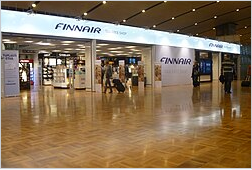
Italy's standard VAT rate is 22%, and non-EU residents can reclaim it on purchases over a €70 minimum at participating retailers — a lower threshold than France or Sweden (both over €100), though higher than Ireland's €30. The process requires the retailer to fill out a tax-free form at the time of purchase, then getting it stamped by customs on the way out of the EU, with the refund processed back to a card or paid in cash at the airport. Source: Wikipedia, Tax-free shopping.
The refund only applies at stores displaying a tax-free shopping sticker, and goods generally need to leave the EU unused, in their original packaging, within three months of purchase. Worth budgeting extra time at the airport on the way home — the customs stamp requires showing the actual goods, not just the receipt.
7. Always Pay in the Local Currency — “Dynamic Currency Conversion” Can Quietly Add an 18% Markup
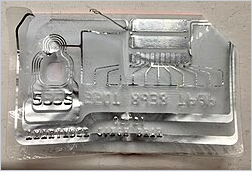
Nearly every card terminal and ATM in Europe now offers to charge purchases in US dollars instead of euros — a process called dynamic currency conversion (DCC). It sounds convenient, but the exchange rate is set by the merchant or a third-party DCC operator, not your own card network, and it typically carries a markup over the real rate that isn't clearly disclosed at checkout — sometimes as high as 18%. Source: Wikipedia, Dynamic currency conversion.
The fix is simple: whenever a terminal asks “charge in USD or EUR,” choose the local currency (EUR) every time — your own card network converts it at a real, published rate, almost always cheaper. Contactless tap-to-pay is now the default across most of Europe, including Italy, so a US card with tap enabled works at the large majority of terminals, often without even needing a PIN for smaller purchases. Source: Wikipedia, Contactless payment.
6. Cathedral Dress Codes Are Enforced, Not Suggested — Bare Shoulders or Shorts Above the Knee Can Get You Turned Away
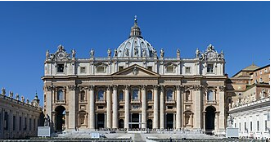
St. Peter's Basilica and the Vatican Museums post an explicit written dress code: sleeveless or low-cut garments, shorts above the knee, miniskirts, and hats are not permitted, and it's enforced by staff at the entrance. The requirement of decorum even extends to visible tattoos or other markings staff judge to be offensive to Catholic morality. Source: Vatican Museums, official visitor information.
The same rule applies, informally but consistently, at nearly every major cathedral and basilica across Catholic Europe — Florence's Duomo, Milan's Duomo, and Venice's St. Mark's Basilica all enforce a version of it. A light scarf or shawl that can cover bare shoulders on the spot solves the problem without having to plan an outfit around it every single day.
5. Italy's Autostrade — Take a Ticket, Pay by the Kilometer, and Watch for a 130 km/h Sign That Isn't Miles
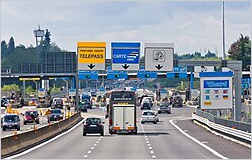
Italy was the first country in the world to build a motorway reserved exclusively for fast, motor-vehicle-only traffic: the Autostrada dei Laghi, connecting Milan to Lake Como and Lake Maggiore, devised by Piero Puricelli and opened in 1924. Most of today's autostrade network still runs on tolls, collected through a “closed” system — take a ticket at the entrance, pay based on the distance traveled when you exit. Source: Wikipedia, Autostrade of Italy.
The standard speed limit is 130 km/h (about 80 mph) for cars — a number that looks alarming on a US speedometer until you remember it's kilometers, not miles. Toll booths sort traffic into lanes: cash/card lanes with an attendant, and Telepass-only lanes for electronic transponders that should be avoided entirely without one, since there's no way to stop and pay inside them.
4. An International Driving Permit Doesn't Replace a US License — It Rides Along With It
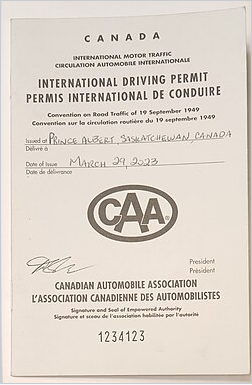
An International Driving Permit (IDP) is an official translation of a domestic driver's license into multiple languages, first codified under the 1926 Paris Convention and updated by later UN road-traffic treaties. It isn't a standalone license — it has to be carried alongside a valid US driver's license, never instead of it. Source: Wikipedia, International Driving Permit.
In the US, AAA is one of only two organizations authorized by the State Department to issue them — a physical booklet valid in roughly 150 countries, translating license information into 10 languages, cheap and good for one year. Most European countries, including Italy, expect a US visitor renting a car to be able to produce one alongside a home license, and a rental counter or traffic stop is the wrong place to find out it's missing. Source: AAA, International Driving Permit.
3. Enroll in STEP Before You Go — Free, State Department-Run, and How the Embassy Finds You in an Emergency
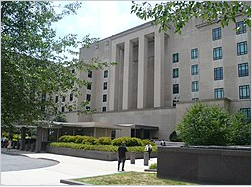
The Smart Traveler Enrollment Program (STEP) is a free State Department service letting US citizens register an upcoming trip abroad. In return, it sends destination-specific security updates and, in a genuine emergency, makes it dramatically easier for the nearest US embassy to actually locate and reach a traveler. Source: Wikipedia, Harry S. Truman Building.
It takes a few minutes on travel.state.gov and costs nothing. The State Department's own Italy travel page recommends it directly: “Enroll in the Smart Traveler Enrollment Program (STEP) to receive messages and alerts from the U.S. Embassy. It makes it easier to locate you in an emergency.” Source: US Department of State, Italy travel information.
2. Pickpocketing Isn't Folklore — the State Department Flags It as Common in Italy's Crowded Areas and on Public Transport
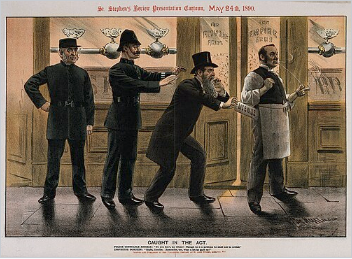
The US State Department's own country information page for Italy is direct about it: “Italy has a moderate rate of crime. Although there are incidents of theft, violent crimes are rare. Pickpocketing, particularly in congested areas and on public transport, and break-ins of rented vehicles are common throughout the country.” Source: US Department of State, Italy travel information.
In practice that means train stations (Rome's Termini above all), crowded buses and metro cars, and the immediate perimeter of major sights — exactly where a two-week Italy itinerary spends most of its time. A crossbody bag worn in front, zippers facing inward, and leaving passports in a hotel safe rather than a pocket cover most of the actual risk.
1. Europe's Emergency Number Is 112, Not 911 — and It Works From a Locked Phone With No SIM Card
Nearly every EU member state uses 112 as a common emergency number for police, fire, and ambulance — one number, no need to know a local variant. It's built into the GSM standard, so any GSM-compatible phone can dial it, and in many countries it will connect even from a phone with no SIM card inserted or while the screen is locked. Source: Wikipedia, 112 (emergency telephone number).
That's meaningfully different from 911, which is a US- and Canada-specific number that doesn't work the same way once you land in Italy. Worth committing 112 to memory before the trip rather than reflexively dialing 911 in a moment of actual stress — it's free, it works on any phone in range of a signal, and it's the same number whether you're in Rome, Venice, or anywhere else in the EU. Source: Wikipedia, 9-1-1.
Ten tips, none of them repeating what #085 already covered — and every fact checked against a source before it made the list.